
Absence Of Bank Guarantee No Ground To Deny Interim Relief In Redevelopment Arbitration: Bombay High Court
Kirit Singhania
8 July 2026 9:28 AM IST
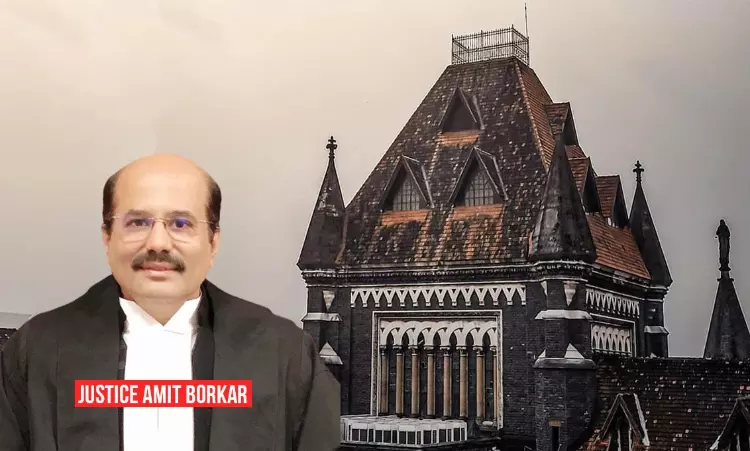
The Bombay High Court has held that the absence of a bank guarantee under the Maharashtra government's redevelopment guidelines, by itself, cannot invalidate a housing society redevelopment project or justify refusing interim relief under the Arbitration and Conciliation Act, 1996.
Holding so, the court observed, "Once this Court has already held that furnishing of bank guarantee under the Government Resolution is recommendatory and not mandatory, mere absence of a bank guarantee cannot make the redevelopment process invalid."
Justice Amit Borkar passed the order on July 7 while allowing a petition filed by Antariksh Realtors Pvt Ltd seeking interim relief under the Arbitration and Conciliation Act, 1996. The dispute concerned the redevelopment of Vidyavihar Palmview Co-operative Housing Society.
The court further observed, "Whether such security is sufficient or not is a matter which may arise between the Society and the developer. That issue cannot be a ground to refuse interim protection under Section 9 of the Arbitration and Conciliation Act."
The dispute arose after the society, which has 80 flats, appointed Antariksh Realtors as its developer in April 2023 with the support of 61 members. The developer's revised proposal expressly stated that no bank guarantee would be furnished because the project would be carried out under the Real Estate (Regulation and Development) Act. The society accepted that condition. A Development Agreement was executed in August 2024. MHADA issued the Intimation of Approval on April 30, 2026.
After receiving the approval, 68 members gave undertakings agreeing to vacate their flats. Twelve members refused to do so. Antariksh Realtors then approached the High Court seeking directions requiring them to execute the Permanent Alternate Accommodation Agreements and hand over vacant possession of their flats so demolition and redevelopment could begin.
The dissenting members argued that the petition had been filed prematurely because they had not received the notice contemplated under the Development Agreement. They also contended that the Development Agreement did not comply with the government's redevelopment guidelines because no bank guarantee had been furnished. They further relied on pending civil suits challenging the redevelopment.
Rejecting the objection relating to the bank guarantee at the prima facie stage, the court noted that the society had accepted the developer's proposal knowing that no bank guarantee would be provided. It also noted that the Development Agreement created an alternative form of security by reserving residential units to secure the developer's obligations.
Accepting the developer's prima facie case on this issue, the court held, "Prima facie, this submission of the petitioner deserves acceptance. Once this Court has already held that furnishing of bank guarantee under the Government Resolution is recommendatory and not mandatory, mere absence of a bank guarantee cannot make the redevelopment process invalid."
The court also rejected the contention that the pending civil suits, by themselves, prevented the redevelopment from proceeding. It noted that none of those proceedings had resulted in any interim order staying the redevelopment resolutions, the Development Agreement or the Power of Attorney.
Explaining its reasoning, the court observed: "Mere pendency of a suit does not suspend the rights and obligations flowing from a valid agreement. If redevelopment is required to wait till every dispute filed by members reaches its conclusion, then no redevelopment project can proceed within a reasonable time."
The court also relied on the Division Bench decision in Pranav Constructions Limited. It noted that disputes regarding redevelopment, the appointment of the developer, and similar grievances must be decided before the appropriate forum. The mere pendency of such proceedings cannot, by itself, be a ground to refuse interim relief.
The court also rejected the contention that directing the dissenting members to vacate would amount to granting final relief. It held that such a direction only facilitates implementation of the Development Agreement pending arbitration. It does not amount to a final adjudication of the parties' rights.
On this aspect, the court held, "Where an overwhelming majority of the members have accepted the redevelopment and only a few members refuse to vacate, the entire project may come to a standstill. In such a situation, a direction to vacate is intended to facilitate performance of the Development Agreement pending arbitration. It is not a final adjudication upon the ownership or any independent rights of the parties."
The court noted that the redevelopment had progressed well beyond the proposal stage. The Development Agreement and the Power of Attorney had been executed and registered. Two deeds of adherence had also been executed. The general body had approved the Permanent Alternate Accommodation Agreement, and MHADA had issued the Intimation of Approval. The court held that stopping the project because of the non-cooperation of 12 members would prejudice both the developer and the 68 members who had accepted the redevelopment.
Holding that Antariksh Realtors had made out a prima facie case for interim relief, the court directed the dissenting members to execute the Permanent Alternate Accommodation Agreements within two weeks. They must hand over vacant possession of their flats within six weeks thereafter. If they fail to comply, the Court Receiver will take possession with police assistance. The court also directed the concerned Senior Inspector of Police to provide assistance to the Court Receiver, if required.
The court clarified that its observations are prima facie and confined to deciding the petition for interim relief. It kept all rights and contentions of the parties in the pending suits, arbitration, and other proceedings open.
For Petitioner: Advocates Mayur Khandeparkar with Nishant Chotani, Nivit Srivastava, Sneha Patil, Isha Vyas and Bhavya Shah i/by Maniar Srivastava Associates
For Respondents: Arun Panicker, Lizum Wangdi with Aniket Mokashi, Anushka S., Amogh Singh i/by Jeet Gandhi, A.M. Saraogi, Advocates