
Fresh Copy Of Arbitral Award Cannot Restart Limitation To Challenge Award: Delhi High Court
Shivani PS
9 July 2026 12:49 PM IST
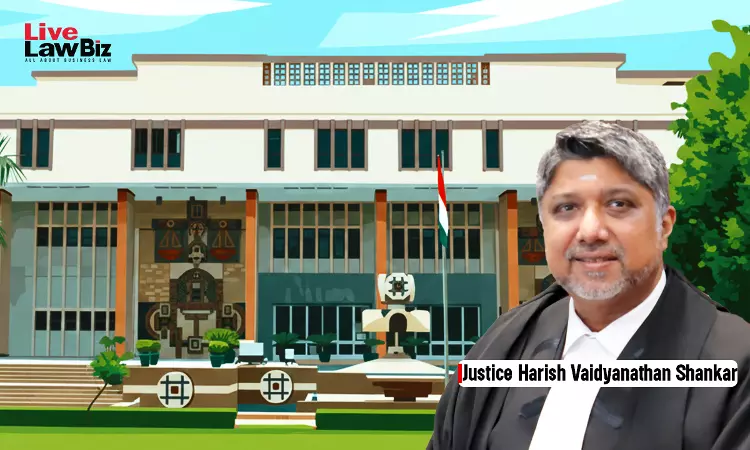
The Delhi High Court has dismissed two petitions filed by the Union of India challenging an arbitral award.
It held that a party cannot allow the statutory period for challenging an award to expire and later attempt to restart the limitation by obtaining another copy of the award.
Justice Harish Vaidyanathan Shankar delivered the judgment.
The court observed, "A party, despite having knowledge of an Award and despite its authorised representative having received the signed copy, could indefinitely postpone limitation by simply applying for another copy months or years later. Such an interpretation would defeat the legislative object of ensuring finality and expedition in arbitral proceedings."
The dispute arose from a tender floated by the Union on September 9, 2016 for construction of various Limited Height works. Letters of Acceptance were issued on December 2, 2016 and January 16, 2017. The parties executed the contract agreements on April 6, 2017. Disputes later arose and were referred to arbitration. A common arbitral award was pronounced on September 22, 2023.
The Union's counsel collected the signed copy of the award on October 9, 2023. After the contractor, ISC-YUG (JV), initiated execution proceedings, the Union applied to the Delhi International Arbitration Centre (DIAC) on July 16, 2024 for another copy of the award. DIAC supplied that copy on July 18, 2024. The Union then approached the High Court seeking to set aside the award.
ISC-YUG (JV) raised a preliminary objection that the petitions had been filed beyond limitation. The Union argued that limitation began only when it received the fresh copy from DIAC. It contended that delivery of the signed award to its counsel did not amount to valid delivery to the party.
The High Court rejected that argument. It found no contemporaneous material showing that the counsel's authority to receive the award had been restricted. It also found no record of any objection before the arbitrator or DIAC regarding delivery of the signed copy.
The court observed, "A subsequent self-serving affidavit cannot displace the admitted factual position reflected from the record."
The court also noted that the Union admittedly knew about the award on September 22, 2023, when it was pronounced. Despite that knowledge, it made no effort to obtain a signed copy from the arbitrator or DIAC within the prescribed period.
The court observed, "Such conduct unmistakably demonstrates that the Petitioner was content in allowing the statutory period to lapse and only sought to obtain another copy once execution proceedings had commenced. A litigant cannot be permitted to take advantage of its own inaction and thereafter seek to postpone the commencement of limitation on the ground that it obtained another copy of the Award at a later point in time."
The High Court also rejected the Union's reliance on the Supreme Court's ruling in State of Maharashtra v. ARK Builders (P) Ltd. It held that the decision could not assist a party whose counsel had admittedly received the signed copy of the award and which later sought to revive the limitation by obtaining another copy.
The court further found that the petitions were based on selective pleadings. It noted that the Union did not disclose the circumstances in which its counsel received the signed copy. Nor did it explain whether that copy had been communicated to the Union.
The court observed, "A litigant invoking the discretionary jurisdiction of this Court is expected to approach the Court with complete candour. Suppression of material particulars assumes added significance where the issue concerns limitation, which goes to the very jurisdiction of the Court to entertain the Petition."
Holding that receipt of the signed copy by the Union's counsel on October 9, 2023 validly triggered the limitation, the High Court concluded that the petitions had been filed well after the maximum period permitted by law. It upheld the preliminary objection and dismissed both petitions as barred by limitation.
For Petitioner (Union of India): Senior Panel Counsel Sushil Kumar Pandey and Advocates Aman Kumar Pandey and Pradip Sharma.
For Respondent (M/s ISC-YUG (JV)/M/s ISC YUG): Advocates Pooja Dua, Urzica Chauhan and Gauri Ojha.