
Unable To Pay Arbitration Fees? Law Provides No Waiver On Financial Grounds: Delhi High Court
Shivani PS
22 Sept 2026 1:41 PM IST
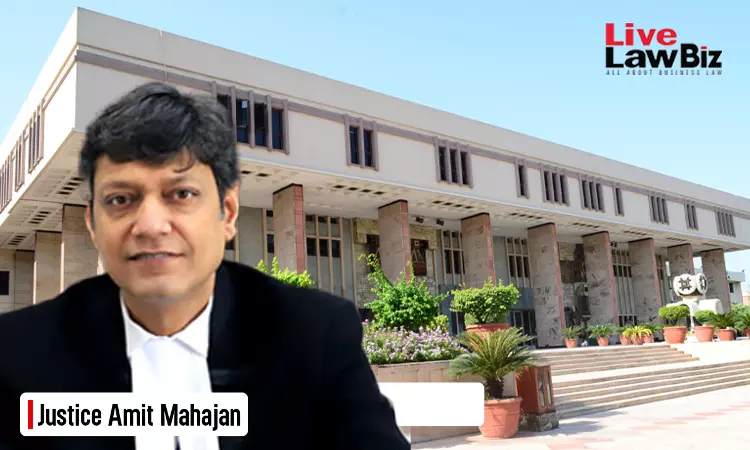
The Delhi High Court has ruled that an arbitral tribunal cannot ordinarily be required to continue adjudicating a claim or counter-claim when the requisite deposit towards arbitration costs has not been paid.
“The statutory scheme, therefore, recognises that an Arbitral Tribunal cannot ordinarily be required to continue adjudicating upon a claim or counter-claim in the absence of the requisite deposit towards the costs of such proceedings,” Justice Amit Mahajan ruled.
The ruling came while dismissing petitions by Rajesh Kumar and Sri Export Co. They had sought waiver or deferment of their share of arbitrator's fees and Delhi International Arbitration Centre (DIAC) administrative charges in separate arbitrations.
Kumar's arbitration proceedings were terminated on April 14, 2026, after he was unable to pay DIAC's fees. Sri Export's counter-claim in a separate arbitration was dropped on May 29, 2026, after it failed to pay its share of the arbitration fees and expenses.
The two petitioners argued that they had effectively been left without a remedy. They submitted that the arbitration clauses prevented them from pursuing their disputes before civil or commercial courts, while their inability to pay DIAC's fees prevented them from pursuing arbitration.
Their counsel also argued that the petitioners fell within the category of “indigent persons” under Order XXXIII of the Code of Civil Procedure. He contended that Section 38(2) of the Arbitration Act and Rule 33.5 of the DIAC Rules created a financial barrier to access to justice because they provided no mechanism to seek waiver of the arbitral fee on that basis.
The court rejected the plea.
Section 38 deals with deposits towards the costs of arbitration. The deposit is payable by the parties in equal shares. If one party does not pay, the other can pay that share.
Where the required deposit remains unpaid by both parties, the tribunal may suspend or terminate the proceedings relating to the claim or counter-claim. The provision therefore allows the tribunal to bring such proceedings to an end when the required deposit has not been made.
The court noted that Section 38 itself contemplates termination where the requisite deposit remains unpaid. It also relied on the Supreme Court's decision in Harshbir Singh Pannu v. Jaswinder Singh, 2025 SCC OnLine 2742, which considered the consequences of non-payment of arbitral fees under Section 38.
The petitioners sought an exception for parties unable to afford the required payment. The court rejected the argument.
“Section 38 of the Arbitration and Conciliation Act, 1996 does not contemplate any exception on the ground of financial incapacity of a party. Thus, no exceptions or waivers can be granted to the petitioners, as prayed for in the present petitions,” the court ruled.
The court also declined to direct the Union of India, the Delhi government, and the Delhi International Arbitration Centre to frame rules or guidelines providing financial or structural support to indigent parties in arbitration. It held that such a measure was a matter of policy falling within the legislature's domain.
“This Court, while exercising jurisdiction under Article 226 of the Constitution of India, cannot direct formulation of a policy or frame rules in the manner suggested by the petitioners,” it observed.
The court further noted that the petitioners had not challenged the constitutional validity of Section 38. It found that the impugned orders had been passed in accordance with the applicable provisions.
The petitions were dismissed on September 21, 2026.
For Petitioner (Rajesh Kumar): Advocates Rahul Sagar Sahay, Pratham Arora and Raghav Rajmalani.
For Petitioner (M/s Sri Export Co.): Advocates Rahul Sagar Sahay, Pratham Arora and Raghav Rajmalani.
For Respondent (Union of India): Government Pleader Urvashi Basak in W.P.(C) 13882/2026; CGSC Brijesh K. Tamber, Government Pleader Rahul Yadav, Advocates Chanchala Kumari and Vinay Singh Bist in W.P.(C) 13884/2026.
For Respondent (GNCTD): Advocates Purnima Jain and Madhur.