
Finance Ministry's High-Value Arbitration Policy Conflicts With India's Declared Policy: Justice Ujjal Bhuyan
Shivani PS
20 July 2026 9:47 AM IST
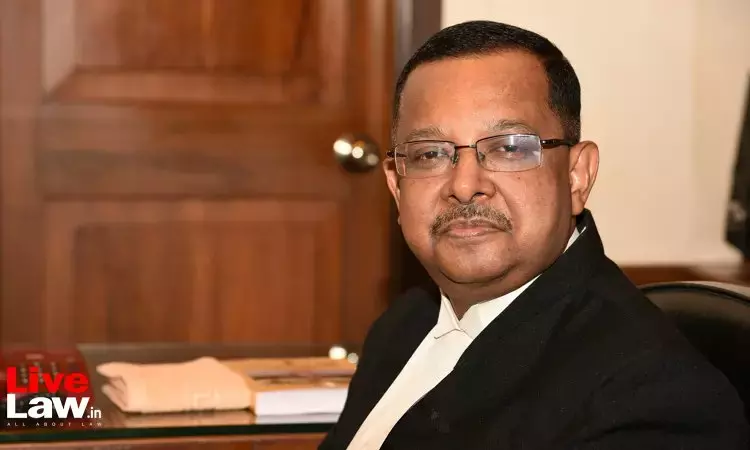
Supreme Court judge Justice Ujjal Bhuyan on Saturday criticized the Finance Ministry's policy discouraging arbitration in high-value government contracts, saying its guidelines are "clearly in conflict with India's declared policy and international commitments."
Justice Bhuyan made the remarks while delivering his keynote address at an event titled "Arbitration in India: Reform, Relevance & the Road Ahead" organised by the Law Forum.
Delhi High Court judge Justice C. Hari Shankar and former Chief Justice of the Himachal Pradesh High Court Justice Rajiv Shakdher were also present. The session was moderated by Senior Advocate Amit Gupta.
Referring to the Finance Ministry's office memorandum dated June 3, 2024, Justice Bhuyan said it marked a "sharp, sudden and controversial policy shift against arbitration."
He said the guidelines mandate that arbitration clauses "should not be included in the contracts and tenders," that arbitration "should be restricted to disputes with a value of less than Rs. 10 crores," and that government departments, entities and agencies are encouraged to adopt mediation instead of arbitration.
The judge contrasted the policy with the Centre's earlier approach towards arbitration. Recalling Prime Minister Narendra Modi's address at a national conference on arbitration in 2016, Justice Bhuyan noted that the Prime Minister had declared, "Creation of a vibrant eco-system for institutional arbitration is one of the foremost priorities of our Government."
He also referred to the Prime Minister's statement that India should promote itself globally as an arbitration hub.
Justice Bhuyan also referred to External Affairs Minister S. Jaishankar's address at the inauguration of the Arbitration Bar of India in May 2024. He noted that Jaishankar had described arbitration as an efficient and equitable method for resolving disputes and had said, "Arbitration is recognized as the cornerstone of modern dispute resolution."
He also referred to the minister's remarks that high-quality arbitration inspires confidence among foreign investors and facilitates international trade and investment.
Against this backdrop, Justice Bhuyan observed, "In complete negation of the Prime Minister's vision and notwithstanding the declaration of the External Affairs Minister, the Finance Ministry issued the above guidelines."
Justice Bhuyan said the office memorandum had already influenced the approach adopted by several government entities. "As if it has set off a trigger," he remarked, pointing out that Oil India Limited and ONGC had decided not to engage in arbitration in public procurement contracts where the disputed amount exceeds ₹10 crore.
He also referred to Delhi's Public Works Department deleting arbitration clauses from future contracts and to the Ministry of Road Transport and Highways issuing instructions that disputes of ₹10 crore or more should not be referred to arbitration.
The judge also referred to projects financed by institutions such as the World Bank, the Asian Development Bank, the International Bank for Reconstruction and Development, the Japan International Cooperation Agency, and the New Development Bank. He said these institutions insist that disputes arising under their loan agreements be resolved through arbitration.
"The Finance Ministry's guidelines are clearly in conflict with India's declared policy and international commitments," Justice Bhuyan said.
Justice Bhuyan also expressed concern over recent judicial developments in arbitration jurisprudence. Referring to the Constitution Bench decision in Gayatri Balasamy v. ISG Novasoft Technologies Ltd., he said the judgment had "literally opened up a can of worms."
He noted that the majority had held that courts may exercise limited powers to modify arbitral awards in specified circumstances.
The judge also referred to the Expert Committee's proposal to amend Section 34 of the Arbitration and Conciliation Act to permit courts to partly modify arbitral awards in exceptional circumstances. While the committee had suggested strict parameters, Justice Bhuyan said, "I am afraid it will only add to the already heightened tendency to judicially interdict arbitral awards."
On the proposal to establish an appellate arbitral tribunal, Justice Bhuyan said it "may not achieve its intended goal of reducing judicial involvement and expediting dispute resolution; rather, it may end up adding one more layer of adjudication, besides enhancing judicial intervention."
Justice Bhuyan also criticised the Supreme Court's decision in Delhi Metro Rail Corporation Ltd. v. Delhi Airport Metro Express Pvt. Ltd. He described it as "one judgment which has caused the most extensive damage to arbitration in India."
Referring to the decision, he said the Court "undertook a detailed review of the merits of the claims and reappreciated the evidence in what was effectively the fifth round of challenge to the award."
According to Justice Bhuyan, the judgment had "raised serious questions regarding the extent of judicial intervention in an arbitral award in India," besides "raising questions about India's suitability as an arbitration hub for commercial disputes."
Summing up his concerns, Justice Bhuyan said, "The above steps starting from the judgment in Delhi Metro followed by the Finance Ministry's office memorandum have greatly harmed India's cause."
He added that these developments had "damaged the longstanding efforts to enhance ease of doing business in India by making India an international arbitration hub."
He also questioned whether parties, "mostly Government and Government entities which are unwilling to accept arbitral awards," could be expected to resolve contractual disputes through mediation.
"As the Prime Minister had suggested, both can and should supplement each other," he said, adding that mediation should not be pitted against arbitration.
Concluding his address, Justice Bhuyan said, "Erratic court verdicts and regressive policies like the above act as barriers to India's efforts to position itself as a global arbitration hub."
He urged "all right thinking people" to "seriously consider the damaging impact of such regressive moves" and ensure that arbitration, "statutorily recognised and celebrated," "continues to remain alive and kicking in India."