
Bombay High Court Upholds ₹86.02 Lakh Award Against CDSL Says Depositories Cannot Avoid Liability
Shivani PS
10 July 2026 4:14 PM IST
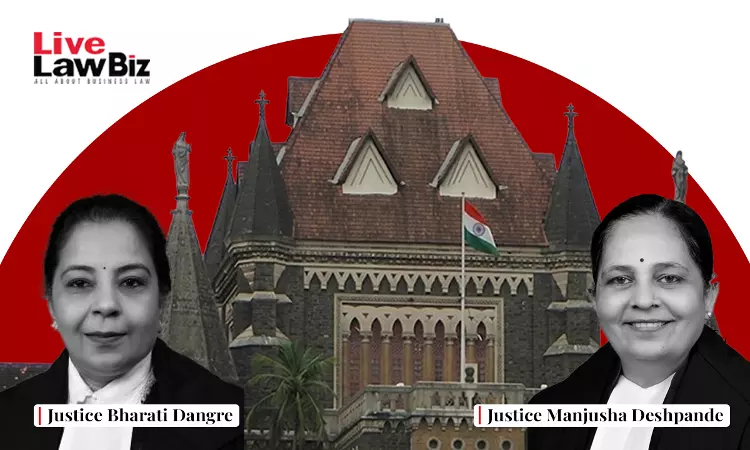
The Bombay High Court on 2 July held that a depository cannot escape liability for loss caused to an investor due to negligence by its depository participant by claiming that the participant became the beneficial owner of the securities after transfer.
A Division Bench of Justices Bharati Dangre and Manjusha Deshpande upheld an arbitral award directing Central Depository Services (India) Ltd. (CDSL) to pay Rs. 86.02 lakh with 9% post award interest to investor Daksha Bhavsar. The judges observed:
“The liability under Section 16 of the Depositories Act to indemnify the beneficial owner is absolute, once a negligent act by Depository Participant is established and it is open for the Appellant as Depository to recover the said amount from the Participant as per its own bye-laws.”
The dispute arose after Bhavsar opened a demat account with CDSL's depository participant, BRH Wealth Kreators Ltd., on 27 June 2018. Along with her late husband, she executed a Power of Attorney in favour of BRH on 29 June 2018.
On 31 July and 23 August 2019, BRH transferred Bhavsar's shares into its own trading member and clearing member accounts. It later pooled these securities with shares belonging to thousands of investors and pledged them with HDFC Bank to secure loans raised for itself. After BRH defaulted, HDFC invoked the pledge and sold the securities, causing Bhavsar to lose her investment.
SEBI debarred BRH from the securities market for seven years on 11 January 2023 following the fraud. On 6 June 2023, the Securities Appellate Tribunal allowed Bhavsar to initiate arbitration against CDSL after she alleged that CDSL failed to supervise BRH despite its statutory obligations.
On 24 July 2023, SEBI had dropped adjudication proceedings against CDSL. However, the arbitral tribunal, through its award dated 30 January 2024, directed CDSL to compensate Bhavsar with Rs. 86.02 lakh and 9% post award interest.
The arbitral tribunal held that CDSL failed to comply with SEBI circulars requiring depositories to supervise depository participants, identify early warning signs of diversion and pledging of client securities, and protect investors. It noted that CDSL's failure attracted liability under Section 16 of the Depositories Act, 1996.
CDSL challenged the award under Section 34 of the Arbitration and Conciliation Act, 1996. The challenge was dismissed on 1 December 2025, following which CDSL approached the High Court.
Before the Division Bench, CDSL argued that it only maintained electronic records and processed securities transfers. It contended that once the shares were transferred into BRH's account, BRH became the beneficial owner and any subsequent pledge fell outside CDSL's statutory role. Bhavsar argued that CDSL was responsible for supervising its depository participant and implementing SEBI's investor protection framework.
Rejecting CDSL's submissions, the Court held that the statutory scheme imposed continuing supervisory obligations on depositories and they could not describe themselves as mere record keepers. It noted that BRH acted both as a stock broker and a depository participant and fraudulently pledged securities belonging to 9,493 investors for its own borrowings.
The Bench held that the Depositories Act contemplated continuing involvement of a depository even after securities were transferred. It observed:
“The indirect involvement of the Depository is evident from Section 12 of the Depositories Act when a beneficial owner is authorized to create a pledge or hypothecation in respect of a security owned by him with the previous approval of the Depository and Sub-section (2) of Section 12 mandate it for every beneficial owner to give an intimation of such pledge or hypothecation to the Depository and such Depository shall make entries in its record accordingly.:
The Court also held that even if BRH became the beneficial owner of the securities, it was required to inform the depository about the pledge and ensure that the transaction was properly recorded. It relied on Clause 2.4.3 of SEBI's Circular dated 26 September 2016, which prohibited stock brokers from using clients' securities for proprietary purposes.
Further, the Division Bench referred to SEBI's Early Warning Mechanism Circular dated 17 December 2018, which required depositories to identify suspicious transfers and pledge transactions. It found that CDSL failed to implement the mandatory safeguards despite warning signs and held that there was no perversity or patent illegality in the arbitral award.
Accordingly, the High Court dismissed the appeal. It however, granted CDSL six weeks' protection from coercive recovery proceedings.
Appearances for appellant (Central Depository Services (India) Ltd.): Senior Advocates Ravi Kadam and Pranav Badheka, with Advocates Rohan Kadam, Vaibhav Singh, Radhika Indapurkar, Rahil Shah, Manas Kotak and Pranav Chandhoke, instructed by Veritas Legal.
Appearances for respondent no. 1 (Daksha Narendra Bhavsar): Advocates Karl Tamboly, Harsh Moorjani, Priyanka Chaddha, Abhay Dhadiwal and Vidhi Karia, instructed by Jayakar & Partners.