
Delhi High Court Upholds Arbitral Award, Says Tribunal Cannot Revisit Merits After Passing Award
Shivani PS
16 July 2026 12:19 PM IST
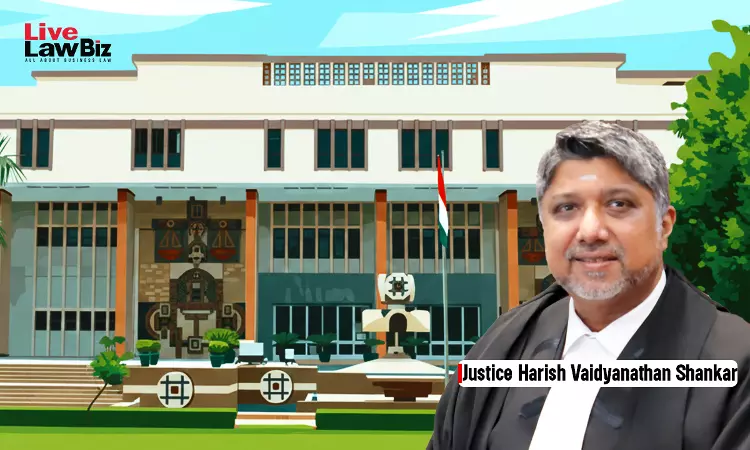
The Delhi High Court has held that once an arbitral award is passed, the arbitral tribunal becomes functus officio and cannot reopen the merits of its decision. Its powers thereafter are confined to correcting computational, clerical, typographical, or similar errors.
Justice Harish Vaidyanathan Shankar delivered the ruling while dismissing cross-petitions filed by Supreme Advertising Private Limited and Genus Power Infrastructures Limited.
The court observed, "Once an award is rendered, the learned Tribunal becomes functus officio except to the limited extent preserved under the A&C Act. Section 33 of the A&C Act constitutes one such statutory exception and permits correction of computational, clerical, typographical and similar errors occurring in the award."
The dispute arose from contractual arrangements for electrification projects awarded by the Uttar Pradesh Power Corporation Limited and Jaipur Vidyut Vitran Nigam Limited. Genus Power acted as the lead bidder for the projects, while Supreme Advertising carried out survey, erection and civil works.
Disputes later emerged over execution of the works, unpaid bills, reconciliation of materials, alleged shortages and business losses.
An arbitral tribunal delivered its award on March 7, 2014. It later issued a modified award after correcting computational, clerical and transcription errors. Supreme Advertising argued that the tribunal had exceeded its jurisdiction by effectively reviewing its earlier decision. Genus Power maintained that the modifications were confined to accidental errors that could be corrected after the award.
Rejecting the challenge, the court held that the tribunal had remained within the narrow limits of its corrective jurisdiction. It found that the tribunal had rejected requests falling outside the scope of permissible corrections.
The modifications it allowed were confined to computational, clerical and transcription errors. They did not involve a fresh determination of liability or entitlement.
The court observed, "The determinative test is not whether the numerical outcome changed but whether the learned tribunal reopened the adjudicatory process." Finding that no such reopening had taken place, it upheld the modified award.
The court also ruled that Supreme Advertising could not question the tribunal's composition after participating in the arbitration without objection. It further held that Genus Power's challenge merely sought a reappreciation of evidence, which falls outside the limited scope of judicial review. Accordingly, the court dismissed both petitions and upheld both the original and modified awards.
For Supreme Advertising Pvt. Ltd.: Senior Advocate Dharmesh Misra, with Advocates Prateek Gupta, Pulkit Agarwal and Vishakha Kaushik.
For Genus Power Infrastructures Ltd.: Advocates Dr. Amit George, Ruchir Mishra, Sanjiv Kr. Saxena, Mukesh Kr. Tiwari, Reba Jena Mishra and Poonam Shukla.