
Delhi High Court Sets Aside Arbitral Award After Tribunal Relied On Pre-Contract Notes To Alter Contract Terms
Shivani PS
19 Aug 2026 12:03 PM IST
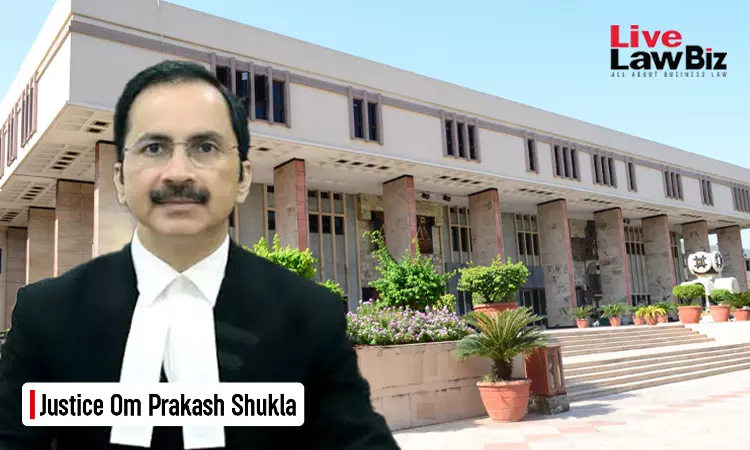
The Delhi High Court has partly set aside an arbitral award after finding that the majority tribunal had relied on pre-contract cover notes and discussions to alter the terms of an executed insurance policy.
Justice Om Prakash Shukla held that the tribunal could not travel beyond the policy and insert terms that were not part of the executed contract.
The court observed, “The majority members of the Tribunal acceded their jurisdiction by travelling beyond the executed policy to insert words based on a precontract cover notes. An Arbitral Tribunal is a creature of the contract and cannot rewrite explicit contractual provisions."
The dispute concerned a Contractor All Risk Insurance Policy taken by Transtonnelstroy Afcons JV Chennai Metro Limited from Oriental Insurance Company Limited for a Chennai Metro project.
The project, awarded in January 2011, involved the design and construction of underground stations and associated works under Package UAA-01 and was valued at approximately ₹2,597 crore. The insurance policy was taken in February 2011 for a premium of ₹7.8 crore.
The policy prescribed a deductible of 5% of the claim amount, subject to a minimum of ₹50 lakh, for Act of God, major perils and maintenance. For tunnel collapse, including Act of God and normal risks, and design defect, the deductible was 5% subject to a minimum of ₹1 crore.
In December 2015, heavy rainfall and flooding damaged the project sites. Oriental Insurance's surveyor recommended an interim payment of ₹3 crore on June 15, 2016, which the insurer released on August 23, 2016. The policy was later extended from August 1, 2016 to April 30, 2018, with the same deductible terms.
The final survey report put the gross liability at ₹7.38 crore and applied the Act of God excess clause, with a minimum deductible of ₹50 lakh. Oriental Insurance later offered ₹2.29 crore after making two separate ₹1 crore adjustments
One was made by applying the tunnel-risk/collapse deductible, while the other related to an alleged excess payment under a separate policy.
Transtonnelstroy Afcons accepted the amount under protest and invoked arbitration on April 18, 2019. The three-member tribunal rejected the adjustment relating to the separate policy, holding that the two insurance contracts were distinct.
By a 2:1 majority, however, the tribunal upheld the tunnel-risk deduction. It held that “tunnel risk” had been omitted from the policy due to a typographical error and relied on pre-contract cover notes and discussions while interpreting the deductible schedule. The minority arbitrator disagreed and held that the tunnel-risk/collapse deductible should not have been applied.
Transtonnelstroy challenged this part of the award under Section 34 of the Arbitration and Conciliation Act, 1996, seeking the ₹1 crore claim along with interest and costs.
It argued that the majority tribunal had gone beyond the policy by relying on pre-contract negotiations and cover notes to alter its terms. Oriental Insurance defended the award, arguing that the majority had taken a plausible view that should not be disturbed.
The high court rejected the defence, finding patent illegality and jurisdictional error in the majority award.
It held that once a formal insurance policy is issued, the rights and obligations of the parties are governed by its terms, relying on the Supreme Court's decision in K. Nagendra v. New India Insurance Co. Ltd
The court noted that Oriental Insurance had admitted in its statement of defence, filed after eight years, that “tunnel risk” was omitted due to a typographical error.
Yet the policy was subsequently extended without correcting the alleged omission. The insurer had neither filed a counter-claim seeking rectification nor issued a mandatory policy endorsement correcting the terms.
The majority was also faulted for refusing to determine whether the damage occurred in the station or tunnel area, even though that question was relevant to applying a tunnel-specific deductible. The court noted that Oriental Insurance's own witness, confirmed during cross-examination that zero loss occurred in the tunnel area.
The high court held the findings to be perverse, patently illegal and opposed to the fundamental policy of Indian law. It therefore allowed the petition and set aside the majority award to the extent of its findings on Issue C, which concerned the ₹1 crore tunnel-risk/collapse deduction.
For Petitioner (Transtonnelstroy Afcons JV Chennai Metro Limited): Senior Advocate Anil K. with Advocates Deepesh, Himanshu Gulliya, Vishal Tyagi, Harsh Gautam and Bindiya Logawney.
For Respondent (Oriental Insurance Company Limited): Advocates Amandeep Singh and Pradeep Desodya.