
Delhi High Court Says Failed Conciliation Talks Cannot Be Used To Decide Arbitration Claims
Shivani PS
11 Sept 2026 12:00 PM IST
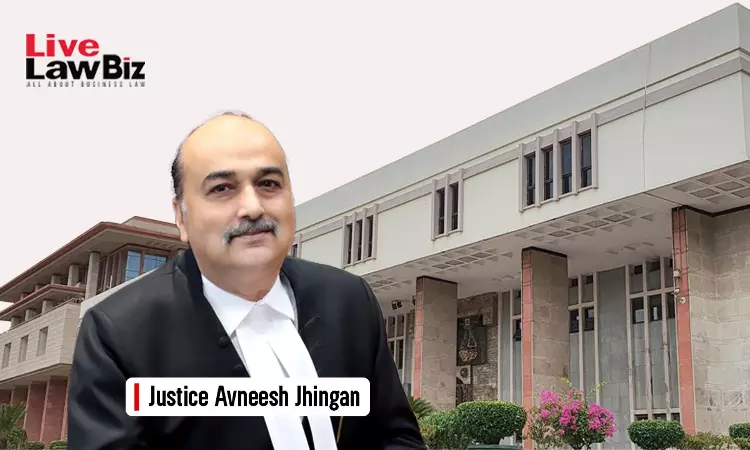
The Delhi High Court has ruled that material recorded during unsuccessful conciliation cannot later be relied upon to decide the same dispute in arbitration.
Justice Avneesh Jhingan observed that the confidentiality of such proceedings must continue even after a settlement attempt fails.
“The proceedings during conciliation cannot be considered and relied upon in case the arbitration of dispute is necessitated. The proceedings during conciliation are different but when an issue is contested equal opportunity is to be provided to both the parties to present their case,” the court observed.
It added that when an issue remains contested, both parties must be given an equal opportunity to present their case.
The ruling came in a challenge by Eco Green Buildtech Pvt Ltd against arbitral awards in its dispute with Vikartan Infrastructure Pvt Ltd over construction of the Sikka Kamya Greens project in Sector 10, Greater Noida. The court ultimately set aside both the February 28, 2023 award and March 27, 2023 additional award.
The dispute concerned delays, release of payments, and responsibility for prolongation of the work. Vikartan attributed the delay to Eco Green, while Eco Green blamed Vikartan for inadequate manpower and machinery and abandonment of the work.
During the arbitration, the parties attempted to settle the dispute through conciliation. A procedural order recorded that Eco Green was broadly satisfied with the Local Commissioner's report on the work at the site, subject to minor computational variations. It also recorded that the parties were hopeful of settling their claims and counterclaims. The settlement failed.
The tribunal later relied on material recorded during the conciliation while deciding the arbitration. The court held that this was impermissible.
“In case of an unsuccessful settlement through alternative dispute resolution methods, the confidentiality of such proceedings shall be kept alive,” the court observed.
The insights from those proceedings, it added, should not be brought before the court.
The court relied on Supreme Court decisions recognising confidentiality as an important feature of mediation and conciliation. Those decisions explain that parties may make statements, offers, or proposals during settlement discussions that they would not otherwise make in adjudication. Such material should not later be used against them if the settlement fails.
The court also found several damages awards unsupported by sufficient evidence.
The tribunal had awarded ₹1.04 crore for idling of rented resources, although there was no evidence of the actual rent paid. It quantified the amount using its experience in the construction field. The court held that the tribunal's expertise could not replace Vikartan's burden to prove the actual loss or damage suffered.
A ₹2.84 crore award for additional overheads was also set aside. The tribunal had relied on its personal experience and CPWD circulars to quantify the amount, but there was no evidence of the additional expenditure actually incurred. The court also noted that the circulars had not been put to Eco Green for its response, in violation of Section 24(3) of the Arbitration and Conciliation Act. This provision requires the tribunal to give each party a full opportunity to present its case.
The court similarly set aside the award for material lying at the site. Eco Green's acceptance of the Local Commissioner's report during conciliation could not be treated as acceptance for the purpose of arbitral adjudication. The court also found insufficient evidence to establish the ownership or value of the material.
The award for loss of profit also failed. Vikartan had relied on the Hudson formula, which is a method used to estimate loss of profit in construction disputes. The court stressed that using the formula does not remove the need to prove that an actual loss was suffered. The tribunal's personal expertise and an unproved trade practice could not substitute for that evidence.
The court did, however, reject Eco Green's separate challenge that the arbitrator's mandate had expired. Section 29A(1) requires an arbitral tribunal in a non-international commercial arbitration to make its award within 12 months of completion of pleadings.
The court found that the relevant rejoinder was filed on May 10, 2022, although it was dated February 25, 2022. The February 28, 2023 award was therefore within the prescribed period.
The court consequently allowed Eco Green's petition and set aside both awards.
For Petitioner (Eco Green Buildtech Pvt Ltd): Advocates S.K. Maniktala, Udit Maniktala, Akshay Sharma, Sanchit Jain, Vikas Rana, Shikhar Prakash and Mohit Sharma.
For Respondent (Vikartan Infrastructure Pvt Ltd): Senior Advocate Somnath Bharti, with Advocates Bhupesh Narula, Rinku Narula, Anurag Ekka and Kanishk Taneja.