
Delhi High Court Quashes ₹2.30 Crore Arbitral Award Against IRCTC In Meal Tariff Dispute
Shivani PS
25 May 2026 12:23 PM IST
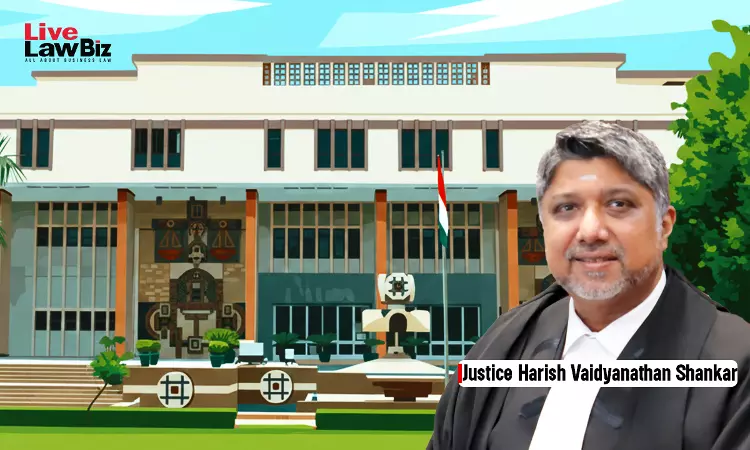
The Delhi High Court has set aside an arbitral award directing Indian Railway Catering and Tourism Corporation Ltd. (IRCTC) to pay ₹2.30 crore to Foodworld in a dispute over reimbursement for second regular meals and welcome drinks under railway catering contracts.
Justice Harish Vaidyanathan Shankar held that the controversy was substantially covered by the Supreme Court's ruling in Indian Railways Catering and Tourism Corp. Ltd. v. Brandavan Food Products.
“The interpretation adopted by the learned Arbitrator in the present matter is directly contrary to the binding legal position declared by the Hon‟ble Supreme Court and, consequently, falls foul of the settled principles governing patent the illegality and contravention of the fundamental policy of Indian law, as elucidated in OPG Power Generation (supra) and the Brandavan case itself." the court observed.
The dispute arose from railway catering contracts under which Foodworld supplied onboard catering services on trains governed by Railway Board catering policies and tariff circulars.
Foodworld claimed that although the Railway Board's October 23, 2013 circular restored regular meals in place of combo meals, caterers continued to be reimbursed for the second regular meal only at the lower combo meal tariff despite supplying regular meals. It also sought reimbursement for welcome drinks introduced under a Railway Board circular dated August 6, 2014.
An arbitral tribunal accepted the claims and, by an award dated August 28, 2023, directed IRCTC to pay ₹2,30,40,995 along with 12% interest and ₹1 lakh towards litigation costs.
IRCTC argued that the issues were substantially covered by the Supreme Court's November 7, 2025 judgment in Brandavan Food Products, which held that arbitral tribunals could not interpret railway catering contracts contrary to binding Railway Board circulars forming part of the contractual framework.
It further contended that the arbitral tribunal ignored binding Railway Board circulars dated October 23, 2013 and August 6, 2014, which governed the parties' contractual relationship.
Foodworld argued that the present case stood on a different factual footing because the May 27, 1999 commercial circular considered in Brandavan did not form part of the present contractual framework. It also relied on Clause 3.5.4 of the tender document dealing with modification of menus, tariffs and catering charges to contend that the dispute was distinguishable.
Rejecting the contention, the High Court held that the controversy was substantially identical to the one considered by the Supreme Court.
The Court noted that while its power to interfere with arbitral awards is narrowly circumscribed, intervention was justified here because the award ran contrary to binding Railway Board policy circulars as well as the legal position settled by the Supreme Court.
It pointed out that those Railway Board circulars remained in force throughout the relevant contractual period, from the execution of the catering agreements in 2014 until the policy was revised prospectively in October 2019.
According to the Court, the arbitrator erred in proceeding on the basis that restoring regular meals in place of combo meals automatically entitled caterers to reimbursement at full regular meal tariffs, even though the Railway Board had expressly retained the lower combo meal tariff for the second regular meal.
It further held that since Foodworld entered into the agreements with full knowledge of the binding Railway Board circulars, the arbitral tribunal could not interpret the contracts contrary to those policy directives.
Holding the award to be patently illegal and contrary to the fundamental policy of Indian law, the High Court allowed IRCTC's petition and set aside the arbitral award.
For Petitioner (Indian Railway Catering and Tourism Corporation Limited): Advocates Harshit Agarwal, Aasheesh Gupta, Kamal Kumar, Deepesh Parashar.
For Respondent (Foodworld): Advocate Naresh Kumar Thanai.