
Interim Relief Provision In Arbitration Act Cannot Be Invoked To Revive Terminated Contract: Delhi High Court
Shivani PS
16 April 2026 2:39 PM IST
The Delhi High Court has held that where an agreement has, prima facie, ceased to subsist, courts cannot grant interim relief under Section 9 of the Arbitration and Conciliation Act, 1996 in a manner that effectively revives such a contract.
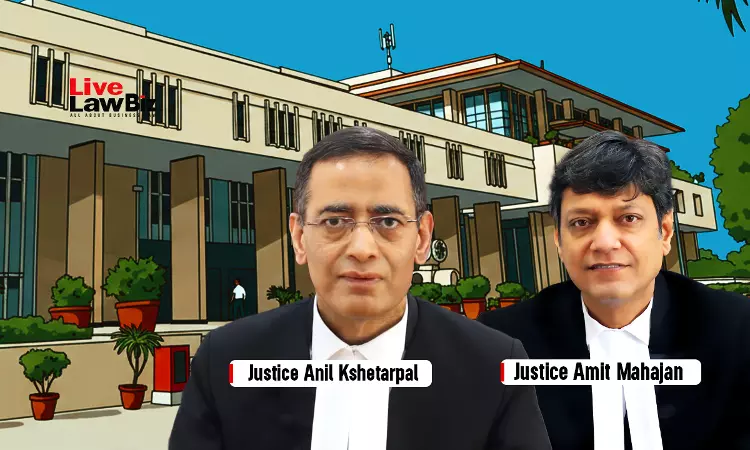
Dismissing an appeal filed by JLT Energy 9 SAS, a Division Bench of Justice Anil Kshetarpal and Justice Amit Mahajan upheld a Single Judge's refusal to restrain Hindustan Cleanenergy Limited from creating third-party rights in its solar project assets.
The court found that the Share Purchase Agreements (SPAs) stood automatically terminated upon non-fulfilment of pre-closing conditions within the agreed timeline.
“Where, upon a prima facie examination of the contractual framework and the material placed on record, the Court arrives at the conclusion that the underlying Agreement has ceased to subsist, the jurisdiction under Section 9 cannot be invoked to grant interim relief so as to resurrect or revive a terminated contract. Grant of interim protection in such circumstances would amount to granting final relief in the guise of an interim measure and would run contrary to the settled principles governing Section 9,” the Bench observed.
The Court also addressed the effect of the emergency arbitral order obtained by JLT Energy, making it clear that such orders do not bind courts exercising jurisdiction under Section 9.
“The Emergency Award/Order, founded on a lower and provisional standard and rendered without the benefit of the complete evidentiary record available before the Court in the Section 9 proceedings, could not govern or dictate the outcome of the Appellant's case,” it said.
The dispute arose from two Share Purchase Agreements dated December 31, 2024. JLT Energy, a French renewable energy developer, had agreed to acquire solar projects in Tamil Nadu and Bihar from Hindustan Clean Energy. The agreements were structured as part of a composite transaction, with completion of one forming a condition precedent for the other.
A central condition under the SPAs was the conversion of project land from agricultural to non-agricultural use. The parties had agreed on a Long Stop Date of April 30, 2025, which was later extended to May 31, 2025.
Clause 5.6 of the agreements stipulated that failure to fulfill the conditions within this period would result in automatic termination. The Court noted that this provision was “clear, unambiguous, and self-operative,” leaving no discretion once the conditions remained unmet.
JLT Energy invoked arbitration before the Singapore International Arbitration Centre on August 7, 2025 and obtained an emergency order on August 28, 2025 restraining Hindustan Cleanenergy from creating third-party rights in the project assets. It then approached the High Court under Section 9 seeking similar interim protection. The Single Judge declined relief on January 6, 2026, leading to the present appeal under Section 37.
Before the Division Bench, JLT Energy argued that the contractual conditions had been modified through correspondence and that the emergency arbitrator's order ought to be taken into account. It also contended that refusal of interim relief would render the arbitral proceedings infructuous.
Hindustan Cleanenergy, on the other hand, maintained that the agreements stood terminated upon non-fulfilment of conditions within the extended timeline. It emphasised that any amendment required a formal written agreement in terms of the contractual framework, which had not been executed.
Agreeing with this position, the court held that the SPAs expressly required amendments to be in writing and executed by all parties. Draft agreements and email exchanges, it found, fell “manifestly short” of these requirements.
The bench noted that the failure to meet the conditions by May 31, 2025 set off Clause 5.6, bringing the agreements to an end. Granting interim protection at that stage, it said, would in effect hand the appellant what it could only seek as final relief, and would upset the commercial arrangement the parties had agreed to.
It also addressed the reliance placed on the emergency arbitral order. Where the agreements are governed by Indian law, the Court said, questions about whether the contracts survive, whether they can be enforced, and whether interim relief should be granted have to be tested within the framework of the Arbitration and Conciliation Act. The SIAC Rules, or the standard applied by an Emergency Arbitrator, do not override that exercise.
There was also the question of balance. JLT Energy had not paid any consideration. At the same time, the assets in issue were valued at around USD 12 million. Continuing restraints on those assets would place a disproportionate burden on Hindustan Cleanenergy.
Given the narrow scope of interference under Section 37, the Bench saw no reason to disturb the Single Judge's decision. It found no perversity or patent illegality in the approach taken.
The appeal was dismissed. The court, however, made it clear that the arbitral tribunal remains free to examine the disputes independently and decide them on their own merits.
For Petitioner (JLT Energy 9 SAS): Advocates Rajshekhar Rao, V.P. Singh, Meherunissa Anand, Asif Ahmed, Shailja Rawal, Suneel Kumar, Khushi Mittal.
For Respondent (Hindustan Cleanenergy Limited & Ors.): Advocates Jayant Mehta, Atul Shanker Mathur, Prabal Mehrotra, Shubhankar, Pallav Arora.