
Contractual Bar On Damages Does Not Exclude Right To Restoration Of Benefits: Bombay High Court Modifies Arbitral Award
Shivani PS
31 March 2026 3:01 PM IST
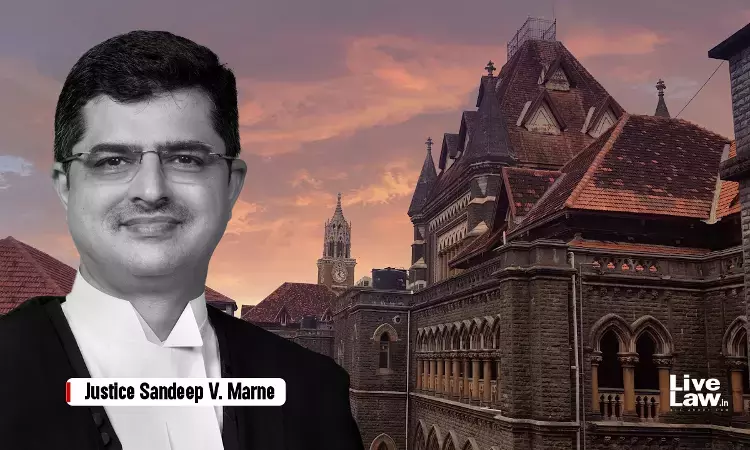
The Bombay High Court has held that a contractual clause barring damages or compensation in a redevelopment agreement is enforceable but does not restrict the statutory right of a developer to seek restoration of benefits under Section 64 of the Indian Contract Act, 1872.
Justice Sandeep V. Marne partly set aside an arbitral award under Section 34 of the Arbitration and Conciliation Act, 1996, holding that while the arbitrator was justified in denying damages in view of Clause 22 of the Development Agreement, the rejection of the developer's claim for restoration of benefits was erroneous.
The court upheld the award directing SSD Escatics Private Limited to pay Rs 7,08,53,695.03 to Goregaon Pearl Cooperative Housing Society Limited towards arrears of transit rent and amounts agreed under consent terms, but interfered with the award to the limited extent of permitting restoration of benefits.
On the issue of enforceability of Clause 22, the Court held:
“In my view, a clause in the redevelopment agreement for denial of damages or compensation to the developer can be enforced in law because of the peculiarity of the contract”.
The court held that the arbitrator was bound under Section 28 of the Arbitration Act to decide in accordance with the terms of the contract and was therefore justified in rejecting the claim for damages.
However, the Court clarified that the claim for restoration of benefits stands on a different footing. Distinguishing between compensation under Section 73 and restitution under Section 64 of the Contract Act, the Court observed:
“What is payable under Section 73 of the Act is 'compensation for such loss or damage caused'. On the other hand, what is contemplated under Section 64 of the Contract Act is restoration of 'such benefits' which are received by the party rescinding the contract from the opposite party. No doubt, provisions of Sections 73 and 64 may concurrently apply in relation to termination of the contract. When a party to contract commits breach thereof, the opposite party can rescind the contract and claim compensation under Section 73. At the same time, if a party rescinding the contract has received any benefit under the contract, such party is liable to restore the benefit under Section 64. In a given case, therefore the claim for restoration of benefit can be set off against the claim for compensation under Section 73 of the Act”.
Emphasising that there was no contractual bar on restitution, the Court held:
“I am therefore of the view that there is no clause in the DA which imposes any restriction or prohibition on Petitioner-developer exercising right of restoration of benefits under Section 64 of the Contract Act”.
The dispute arose out of a redevelopment project under a Development Agreement dated September 26, 2007. Construction came to a halt following a stop-work notice dated 4 August 2011. Despite consent terms dated May 16, 2017 fixing liability and timelines, the developer failed to comply with its obligations, including payment of transit rent, leading to termination of the Development Agreement on 9 June 2018.
An arbitral tribunal upheld the termination, directed payment of Rs 7.08 crore to the society, and rejected the developer's counterclaims, including claims for damages and reimbursement of amounts allegedly spent on the project.
The High Court upheld the findings on termination and held that refusal of damages was justified in view of the developer's breaches and Clause 22 of the Development Agreement.
However, on the issue of restitution, the Court held that the arbitrator erred in treating all claims as claims for compensation. It held that only those benefits actually received by the society are liable to be restored under Section 64.
Applying this principle, the court held that the incomplete “bare shell” structure did not constitute a benefit. In contrast, amounts expended towards the acquisition of additional FSI, TDR and land were held to constitute benefits received by the society.
The court held that denial of restoration of such benefits would result in unjust enrichment.
Accordingly, while upholding the award insofar as it granted Rs 7.08 crore to the society and denied damages, the court modified the award to permit restoration of amounts spent on the acquisition of TDR, additional land, and FSI.
For Petitioner (SSD Escatics Private Limited): Advocates Rajiv Narula, Abhishek Bhadang, Tarang Jagtiani.
For Respondent (Goregaon Pearl Cooperative Housing Society Limited): Advocates Mayur Khandeparkar, Tushar Gujjar, Deepak Singh, Lancelot Lewis.