
Contractual Conciliation Process Cannot Be Treated Mandatory For Invoking Arbitration: Orissa High Court
Shivani PS
25 Nov 2026 5:48 PM IST
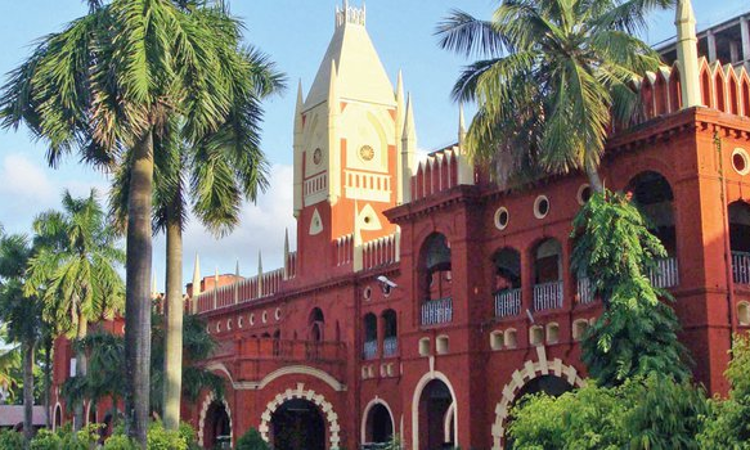
The Orissa High Court has ruled that the conciliation clause in a contract cannot be treated as a precondition for invoking arbitration under the same contract.
The dispute arose from a contract between East Coast Railway and contractor Dillip Kumar Dash.
Under the General Conditions of Contract (GCC), Clause 63 provided for resolution of disputes through conciliation, while Clause 64 provided for arbitration.
“Clause 63 of the GCC has though speaks of the resolution of dispute through conciliation, but the same cannot be treated as a precondition to invoke the arbitration as per Clause 64 of the GCC,The unilateral refusal of Opposite Parties compelling the Petitioner to exercise his option as per the letter of Opposite Parties at Annexure-3 thus cannot prevent the parties for invoking the arbitration clause. Undoubtedly, the power of the Court under Section 11(6) of the Arbitration and Conciliation Act, 1996 to cure the defect and appoint an independent and impartial arbitrator cannot be fettered.” the court ruled.
Acting Chief Justice B.P. Routray appointed advocate Deepali Mahapatra as the sole arbitrator to adjudicate the dispute and directed that the proceedings take place under the aegis of the High Court of Orissa Arbitration Centre.
After Dash raised a dispute through a letter dated July 6, 2026, East Coast Railway asked him to choose between two procedures for appointing an arbitrator.
Under the revised provisions introduced through Amendment Correction Slip No. 10 to GCC-2022, he was required to enter into a supplementary agreement before proceeding with arbitration.
If he opted for the earlier GCC-2020 provisions, he would have to waive the applicability of Section 12(5) of the Arbitration and Conciliation Act, 1996, which renders persons falling within the categories specified in the Seventh Schedule ineligible to act as arbitrators.
Unwilling to accept either condition, Dash approached the High Court under Section 11(6) of the Act, seeking appointment of an independent and impartial arbitrator. He argued that Clause 64 allowed the parties to invoke arbitration and that the railway's conditions could not prevent him from doing so.
In its counter-affidavit, East Coast Railway argued that the application was premature. It contended that Dash should first have approached the General Manager and exercised the appropriate option under Clause 64(3)(b) of the GCC before seeking the High Court's intervention.
During the hearing, however, Deputy Solicitor General of India P.K. Parhi, appearing for the railway, submitted that Dash could not be compelled to exercise his option to avail himself of arbitration under Clause 64 by waiving his right under Section 12(5). He also expressed no objection to the dispute being referred to arbitration.
The court relied on the Supreme Court's decision in Hindustan Construction Company Limited v. Bihar Rajya Pul Nirman Nigam Limited and Others, (2026), which held that an inoperative or defective arbitrator appointment mechanism does not render the underlying arbitration agreement unenforceable. Courts can sever the defective mechanism and appoint an independent arbitrator under Section 11(6) of the Act.
Applying this principle, the High Court held that the railway's insistence on Dash choosing between the two appointment procedures could not prevent the parties from invoking arbitration
The court further held that its statutory power to remedy the defect and appoint an independent and impartial arbitrator could not be restricted.
Allowing the application, the court appointed advocate Deepali Mahapatra as the sole arbitrator. She will enter upon the reference upon communication of the order. The arbitration proceedings will take place under the aegis of the High Court of Orissa Arbitration Centre.
The arbitration petition was accordingly disposed of.
For Petitioner (Dillip Kumar Dash): Advocate S.S. Padhy.
For Respondent (General Manager, East Coast Railway and another): Deputy Solicitor General of India P.K. Parhi and Senior Panel Counsel S.S. Kashyap.