
Conflicting Dispute Resolution Clauses Should Be Interpreted in Favour of Arbitration: Bombay High Court
Shivani PS
14 July 2026 12:03 PM IST
The Bombay High Court has recently held that where a commercial contract contains conflicting dispute resolution clauses, courts should lean in favour of arbitration if the agreement, read as a whole, reflects the parties' intention to resolve disputes through arbitration.
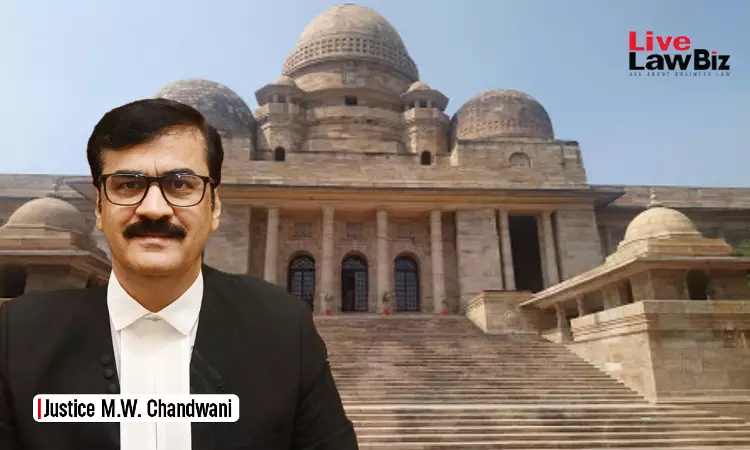
Justice M. W. Chandwani of the Nagpur bench delivered the ruling while deciding an application filed by Sri Buddha–SVEC JV against Western Coalfields Ltd.
The court referred the parties to conciliation before Advocate Harish Thakur and directed that if the process failed, the dispute would stand referred to arbitration before Justice R.K. Deshpande (Retd.), subject to his consent and the disclosure required under the Arbitration and Conciliation Act.
Observing that conflicting drafting should not defeat an otherwise valid arbitration agreement, the court held, "It is worthwhile to mention that when there are conflicting and confusing clauses, the Court shall rule in favour of arbitration, not giving weightage to confusing clauses. The Court should ignore the clauses of the contract which may create confusion about existence of the agreement, since arbitration is aimed at removing bottlenecks or declogging the courts from a docket explosion. In such cases, the Court should rule to advance arbitration."
The dispute arose from a tender floated by Western Coalfields on July 4, 2024 for execution of seven mining jobs. Sri Buddha–SVEC JV emerged as the successful bidder, received the work order on October 30, 2024, and executed the agreement on January 11, 2025.
Western Coalfields issued a seven-day notice on July 19, 2025, alleging that the contractor had failed to improve its performance and was not adhering to the agreed schedule. The joint venture attributed the delays to unseasonal rain and inadequate site conditions, which it claimed had affected production.
A show-cause notice followed, proposing termination of the contract, forfeiture of the performance security or recovery of 20 per cent of the value of the unfinished work, and blacklisting for one year. During a personal hearing on September 15, 2025, Western Coalfields warned that the contract would be terminated if the contractor failed to commit to the project schedule.
According to the joint venture, Coalfields also floated a fresh tender for the same work around that time. The contract was ultimately terminated through communications dated October 27 and 28, 2025. Sri Buddha–SVEC JV thereafter obtained a status quo order in proceedings seeking interim protection and invoked arbitration through a notice dated January 1, 2026. When Coalfields did not act on the notice, the joint venture approached the High Court seeking appointment of an arbitrator.
Western Coalfields argued that the request was premature because the parties had not first gone through the conciliation process required under the contract.
It also maintained that the agreement did not create a binding arbitration arrangement, pointing to the use of the word "may" in one of the dispute resolution clauses. Sri Buddha–SVEC JV countered that the following clause left no room for doubt, as it required disputes to be resolved through arbitration and laid down the entire procedure for doing so.
After examining both clauses, the court held that the agreement did not reflect an absence of an arbitration agreement merely because one provision used permissive language. It noted that the subsequent clause mandated arbitration and also prescribed the appointment of an arbitrator, the venue of arbitration, the replacement of the arbitrator if necessary, and other procedural requirements.
Explaining why Clause 14 reflected the parties' true intention, the court observed, "The golden rule of interpretation of an agreement is to give effect to the intention of the parties. Though, in the last sentence of Clause 13 the word 'May' has been used but, Clause 14 along with a mandate to arbitrate, also provides for appointment of an Arbitrator, place of arbitration, appointment of new Arbitrator in case of death of an Arbitrator and other conditions of arbitration in detail."
The court further noted that the Coalfields had not disputed the existence of the arbitration clause either before the District Judge in the earlier proceedings or before the High Court.
Referring to the parties' conduct, it observed, "The attending circumstances and the material available on record suggests that the parties had intended to agree that in case of failure to resolve the dispute amongest themselves or through conciliation proceedings, the matter shall be referred to arbitration."
On the objection that conciliation had not been attempted before invoking arbitration, the court held that this alone could not defeat the application.
Instead, it directed the parties to first undergo conciliation before Advocate Harish Thakur. If the dispute remains unresolved, it will automatically stand referred to Justice R.K. Deshpande (Retd.) as the sole arbitrator, subject to his availability.
For Applicant (Sri Buddha–SVEC JV): Senior Advocate D. V. Chauhan with Advocate Deoul Pathak.
For Respondent (Western Coalfields Ltd.): Advocate Nachiket G. Moharir.