
Clause Allowing Civil Court Recourse If Arbitration Fails Is Not Arbitration Agreement: Madhya Pradesh High Court
Shivani PS
31 Oct 2026 3:44 PM IST
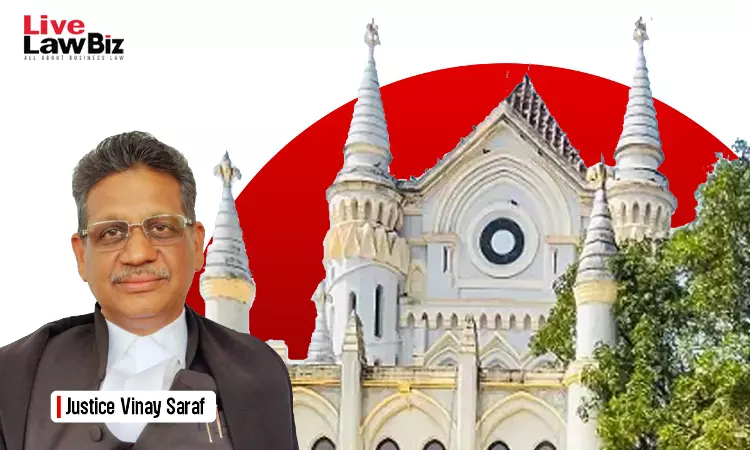
The Madhya Pradesh High Court has refused to appoint an arbitrator in a dispute over Global Buildocon's ₹1.25 crore claim concerning the proposed Global Towers residential project in Indore. It held that a clause allowing parties to approach civil courts if arbitration fails does not constitute a valid arbitration agreement.
A Single Bench of Justice Vinay Saraf ruled that Clause 5 of the development agreement did not make the arbitrator's decision final and binding on the parties. The court observed:
“After hearing counsel for the parties and perusal of documents, especially the Development Agreement Clause 5, this Court is of the view that the Clause 5 cannot be treated as an arbitration clause, because the clause itself provides that if the arbitrators are failed to decide the dispute, the parties will be free to approach Civil Court or any other Court. Meaning thereby, the decision of the arbitrator will not be final and binding upon the parties and the intention of the parties was to approach to the arbitrator for the purpose of resolution of dispute, between the parties and though the word has been used arbitration in the first part of the Clause 5, but the intention of the parties was not to resolve the dispute through arbitration.”
The dispute arose from a development agreement executed on March 26, 2015, and registered on April 15, 2015. It was entered into between Global Buildocon and landowners Harsh Chauhan and another, concerning 1.225 hectares of land at Bada Bangarda in Indore.
The agreement contemplated developing a P+6 multi-dwelling residential complex named Global Towers.
Under the agreement, the landowners were required to renew permissions obtained from the Town and Country Planning Department. They were also required to hand over physical possession of the land after demarcation and measurement.
Global Buildocon alleged that the landowners failed to comply with the planning conditions. It also claimed that part of the land was notified as a green area by the state government, preventing the proposed development.
The developer claimed to have paid ₹1 crore to the landowners. It also claimed to have spent another ₹25 lakh on stamp duty, registration and related expenses.
Through a communication dated March 30, 2026, it sought a refund with interest. The landowners disputed the claim.
When the landowners denied the existence of a valid arbitration agreement, Global Buildocon approached the high court under Section 11(6) of the Arbitration and Conciliation Act, 1996. It sought the appointment of a sole arbitrator.
The developer argued that Clause 5 expressly provided for arbitration. It maintained that allowing parties to approach civil courts if arbitration failed did not invalidate the clause.
It relied on Supreme Court decisions recognising that the parties' intention to arbitrate must be gathered from the agreement as a whole.
The landowners, however, maintained that the clause did not make the arbitrator's decision final and binding. They also disputed the developer's payment claims, stating that only cheques worth ₹37 lakh had been encashed. They further claimed that the remaining cheques had never been handed over to them.
They argued that the clause merely contemplated an attempt at dispute resolution. It did not create an enforceable arbitration agreement.
Examining Clause 5, the court found that the provision allowing parties to approach civil courts if the dispute remained unresolved through arbitration showed that they had not agreed to be bound by the arbitrator's decision.
The court relied on Supreme Court decisions, including K.K. Modi v. K.N. Modi, Jagdish Chander v. Ramesh Chander and Alchemist Hospitals Ltd. v. ICT Health Technology Services India (P) Ltd.
These decisions explain that an arbitration agreement must reflect the parties' intention to have their disputes decided by a private forum. Its decision must also be binding on them.
The court separately examined whether the developer's claim was within limitation.
For this purpose, the court recorded that the development agreement was executed on April 15, 2015, and that the advance amount was paid at the same time. Global Buildocon, however, demanded repayment only on March 30, 2026.
Observing that the limitation period for recovery of money was three years, the court held that the claim was ex facie time-barred.
It also referred to Section 43 of the Arbitration and Conciliation Act, which makes limitation law applicable to arbitration proceedings.
Describing the claim as "dead wood", the court held that it could not be referred to arbitration.
The court accordingly dismissed the application without costs. It clarified that the parties were free to approach the competent civil court for redressal of their dispute in accordance with law.
For Petitioner (Global Buildocon): Senior Advocate Vishal Baheti and Advocate Nipun Soni.
For Respondents (Harsh Chauhan and another): Advocate Aniket Naik.