
Bombay High Court Bars Owners From Stalling Redevelopment Over Disputes On Flat Sizes And Parking
Shivani PS
20 Oct 2026 3:44 PM IST
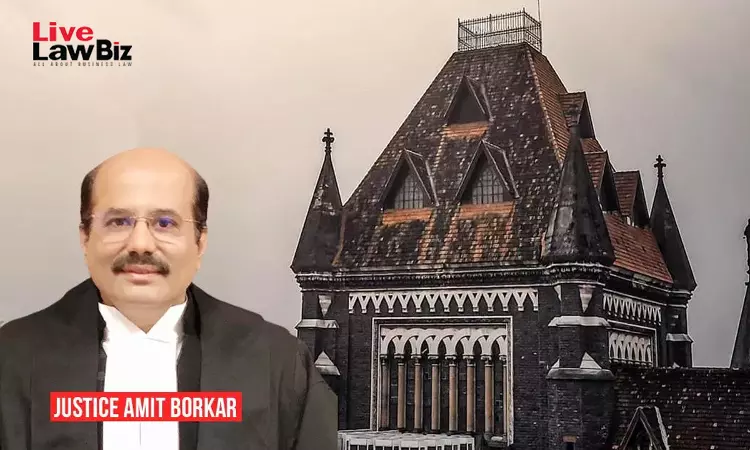
The Bombay High Court on 19 October held that parties cannot obstruct redevelopment or use a housing society to pressure a developer into renegotiating contractual terms when their disputes are covered by an existing agreement providing for arbitration.
Justice Amit Borkar partly allowed a petition filed by Bindu Raheja & Sons LLP against Stephen Francis Coutts and seven others under Section 9 of the Arbitration and Conciliation Act, 1996, granting interim protection to a redevelopment project in Chembur, Mumbai, and directing the owners to withdraw their communication seeking to withhold further redevelopment permissions. The Bench observed:
“However, when a registered Development Agreement is in force and the parties have agreed to resolve their disputes through arbitration, one party cannot use correspondence with the Society merely to force the other party to accept fresh commercial terms.”
The dispute arose from a registered Development Agreement dated 29 November 2024 between Bindu Raheja & Sons LLP and the property owners for the redevelopment of a property known as “Delana” in Chembur, Mumbai. Under the agreement, the owners were entitled to eight flats measuring 600 square feet each and four parking spaces. The developer was also responsible for settling claims by non-consenting occupants at its own cost.
On 6 and 7 November 2025, the owners questioned the agreed terms, alleging that the developer had promised flats measuring 900 square feet each. On 17 December 2025, they wrote to the housing society requesting it to withhold further redevelopment permissions, citing a dispute with another occupant.
The dispute with the occupant was subsequently settled through consent terms dated 18 June 2026. However, the owners allegedly refused to withdraw their communication, following which the Society withheld its final No Objection Certificate (NOC).
On 16 July 2026, the owners issued a legal notice demanding eight flats measuring approximately 1,000 square feet each and two parking spaces per flat. Bindu Raheja & Sons LLP rejected the demands on 1 August 2026, maintaining that the owners were attempting to renegotiate the existing agreement.
Having invested over Rs. 15 crore in the project, Bindu Raheja & Sons LLP approached the High Court seeking protection against obstruction to redevelopment. The owners opposed the petition, arguing that the developer had not issued an arbitration notice, lacked a genuine intention to commence arbitration and was seeking relief that would effectively resolve the underlying contractual dispute.
Rejecting the objection concerning the arbitration notice, the Court held that interim protection could be sought before arbitration commenced, provided the applicant genuinely intended to pursue arbitral proceedings.
It examined Clause 85 of the agreement, which provided that construction could not be stopped over contractual disputes, except those concerning title to the property. It held that disagreements over flat sizes and additional benefits did not constitute title disputes. It observed:
“From the material placed before me, the dispute about the size of the flats and additional benefits is not shown to be a dispute relating to title. Therefore, this clause supports the Petitioner's request that redevelopment should not be stopped merely because the parties have a dispute regarding their contractual rights.”
Further, the Bench held that an order preventing obstruction and requiring the parties to act in accordance with the existing agreement would not, by itself, finally determine the developer's claim for specific performance. It said:
“An order preventing obstruction, protecting the property and requiring the parties to act according to their existing Agreement does not, only because of that reason, finally decide the Petitioner's claim for specific performance.”
At the time of pronouncement, the Court was informed that the owners had subsequently terminated the agreement. It permitted Bindu Raheja & Sons LLP to pursue appropriate legal remedies.
It restrained the owners from obstructing redevelopment, creating third-party rights inconsistent with the agreement or using communications with the Society to force renegotiation. It directed the owners to withdraw their 17 December 2025 communication within seven days, insofar as it sought to withhold permissions over contractual disputes, and required the developer to invoke arbitration within fourteen days.
The Bench stated that the interim protection would remain in force for ninety days, subject to commencement of arbitration, and left disputes over additional flat area and parking spaces to arbitration and clarified that the Society remained free to decide whether to grant the final NOC.
Accordingly, the High Court disposed of the petition.
Appearances for petitioner (Bindu Raheja & Sons LLP): Advocates Hasmit Trivedi and Indra Kumar Lahoti, instructed by Praxis Legal.
Appearances for respondents (Stephen Francis Coutts & Ors.): Advocate V. Mannadiar, instructed by Mannadiar & Co.