
Bombay High Court Refuses EuroChem Plea To Freeze Tecnimont Assets Over RUB 171 Billion Russian Decree
Shivani PS
4 Nov 2026 3:06 PM IST
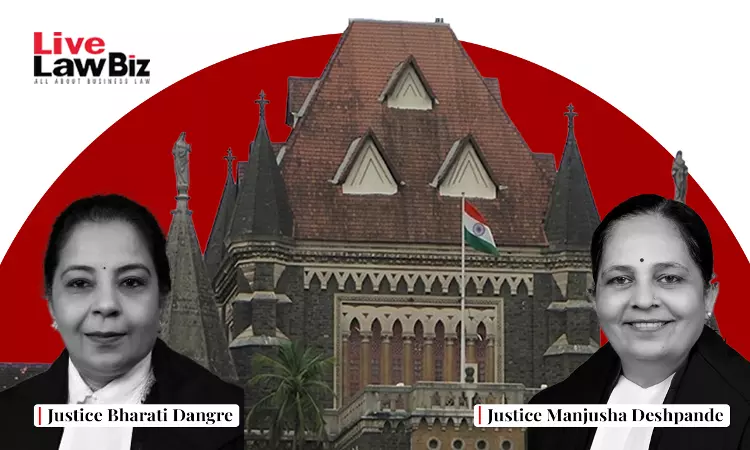
The Bombay High Court on 29 October dismissed an appeal filed by EuroChem North-West-2 against the refusal to freeze the Indian assets of Italian engineering company Tecnimont, following a Russian court judgment awarding the former approximately RUB 171.12 billion.
A Division Bench of Justices Bharati Dangre and Manjusha Deshpande held that a foreign judgment does not automatically entitle a party to interim protection in India and that the requirements for granting an injunction must be independently satisfied. The judges observed:
“Therefore, whenever an opportunity comes for consideration of grant of injunction or any interim order pending the suit, the parameters which are applicable under Order XXXIX Rule 1(b) must apply with equal force”.
The dispute arose from three contracts executed on 1 June 2020, under which EuroChem engaged Tecnimont and its Russian subsidiary, MT Russia, to construct a fertiliser complex in Russia. The contracts provided for London-seated arbitration under the rules of the International Chamber of Commerce (ICC).
Following international sanctions imposed after Russia's invasion of Ukraine, Tecnimont and MT Russia suspended work. EuroChem terminated the contracts on 4 August 2022, following which Tecnimont and MT Russia initiated ICC arbitration. EuroChem participated in the arbitration and filed a counterclaim.
However, on 1 September 2025, EuroChem approached the Arbitrazh Court, Moscow, which passed a judgment awarding RUB 171.12 billion against Tecnimont and MT Russia. The judgment was upheld on 4 March 2026, while the ICC arbitration remained pending.
Subsequently, EuroChem filed a commercial suit in India seeking enforcement of the Russian judgment, along with interim relief restraining Tecnimont from disposing of or removing its assets. A Single Judge refused interim protection on 8 June 2026, prompting EuroChem to file the appeal.
Examining the jurisdiction of the Russian court, the Court held that international sanctions did not automatically justify invoking its exclusive jurisdiction despite the existence of an arbitration agreement. The party seeking to invoke that jurisdiction had to establish actual obstacles to accessing justice. It observed:
“Therefore, for invoking the exclusive jurisdiction, the Arbitrazh Court must satisfy itself that the sanctions have resulted in obstacles for accessing justice for the Appellant before the Courts of the foreign jurisdiction, including the ICC Arbitration and the Courts of the United Kingdom, and Para 4 do not contemplate the automatic creation of obstacles or an artificial situation amounting to an obstacle."
The Bench also considered Tecnimont's objections concerning compliance with the principles of natural justice. It had alleged that approximately 20,000 pages of documents were introduced through amended claims just 10 days before the final hearing.
However, the Russian court rejected its request for an adjournment to respond to the additional material. Tecnimont also contended that the court did not entertain its statement of defence or request for an independent expert examination.
The judges noted that the Russian proceedings prima facie raised concerns about procedural fairness. It emphasised that compliance with the principles of natural justice is fundamental across jurisdictions and that adherence to basic procedural safeguards is distinct from the factual or legal correctness of a judgment.
Turning to Sections 13 and 14 of the Code of Civil Procedure, 1908 (CPC), which govern the conclusiveness of foreign judgments and the presumption regarding the jurisdiction of foreign courts, the Court clarified that the statutory presumption under Section 14 concerns only the jurisdiction of the foreign court and does not establish the conclusiveness of its judgment. It observed:
“Section 13 of CPC do not provide for any presumption but Section 14 prescribe a presumption as regards sub-clause (a) of Section 13, namely that the foreign judgment has been pronounced by a Court of competent jurisdiction but this presumption is a rebuttable one, permitted to be rebutted, when 'the contrary appears on record' or 'it is displaced by proving want of jurisdiction'.”
Further, the Bench distinguished between judgments delivered by courts in reciprocating territories, which may be directly executed in India, and those delivered in non-reciprocating territories, which require a fresh civil suit. It explained that this distinction affects the burden of establishing conclusiveness and the stage at which objections to a foreign judgment may be examined.
Considering the existing arbitration agreement, the pending ICC proceedings and the objections concerning the Russian judgment, it held that EuroChem had failed to establish a prima facie case, balance of convenience or irreparable loss warranting interim protection.
Accordingly, the High Court dismissed the appeal and upheld the Single Judge's refusal to grant an injunction.
For EuroChem North-West-2 (Appellant): Senior Advocate Zal Andhyarujina, assisted by Advocates Prateek Bagaria, Maithili Parikh, Jimisha Dalal, Nitansha Nema, Mihir Govande and Shrilakshmi Sankaranarayanan, instructed by Singularity Legal.
For Tecnimont S.P.A. (Respondent): Senior Advocate Vikram Nankani, assisted by Advocates Alok Jain, Samarth Saxena, Ria Gard, Aditya Athreya and Mihir Beradia, instructed by Quillon Partners.