
Delhi High Court Sets Aside Arbitral Award For Refusal To Examine Key Witnesses Who Left Employment
Shivani PS
6 April 2026 2:54 PM IST
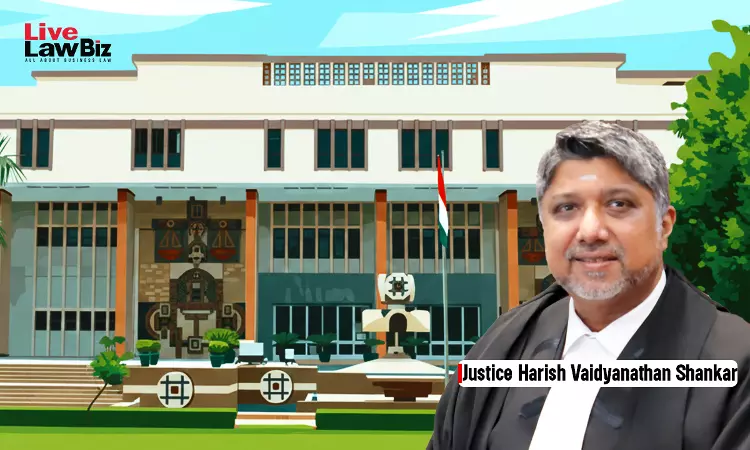
The Delhi High Court on 1 April held that refusing to examine key witnesses solely because they were no longer employees of the company undermines a fair arbitral hearing, particularly when those witnesses were directly involved in the transaction.
Justice Harish Vaidyanathan Shankar set aside an arbitral award in a dispute between Sujit Kumar Jaiswal and Dalmia Research International Pvt. Ltd., holding that by selectively accepting the company's version, the Tribunal deprived him of a fair opportunity to prove his case, contrary to Section 18 of the Arbitration and Conciliation Act, 1996, which mandates equal treatment.
The Court stated:
“In the opinion of this Court, the mere fact that such individuals were no longer in the employment of the Respondent could not have constituted a valid ground for refusing their examination, particularly when their testimony had a direct bearing on the authenticity of the disputed Agreement.
The dispute arose from a vacation ownership and assured rental returns agreement dated 31 July 1996, entered into after negotiations between Sujit Kumar Jaiswal, proprietor of Alark Orient Tibet Teppich Exports, and Anuroadh Srivastava, then Area Sales Representative of Dalmia Research International Pvt. Ltd.
Under the agreement, the company undertook to allot vacation ownership units in its resorts at Mussoorie, Goa, and other locations with assured returns against payments exceeding Rs. 24 lakh.
Jaiswal paid Rs. 17.63 lakh but alleged that the company neither provided the units nor paid the assured returns. When he sought a refund, the company, through its General Manager (Finance), stated in April 1998 that the sales representative lacked authority to enter into the agreement and refused allotment.
After the company declined allotment and ignored legal notices dated 7 August 1998 and 31 August 1999 seeking a refund, Jaiswal initiated winding-up proceedings in 2000. The matter was subsequently referred to arbitration, where an award dated 11 August 2008 dismissed all claims raised by Jaiswal and awarded costs in favour of Dalmia Research International.
Jaiswal approached the Court under Section 34, contending that the arbitrator effectively prevented him from proving his case by rejecting his applications for production of documents and for summoning three individuals associated with Dalmia Research International. to testify on the execution and authenticity of the disputed agreement.
The company defended the award, asserting that the arbitrator acted within his discretion and that the individuals were no longer in its employment.
The Court observed that cross-examination of both parties' agreements had not taken place and held that by selectively accepting the company's documents while blocking Jaiswal's evidence, the arbitrator bypassed the evidentiary rigor required for a fair arbitral process.
Justice Shankar also noted that the Tribunal acted untenably by refusing to summon material witnesses solely because they were no longer employees. The arbitrator failed to examine whether their testimony was necessary to determine the authenticity of the competing agreements, despite their direct involvement in the transaction.
Invoking the doctrine of indoor management, the Court observed that the company could not avoid liability by claiming its representative lacked internal authority, since a third party is entitled to presume proper compliance with internal corporate requirements.
The Bench found the award “perverse, arbitrary, and contrary to the fundamental policy of Indian law,” and concluded that Jaiswal had been “unable to present his case,” justifying interference under Section 34.
Accordingly, the Court set it aside.
Appearances for petitioner (Sujit Kumar Jaiswal): Advocate Hemlata Rawat.
Appearances for respondent (Dalmia Research International Pvt. Ltd.): Advocates Subhranshu Padhi, Aman Varma, Riya Wasade, Minal Mishra, Vandana Bedi.