
Madras HC Refuses Arbitrator Appointment Over Forged Clause, Says Arbitration Is 'Child Of Consent'
Shivani PS
30 Sept 2026 2:55 PM IST
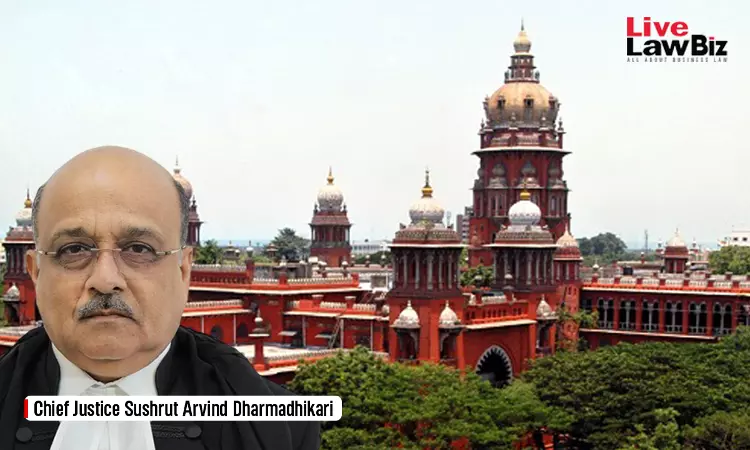
The Madras High Court on 25 September refused to appoint an arbitrator in an employment dispute between former Purchase Manager Chandramouli V. and the American International School Chennai, holding that a challenge to the genuineness of the document containing the arbitration clause goes to the root of whether an Arbitral Tribunal can be constituted.
Chief Justice Sushrut Arvind Dharmadhikari observed that arbitration, being the “child of consent,” cannot proceed where the very document containing the arbitration clause is seriously and credibly alleged to be forged or fabricated. He held:
“It is trite that arbitration is the child of consent, and consent cannot be presumed into existence merely because a document bearing an arbitration clause has been produced. Where the very parentage of that document is disputed and it is alleged to be the offspring of forgery or fabrication, the dispute sheds its purely contractual character and assumes a jurisdictional dimension.”
Chandramouli joined the American International School Chennai as Purchase Coordinator on 4 February 2004 and became Purchase Manager on 1 July 2013. His employment was renewed from time to time, with the latest contract executed on 12 May 2023.
A letter issued the following day purportedly introduced an arbitration clause governing employment disputes. The school alleged that its then Chief Business Officer, to whom Chandramouli reported, later came under scrutiny over alleged financial irregularities. An FIR was registered on 19 March 2025.
The school further alleged that the former officer had, without authority, sanctioned a Rs. 1 crore advance against gratuity to Chandramouli on 19 December 2024. It sought to recall the amount on 23 June 2025. Chandramouli stepped down on 8 August 2025, claiming that he had been orally assured severance and other benefits until May 2026.
After the school sent him a draft severance agreement and final calculation on 3 September, he disputed the calculation and claimed contractual benefits, leave encashment, stipend and retention bonus. The school rejected his claims and maintained that Chandramouli instead owed Rs. 3,16,246.
Chandramouli invoked the arbitration clause in the 13 May letter on 24 April 2026 and nominated a sole arbitrator. The notice was served on 27 April. The same day, the school issued a dismissal notice alleging wrongdoing, which Chandramouli denied on 30 April.
In its reply dated 2 May, the school denied the existence of a valid arbitration agreement. It alleged that the 13 May letter was itself a product of fraud and forgery and had been issued without institutional sanction by the former Chief Business Officer.
Subsequently, Chandramouli approached the High Court seeking appointment of an arbitrator. He maintained that the arbitration clause had never been amended or rescinded and that any dispute over the genuineness of the letter should be decided by the Arbitral Tribunal.
Referring to the Supreme Court's decision in Rajia Begum v. Barnali Mukherjee, the Court reiterated that while a bare allegation of fraud would not derail arbitration, a serious challenge striking at the genesis of the arbitration agreement could render the dispute non-arbitrable at the threshold.
Applying this principle, the Bench noted that the arbitration clause had “no independent existence” and appeared only in the disputed 13 May letter, rather than the employment contract executed a day earlier. It found that no board resolution, delegation, ratification or institutional sanction had been produced to establish that the school authorised the letter.
The Bench also found that the fraud allegation was not merely “a shield raised in haste to avoid the inconvenience of arbitration”, since the criminal investigation involving the officer who allegedly issued the letter predated Chandramouli's severance claims. Holding that the school's consent to arbitration had not been established, it observed:
“Without consent, howsoever elegantly the clause may be drafted, there is no arbitration agreement upon which this Court's jurisdiction under Section 11(6) of the Act can be made to stand.”
Accordingly, the High Court dismissed the petition without costs, while allowing Chandramouli to pursue his severance and allied claims before a competent civil court, where the genuineness of the 13 May letter and the existence of the arbitration clause could be tested on evidence.
Appearances for petitioner (Chandramouli V.): Advocate M.S. Seshadri.
Appearances for respondent (American International School Chennai): Advocate Edward James.