
Arbitration Is Founded On Party Autonomy; Tribunal Bound By Contract: Delhi High Court
Shivani PS
21 May 2026 5:52 PM IST
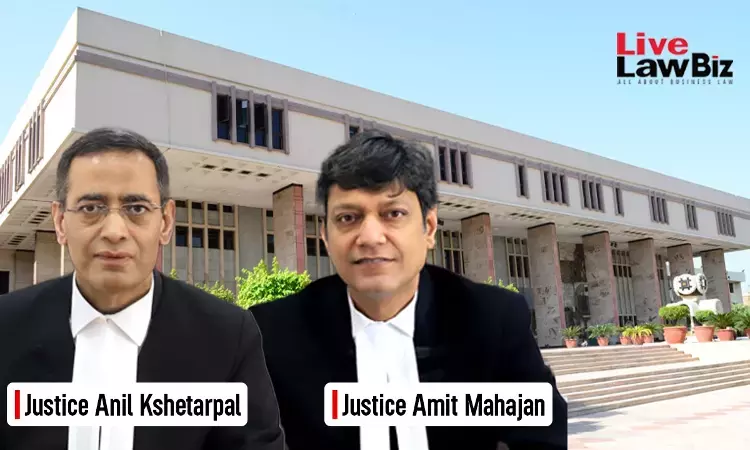
The Delhi High Court has set aside a Single Judge order that upheld an arbitral award directing MMTC to release ₹2.21 crore to Knowledge Infrastructure, holding that the arbitral tribunal ignored the express terms of the parties' contract
A Division Bench of Justice Anil Kshetrapal and Justice Amit Mahajan ruled, “The Tripartite Agreement does not stipulate that the Appellant must first discharge liabilities attributable to Respondent No.1 and thereafter seek reimbursement through a separate indemnificatory mechanism. Thus, such an interpretation by the SB travels beyond the four corners of the Agreement.”
The Court also underscored that “arbitration proceedings are founded upon party autonomy” and that the arbitral tribunal, “being a creature of the contract, remains bound by the allocation of rights and liabilities consciously agreed upon between the parties.”
The dispute arose from a tripartite agreement dated August 1, 2012 between MMTC, Knowledge Infrastructure and an overseas coal supplier for supply of 1.119 MMT of non-coking steam coal to three thermal power stations of Damodar Valley Corporation.
Under the agreement, Knowledge Infrastructure was responsible for handling, storage, port clearances, railway rake arrangements, transportation and delivery of coal, while the overseas supplier was to supply coal at eastern ports in India.
MMTC had withheld ₹1.64 crore towards railway surcharge and ₹56.93 lakh towards detention charges arising from adjustment of overloaded wagons after East Central Railways raised demands against it.
Knowledge Infrastructure invoked arbitration seeking release of the withheld ₹2.21 crore. The arbitral tribunal allowed the claims, holding that East Central Railways' claim had become time-barred. MMTC's challenge to the award was dismissed by a Single Judge, prompting the present appeal.
Before the Court, MMTC argued that Clause 5.2 of the agreement expressly made Knowledge Infrastructure liable for the disputed charges and that the arbitral tribunal had travelled beyond the contract by disallowing contractual set-off. It also argued that limitation bars only the remedy and not the underlying right.
Knowledge Infrastructure defended the award and offered undertakings and indemnities against future claims by East Central Railways.
Allowing the appeal, the Court held that Clause 5.2 was “ex-facie unambiguous” and clearly placed liability for the disputed charges on Knowledge Infrastructure.
The bench noted that East Central Railways had already raised a demand on January 23, 2014 towards delayed freight payment surcharge, crystallising MMTC's liability and justifying withholding of corresponding amounts from Knowledge Infrastructure's dues.
On limitation, the Court reiterated, "It is well settled that limitation merely bars the remedy and not the underlying right, unless the statute expressly provides otherwise.”
It clarified that expiry of limitation may prevent East Central Railways from independently enforcing recovery proceedings, but it does not extinguish Knowledge Infrastructure's contractual liability under Clause 5.2 or MMTC's right of contractual set-off.
Holding that the arbitral award and the Single Judge's decision were contrary to the express terms of the agreement and suffered from patent illegality, the Court set aside the award to the extent it directed release of the withheld ₹2.21 crore.
It clarified that if Knowledge Infrastructure later secures a declaration exempting it from the liability, it would be free to seek recovery from MMTC in accordance with law.
For Appellant (MMTC Limited): Advocates Nandita Rao, Akhil Sachar, Sunanda Tulsyan, Shweta Pattnaik, Babita Rawat, Kashish Maheshwari and Ujjwal Sharma.
For Respondents (Knowledge Infrastructure & Anr.): Advocates Rajshekhar Rao, Manali Singhal, Santosh Sachin, Deepak Singh Rawat and Tarini Khurana.