
Arbitration Clause Not 'Blanket Protection' To Retain Land After Lease Expiry: Rajasthan High Court
Shivani PS
18 Nov 2026 6:41 PM IST
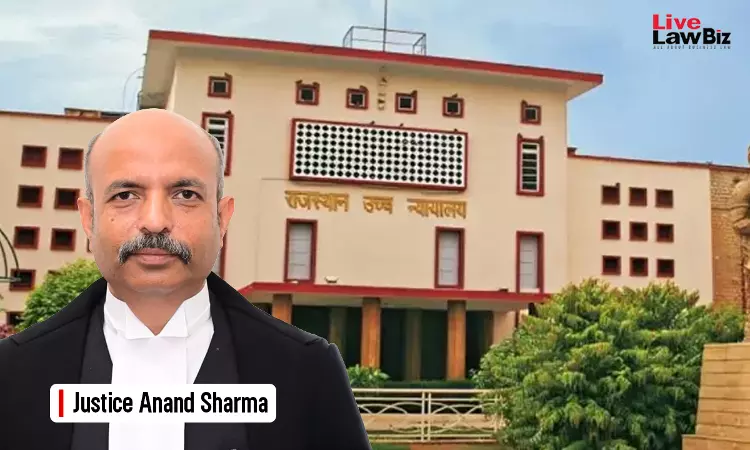
The Rajasthan High Court has held that a public sector corporation cannot use an arbitration clause as a blanket protection to continue occupying private land after expiry of the lease when the landowner has demanded possession.
“In view of the foregoing discussion, this Court is of the considered opinion that the arbitration clause cannot be treated as a blanket protection for Respondent-IOCL to continue occupying the petitioner's land after expiry of the lease,” Justice Anand Sharma ruled.
The court further observed that “a public sector corporation is expected to act fairly, reasonably and in accordance with law. It cannot insist upon retention of private property indefinitely without establishing a subsisting legal entitlement to do so”.
The court was hearing a petition filed by Suma Minerals Private Limited seeking recovery of possession of its land in Kishangarh, Ajmer district, which Indian Oil Corporation Limited (IOCL) had leased for operating a petroleum outlet.
The lease agreement, executed on March 16, 2004, was for 19 years and 11 months and expired on February 15, 2024. Although a clause contemplated renewal up to 2034, it required the parties to execute a separate lease deed. The word “automatic” had also been struck out from the clause with their consent.
After the lease expired, Suma Minerals informed IOCL that the outlet had been closed and asked it to remove its fixtures, equipment and remaining petroleum stock and hand over possession. It also returned ₹25,899.52 remitted by IOCL in March 2024, refusing to accept the amount as rent under a renewed tenancy.
IOCL claimed that it had exercised its renewal right through communications dated October 16, 2023 and January 12, 2024. However, the High Court noted that the corporation had not produced material to establish that these communications were received by the landowner. No fresh lease deed had been executed either.
Rejecting IOCL's objection that the dispute should be referred entirely to arbitration, the Court held that the existence of an arbitration clause does not, by itself, bar the High Court from exercising its jurisdiction under Article 226 of the Constitution. The availability of an alternative remedy is a rule of judicial discretion, not an absolute bar.
The Court clarified that it was not holding every dispute arising from a lease to be non-arbitrable. Claims relating to outstanding rent, dealership charges, occupation charges, damages, interest, and reimbursement for unsold petroleum stock could be pursued before the arbitral tribunal.
Allowing the petition, the Court directed IOCL to vacate the land and hand over peaceful and vacant possession to Suma Minerals within 60 days of receiving a certified copy of the judgment.
It must also remove its fixtures, equipment and installations within the same period. The removal and handling of petroleum products must be coordinated with the Petroleum and Explosives Safety Organisation (PESO) and other competent authorities in accordance with safety norms.
For the petitioner: Senior Advocate M.M. Ranjan, assisted by Advocates Ashwani Kumar Chobisa, Pratyushi Mehta, Rohan Agarwal and Priyansha Gupta.
For respondents 1–3: Advocates Suruchi Kasliwal, Vikram Singh, Dikshant Jain and Annika Anna.
For respondents 4–5: Additional Government Counsel Sharad Joshi.
For respondents 6–8: Advocate Pawan Pareek.