
Delhi High Court Appoints Arbitrator Though Arbitration Clause in Offers Not Repeated in Work Orders
Shivani PS
18 March 2026 9:59 AM IST
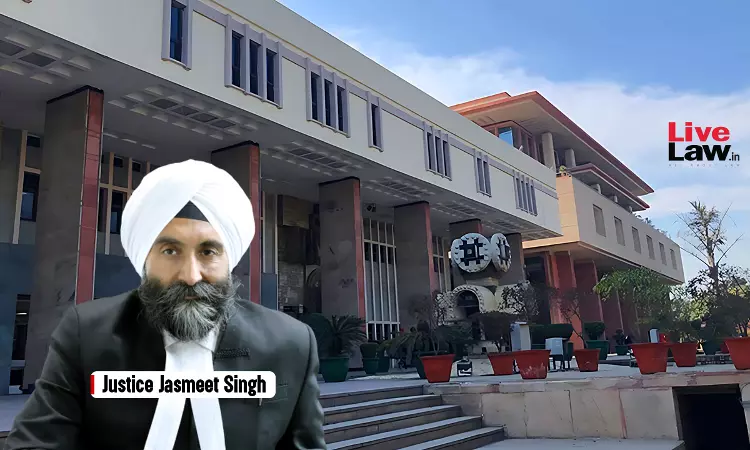
The Delhi High Court has held that the arbitration clause contained in techno-commercial offers formed part of the contract between Moonwalk Infra Projects Private Limited and Onstruq Interlayer Private Limited, even though the subsequent work orders did not repeat the clause, since the work orders were issued with reference to and on the basis of those offers.
A Single Bench of Justice Jasmeet Singh observed that “the Work Orders do not stand in isolation but are intrinsically linked to and founded upon the petitioner's TCOs. The reference to the quotation is neither incidental nor merely descriptive; rather, it forms the very foundation upon which the Work Orders have been issued. In such circumstances, the technical specifications contained in the TCOs, including the arbitration clause, prima facie stand incorporated into the Work Orders through reference.”
Accordingly, the Court appointed Advocate Maneesha Dhir as the sole arbitrator to adjudicate disputes between Moonwalk Infra Projects Private Limited and Onstruq Interlayer Private Limited, with the arbitration to be conducted under the aegis of the Delhi International Arbitration Centre.
The dispute arose out of two prefabricated building projects at Sri City, Andhra Pradesh, and Luhari, Haryana.
Moonwalk Infra Projects had submitted techno-commercial offers dated 25 September 2023 and 8 November 2023 in response to inquiries made by Onstruq Interlayer.
These offers contained detailed technical specifications along with arbitration clauses providing for resolution of disputes by arbitration, with the venue at Delhi, in accordance with the Arbitration and Conciliation Act, 1996.
Following negotiations, Onstruq issued work orders on October 16, 2023, and February 12, 2024 with reference to these offers.
Moonwalk claimed that it carried out substantial work under both projects but payments were withheld. In one project, it alleged that Rs 1.49 crore was retained on account of alleged snag points, while in the other, work could not proceed due to non-payment of about Rs 1.47 crore, after which the contract was terminated on June 18, 2025.
Moonwalk invoked arbitration through notices dated 12 March 2025 and 2 July 2025. The respondent replied to the notices but failed to suggest any name for appointment of a sole arbitrator, leading to the filing of petitions under Section 11(6) of the Arbitration and Conciliation Act, 1996.
Moonwalk argued that the work orders were issued on the basis of the techno-commercial offers and expressly referred to them, and therefore the arbitration clause contained in those offers stood incorporated by reference. It also contended that the conduct of the parties in acting upon the work orders amounted to acceptance of the terms of the offers.
Onstruq opposed the petitions, contending that the techno-commercial offers were never accepted; had lapsed due to expiry of their validity period; and that the work orders alone governed the parties' relationship and did not contain any arbitration clause.
Rejecting these objections, the Court held that the work orders were intrinsically linked to the techno-commercial offers and reflected acceptance of the offers after negotiations.
The Court observed that the case fell within the category of a “single-contract case," where a general reference to the underlying document is sufficient to incorporate the arbitration clause contained in it.
It further held that even if the techno-commercial offers did not independently culminate into concluded contracts, the work orders themselves acknowledged and relied upon those offers, and therefore the arbitration clause contained therein stood incorporated by reference.
The Court reiterated that while exercising jurisdiction under Section 11 of the Act, it is only required to examine, on a prima facie basis, whether a valid arbitration agreement exists, and disputed questions regarding whether the contracts were concluded or had lapsed are matters to be decided by the arbitrator.
Holding that a prima facie valid arbitration agreement existed between the parties within the meaning of Section 7 of the Arbitration and Conciliation Act, the Court allowed the petitions and referred the disputes to arbitration under the rules of the Delhi International Arbitration Centre.
The court clarified that all rights and contentions of the parties, including objections on arbitrability and merits of the claims, are left open for adjudication by the arbitrator.
For petitioner (Moonwalk Infra Projects Private Limited): Advocates Rajeev Kumar.
For respondent (Onstruq Interlayer Private Limited): Advocates Anish Maheshwari, Aayushmaan Vatsyayana, Manas Tripathi, Vijay Kumar Maurya, Harsha Vinoy.