
Absence Of Physical Signature Does Not Invalidate Arbitration Agreement If Correspondence Shows Reliance On It: Bombay High Court
Shivani PS
4 March 2026 3:51 PM IST
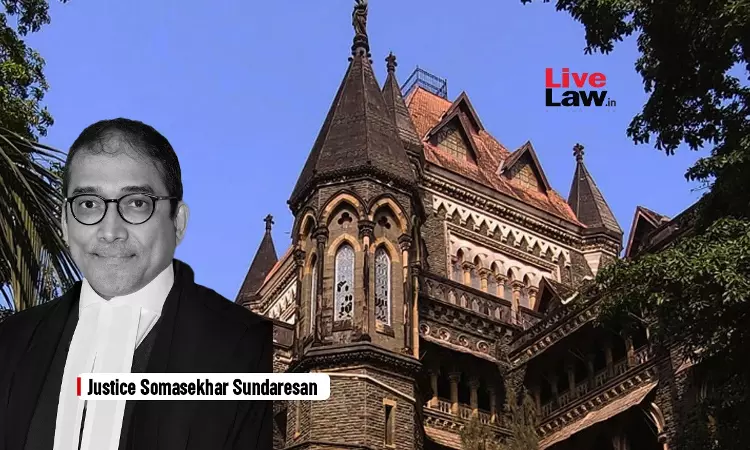
The Bombay High Court has recently refused to set aside an ex-parte arbitral award arising out of a commercial toy retail franchise dispute, holding that the absence of a physical signature on a contract would not invalidate the arbitrator's finding that an arbitration agreement existed, particularly where correspondence between the parties indicated reliance on the agreement.
A single bench of Justice Somasekhar Sundaresan observed that “the absence of an actual physical signature would not come in the way of the reasonableness of the arbitrator's findings. Exchange of correspondence too can constitute an arbitration agreement”.
The Court also imposed costs of Rs 1.5 lakh on Exelixi Management Company Pvt. Ltd., payable to Nishi Retails Pvt. Ltd., noting that the petitioner had chosen not to participate in the arbitration proceedings and later sought to challenge the award.
“The Respondent has spent the past twelve years running from pillar to post being given a run for its money by the conduct of the Petitioner, with a cynical and dishonest strategy, hoping to tire the Respondent out”, the Court observed.
The dispute arose between Exelixi Management Company Pvt. Ltd., which functioned as the master franchisee for retailing Simba Toys, and Nishi Retails Pvt. Ltd., which was intended to operate as a sub-franchisee based in Ahmedabad.
The relationship initially began with a Letter of Intent dated July 22, 2014, which did not contain an arbitration clause. Pursuant to this arrangement, Rs 24.76 lakh was paid by Nishi Retails to Exelixi as an advance towards the supply of toy products.
Later, on November 25, 2014, Exelixi circulated a draft franchise agreement by email containing an arbitration clause and requested that the document be executed and couriered back.
Exelixi claimed that the executed agreement was never received, and therefore no arbitration agreement came into existence. Nishi Retails, on the other hand, maintained that the agreement had been printed, signed, and couriered to Exelixi.
When the franchise relationship subsequently broke down, arbitration proceedings were initiated. The proceedings culminated in an ex-parte arbitral award dated July 8, 2017, in favour of Nishi Retails.
Exelixi, thereafter, approached the High Court under Section 34 of the Arbitration and Conciliation Act, 1996, seeking to set aside the award. It contended that no valid arbitration agreement existed since the executed agreement had not been received. It also argued that the arbitration proceedings and earlier appointment proceedings had been conducted without its knowledge due to discrepancies in the company's name and the postal code used in the notices.
Nishi Retails countered that the parties had relied on the agreement in their communications and dealings. It also pointed out that multiple notices and communications, including emails and letters, had been sent to the petitioner and were acknowledged earlier, though some later communications were refused.
After hearing the parties and examining the record, the Court held that the arbitrator had arrived at a reasonable and plausible conclusion based on the material available.
Justice Sundaresan noted that Exelixi itself had referred to the “agreement” in its communications when resisting termination of the franchise arrangement, including in an email dated March 29, 2015.
“The Learned Arbitral Tribunal being the master of the evidence has reasonably found this to the plausible, it is not for this Court to disturb that, particularly taking into account the evident conduct of the Petitioner in avoiding service of notices and relying on the Pin Code from the RoC's records, when service of the notices by the Learned Arbitral Tribunal have been sent to the very email ID that also forms a part of the RoC's records,” the court held.
The court further noted that the petitioner had chosen not to participate in the arbitration proceedings while relying on alleged discrepancies in the name and postal code used in the notices.
“The conduct of the petitioner would indicate that the petitioner chose not to participate in the arbitration proceedings and had the strategy of taking a chance, hoping that it would undermine an arbitral award that is adverse,” the court observed.
Finding no grounds for interference under Section 34 of the Arbitration and Conciliation Act, the High Court dismissed the petition and upheld the arbitral award.
Taking note of the nature of the objections raised and the conduct of the petitioner, the Court imposed costs of Rs 1.5 lakh on Exelixi Management Company Pvt. Ltd., payable to Nishi Retails Pvt. Ltd. within two weeks from the upload of the judgment on the Court's website.
For Petitioner (Exelixi Management Company Pvt. Ltd.): Advocates Harshad Inamdar, Dinesh Masurkar i/b Tejas Deshpande.
For Respondent (Nishi Retails Pvt. Ltd.): Advocates Sajid Shamim, Sharif Lakdawala i/b S. Shamim & Co.