
Arbitral Tribunal Cannot Reject One Party's In-House Witnesses While Accepting Opponent's: Bombay High Court
Shivani PS
26 Oct 2026 11:44 AM IST
The Bombay High Court has held that an arbitral tribunal cannot reject one party's evidence merely because its witnesses are company employees while accepting evidence from similarly placed in-house witnesses of the opposing party.
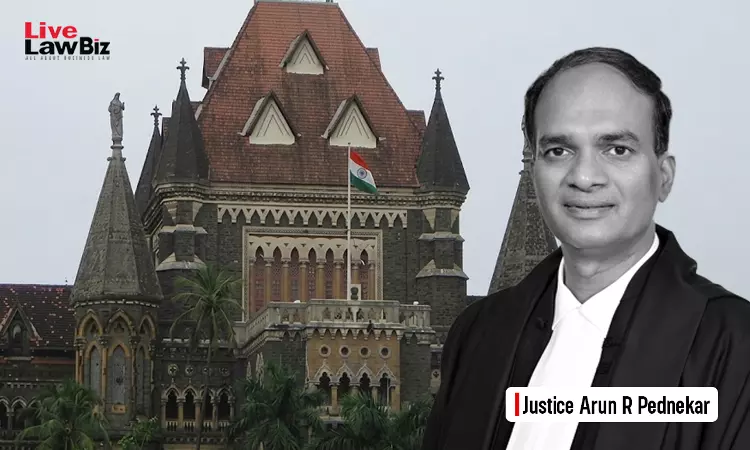
Justice Arun R. Pedneker made the observation while setting aside a ₹2.16 crore arbitral award against Forech India Limited in favour of JSW Jaigarh Port Limited over defective conveyor belts. The Court held that the tribunal's unequal treatment of witnesses amounted to one-sided appreciation of evidence.
“The wholesome rejection of one party's evidence, while accepting evidence the claimant, whose witnesses were also in-house, without composite scrutiny shows one sided appreciation. The Arbitral Tribunal has not engaged with the evidence of the Petitioner", it observed.
The dispute arose from the supply of conveyor belts by Forech India for JSW Jaigarh Port's coal-handling system.
Following a Letter of Intent dated July 19, 2011, JSW placed two purchase orders on July 21 and August 19, 2011.
After inspecting and receiving the belts, JSW reported waviness and other irregularities in October 2011. Forech maintained that these defects were superficial and would not affect performance.
On April 11, 2012, JSW replaced approximately 260 metres of belting after air pockets developed.
Further defects were reported in September and October 2012.
JSW encashed Forech's two performance bank guarantees on October 23, 2012, and invoked arbitration on December 24, 2012.
On August 12, 2015, the arbitral tribunal directed Forech to pay ₹2,16,44,423 with 12% annual interest and rejected its counterclaim of ₹20,40,180.
Forech challenged the award under Section 34 of the Arbitration and Conciliation Act, 1996, arguing that the tribunal had ignored material evidence, including joint inspection reports and test certificates showing compliance with the prescribed technical specifications.
It also contended that the tribunal had unfairly rejected its technical witnesses and awarded compensation for the entire supply despite only partial replacement.
JSW defended the award, contending that the belts suffered from inherent manufacturing defects, were covered by warranty and had been replaced due to recurring failures. It argued that the arbitrator's factual findings could not be reopened.
The Court found that the tribunal had rejected Forech's technical witnesses as in-house personnel lacking expertise while relying on JSW's own employees.
It observed that Forech's witnesses were technically qualified and competent to testify about conveyor operating conditions. Their evidence could not be discarded merely because they were company employees.
Examining the technical specifications, the Court noted that the maximum permissible conveyor speed was 3 metres per second, whereas JSW's system operated at 4.5 metres per second. The tribunal had failed to properly consider whether operating conditions contributed to the defects.
The Court further noted that only 860 metres of the 3,490 metres of belting supplied had been replaced, with no evidence establishing replacement of the remaining 2,630 metres.
It also noted that Clause 15 of the purchase orders provided for free repair or replacement of defective parts during the warranty period.
Since JSW had accepted and continued using the belts, and there was no evidence that the entire supply was defective or replaced, the Court held that the dispute concerned breach of warranty, requiring assessment of damages rather than recovery of the entire purchase price.
Holding that the award suffered from patent illegality, including unequal treatment of witnesses contrary to Section 18 of the Arbitration Act and disregard of contractual warranty terms, the Court set aside the award and the decision on Forech's counterclaim.
It clarified that if the parties seek appointment of a fresh arbitrator, evidence from the earlier proceedings may be used alongside any additional evidence permitted by the arbitrator.
For Petitioner (Forech India Limited): Senior Advocate Sharan Jagtiani; Advocates Jyoti A. Singh, Sankalpita Mullick, Sakil Ansari and Ritwik Kulkarni, instructed by AJA Legal.
For Pespondent (JSW Jaigarh Port Limited): Advocates Karl Tamboly, Arup Pereira, Huzefa Nasikwala, Freddy Daruwala, Idris Balasinorwala and Farzana Rine, instructed by Nasikwala Law Office.