
Arbitral Award Can Be Executed Anywhere In India Where Decree Can Be Enforced: Punjab And Haryana High Court
Shivani PS
3 Aug 2026 6:22 PM IST
The Punjab and Haryana High Court has recently ruled that an arbitral award can be executed before any court where the judgment debtor's assets are located and is not restricted to the place where the award was passed.
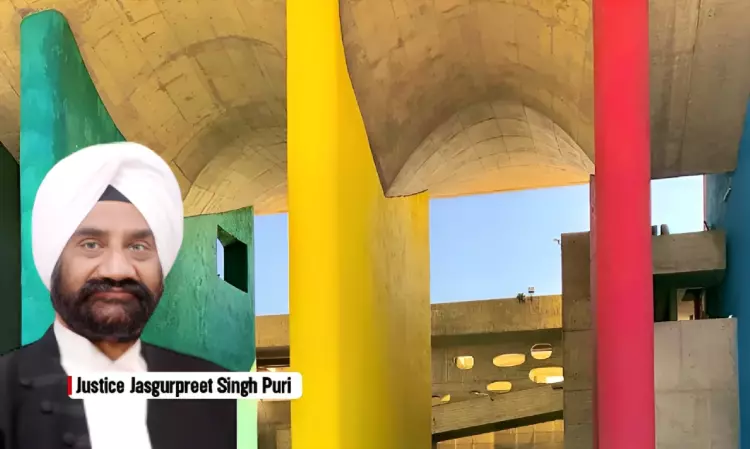
Dismissing a writ petition filed by the Union of India and others against Triveni Constructions, Justice Jasgurpreet Singh Puri observed that once an arbitral award is made, the arbitrator's mandate comes to an end and the award is not the decree of any particular court.
Referring to the Supreme Court's rulings in Sundaram Finance Ltd. v. Abdul Samad and Cheran Properties Ltd. v. Kasturi and Sons Ltd., the court observed:
"It is not the case where there are no assets of the petitioners located in Chandigarh and just because an award is passed in Patna (Bihar) would not mean that execution would also lie only at Patna because once the award is passed, the mandate of the arbitrator terminates and the award is not a decree of a particular Court and is only by way of a legal fiction. Hence, the award can be filed for execution before any Court anywhere in the country where such decree can be executed."
Justice Puri upheld an order of the Additional District Judge, Chandigarh, refusing to dismiss execution proceedings arising out of an arbitral award passed in Patna after finding that the Union of India maintained assets and bank accounts within Chandigarh.
The dispute arose from a contract between the Union of India and Triveni Constructions. After a dispute over an alleged breach of contract, an arbitrator was appointed. The proceedings were conducted in Patna, Bihar, where an award dated March 3, 2025 was passed in favour of Triveni Constructions.
The Union of India challenged the award under Section 34 of the Arbitration and Conciliation Act, 1996 before the district court in Patna, where the proceedings are still pending.
While that challenge was pending, Triveni Constructions initiated execution proceedings before the Additional District Judge, Chandigarh. The executing court rejected the Union of India's objection to territorial jurisdiction by an order dated October 23, 2025, prompting the present writ petition.
Before the high court, the Union of India argued that execution should proceed only in Patna, where the arbitration had taken place and where its Ministry of Defence accounts were maintained. It also contended that Section 42 of the Arbitration Act and principles of territorial jurisdiction required the execution proceedings to be pursued there.
Triveni Constructions, however, argued that the Union of India maintained assets and bank accounts within Chandigarh, giving the executing court jurisdiction. It further submitted that Section 42 applies only to applications under Part I of the Arbitration Act and does not govern execution proceedings.
During the hearing, the high court appointed Senior Advocate Akshay Bhan as amicus curiae to assist on the legal issue of whether the availability of internet and digital banking allows execution proceedings to be filed anywhere in the country.
The court, however, found it unnecessary to answer that broader question. It noted that the Union of India admittedly had assets and bank accounts within Chandigarh, making the issue academic in the facts of the case.
The court relied on the Supreme Court's decisions in Sundaram Finance and Cheran Properties to hold that arbitral proceedings come to an end once the final award is passed. It observed that an arbitral award is not the decree of any particular court and can therefore be executed before any competent court where the judgment debtor has assets.
It also found the Himachal Pradesh High Court's decision in Esteem Industries did not apply to the present case. In that matter, the judgment debtor had no movable or immovable assets within the executing court's jurisdiction, and only a bank branch was located there. Here, however, the Union of India admittedly had assets and bank accounts in Chandigarh.
The high court, therefore, found no merit in the Union of India's challenge. It dismissed the writ petition, vacated its interim order dated December 22, 2025, and allowed the execution proceedings before the Chandigarh court to continue.
For Petitioners (Union of India and others): Senior Standing Counsel Vishal Sharma and Advocate Manjit Singh.
For Respondent (M/s Triveni Constructions): Advocate Jayant Puneet Bamal.
Amicus Curiae: Senior Advocate Akshay Bhan, assisted by Advocate Harsh Gupta.