
ARBITRATION
Even If The Principal Agreement Is Non-Existent, The Arbitration Clause Would Still Apply: Delhi High Court
The Delhi High Court has ruled that even if the principal agreement is non-existent, the arbitration clause contained therein would still apply. The Single Bench of Justice V. Kameswar Rao observed that since the issue of limitation and arbitrability was not conclusive against the party, the issue was amenable to the jurisdiction of the Arbitral Tribunal. The petitioner National Research Development Corporation and the respondent Mak Controls and Systems Private Limited entered...
Court Under Section 34,37 Arbitration Act Cannot Modify An Award ; It Can Only Remand : Supreme Court
The Supreme Court observed that, under Section 34 or 37 of Arbitration and Conciliation Act, a Court cannot modify the award passed by the Arbitrator.The option would be to set aside the award and remand the matter, the bench comprising Justices Indira Banerjee and AS Bopanna said.The court was considering the appeals filed by National Highways Authority of India ('NHAI') assailing the judgment of High Court of Karnataka, Bengaluru which upheld awards passed by Deputy Commissioner and...
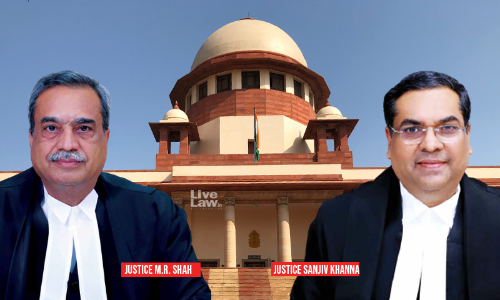
Counter-Claim Cannot Be Rejected Merely Because The Claims Thereunder Were Not Notified At The Pre-Arbitral Stage: Supreme Court
The Supreme Court has held that the counter-claim of a party cannot be dismissed merely because the claims were not notified before invoking the arbitration. The Division Bench of Justice M.R. Shah and Justice Sanjiv Khanna held that there is a difference between the word "Claim" and "Dispute" where the former may be a one-sided thing while the latter by its definition has two sides. It observed that once the conciliation failed, the entire gamut including the counter-claim/set off...
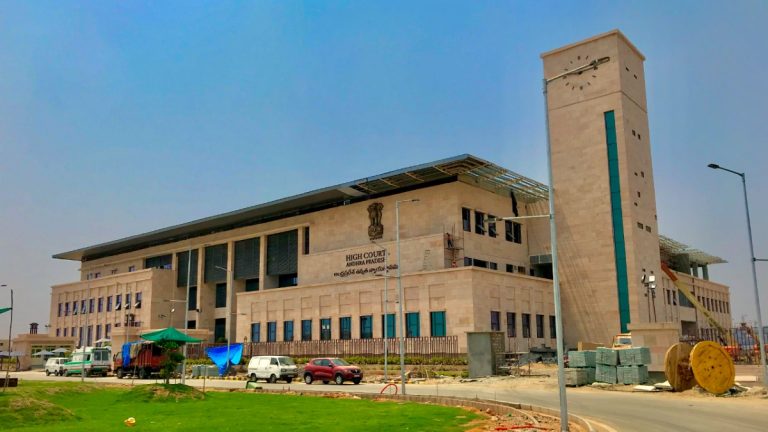
The Arbitration Clause Contained In A Manual Issued By The Government As A Generic Guideline Is Not Binding: Andhra Pradesh High Court
The Andhra Pradesh High Court Bench of Chief Justice Prashant Kumar Mishra has held that arbitration clause contained in a government manual as generic guidelines cannot be invoked by the parties. The Court also observed that there cannot be an arbitration clause in a sub-contract or in a separate document when there is no binding agreement between the parties in the first place. Facts The Andhra Pradesh Medical Services Infrastructure Development Corporation issued tender for...
Subrogation Deed Does Not Terminate The Right Of The Assured To Initiate Arbitration Against The Wrongdoer: Delhi High Court
The Delhi High Court has held that arbitration can be invoked by the insured even after entering into a subrogation-cum-assignment agreement with an insurance company. The Single Bench of Justice Sanjeev Sachdeva held that subrogation does not put an end to the right of the assured to initiate legal proceedings against the wrongdoer, it merely allows the insurer to step into the shoes of the insured to recover the damages. Facts The parties entered into two identical...

Dispute Referred To Arbitration Under MSME Act; Court Can Extend The Mandate Of Arbitrator Under Section 29A Of A&C Act: Gujarat High Court
The Gujarat High Court has ruled that even in cases where the dispute has been referred to arbitration under the Micro, Small and Medium Enterprises Development Act, 2006 (MSME Act), the Court is empowered under Section 29A of the Arbitration and Conciliation Act, 1996 (A&C Act) to extend the mandate of the Arbitral Tribunal. The Single Bench of Chief Justice Aravind Kumar held that in view of Section 18(3) of the MSME Act, the provisions of the A&C Act would be applicable once...
Section 8 Application Should Be Filed Within Time Available For Filing Written Statement: Delhi High Court
The Delhi High Court has ruled that if a party fails to file an application under Section 8(1) of the Arbitration and Conciliation Act, 1996 (A&C Act) for referring the parties to arbitration within the time available for filing the first statement on the substance of the dispute, which would include a written statement in the context of a suit, the party would forfeit its right to apply under Section 8(1) of the A&C Act. The Division Bench of Justices Vibhu Bakhru and Amit...

Arbitration Cases Weekly Round-Up: 3 July To 9 July, 2022
Bombay High Court: Invocation Of Arbitration Has To Be In Clear Terms; Merely Stating Claims Would Not Suffice: Bombay High Court Case Title: M/s. D.P. Construction versus M/s. Vishvaraj Environment Pvt. Ltd. The Bombay High Court has ruled that invocation of arbitration has to be in clear terms, as specified in Section 21 of the Arbitration and Conciliation Act, 1996 (A&C Act), and that a mere reference to the claims and disputes sought to be raised by a party, and the...
"Interim Award Is A Stopover En-Route To The Destination To Final Adjudication Of The Dispute": Calcutta High Court Explains
Recently, the Calcutta High Court has discussed the concept of interim award under the Arbitration Act. The court was hearing a plea by Lindsay International seeking to set aside an order dated 24th August, 2019 by which the petitioner's pleaded that it was an interim order in terms of the Act. Single judge bench of Justice Moushumi Bhattacharya held that the impugned decision dated 24th August 2019 does not qualify to be nor does it have the trappings of an interim award under section...
Section 8 Of A&C Act Can't Be Invoked Based On A Non-Binding Arbitration Agreement: Karnataka High Court
The Karnataka High Court has ruled that since the agreement between the parties provided for a 'non-binding' arbitration, there was absolutely no intention of the parties to enter into an arbitration agreement and that the said agreement could not be termed as an arbitration agreement. The Single Bench of Justice Sachin Shankar Magadum held that since under the relevant clause in the agreement, the parties were at a liberty to initiate litigation before the Civil Court, therefore, the...

Invocation Of Arbitration Has To Be In Clear Terms; Merely Stating Claims Would Not Suffice: Bombay High Court
The Bombay High Court has ruled that invocation of arbitration has to be in clear terms, as specified in Section 21 of the Arbitration and Conciliation Act, 1996 (A&C Act), and that a mere reference to the claims and disputes sought to be raised by a party, and the existence of an arbitration clause, would not itself mean that arbitration has been invoked by such a party. The Single Bench of Justice Manish Pitale observed that Section 21 of the A&C Act specifically refers to a...

If The Issue Of Limitation Calls For An Enquiry, The Court Should Yield To The Authority Of The Arbitral Tribunal: Meghalaya High Court
The Meghalaya High Court has ruled that in a case where the issue of whether the claim raised by a party is barred by limitation or not calls for an inquiry, the Chief Justice or his designate should allow the objection to be decided by the arbitral tribunal in accordance with law. The Single Bench of Chief Justice Sanjib Banerjee held that though in an open and shut case where it is apparent that the claim can no longer be pursued, or where the request for setting up an arbitral...