
ARBITRATION
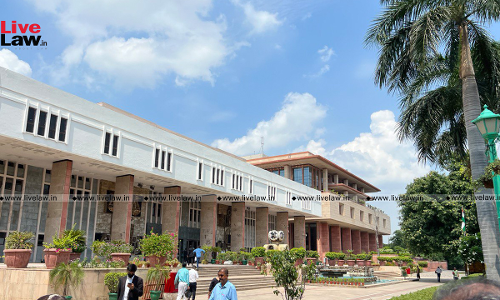
Refusal Of The Defendant To Amicably Settle The Dispute Satisfies The Requirement Of Pre-Litigation Mediation Under Commercial Courts Act: Delhi High Court
The High Court of Delhi has held that when the plaintiff makes an offer to the defendant to amicably settle the dispute and the defendant refuses the offer then in that circumstance, the requirement of pre-litigation meditation stands satisfied. The Bench of Justice Prathiba M. Singh while reiterating that pre-litigation mediation as provided under Section 12-A of the CCA is a mandatory provision, held that the conduct of the defendant in refusing to amicably settle the dispute...
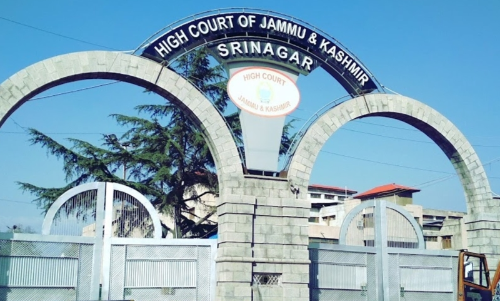
Application Under O.7 R. 11 Is Not The Submission Of The First Statement On The Substance Of Dispute, Application Under Section 8 Of A&C Act Can Still Be Filed: J&K&L High Court
The Jammu and Kashmir and Ladakh High Court has held that an application for rejection of a plaint cannot be considered to be the first statement on the substance of the dispute as it is merely an incidental procedural proceeding. The Bench of Chief Justice held that mere filing of an application for rejection of plaint would not debar a party from subsequently filing an application under Section 8 of the A&C Act as the party cannot be presumed to have given up on its right to...
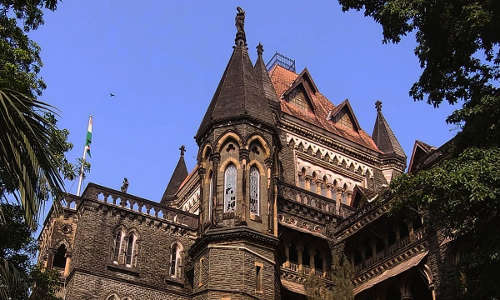
Notice Under Section 21 Of A&C Act Issued; Court Not Barred From Exercising Jurisdiction Under Section 9: Bombay High Court
The Bombay High Court has ruled that merely because a notice under Section 21 of the Arbitration and Conciliation Act, 1996 (A&C Act) to refer the disputes to arbitration is issued by a party, the Court is not barred from exercising jurisdiction under Section 9 of the A&C Act for interim measures. The Court added that it is not constrained to refer the parties to arbitration and convert the proceedings under Section 9 into an application under Section 17 of the A&C Act, to be...
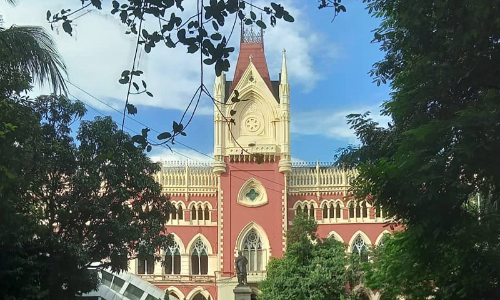
Arbitral Award With Contradictory Findings Is Liable To Be Set Aside: Calcutta High Court
The High Court of Calcutta has held that an arbitral award wherein the arbitrator has given contradictory findings is liable to be set aside. The Bench of Justice Krishna Rao reiterated that an arbitral award wherein no reasons are given for arriving at a particular finding is also liable to be set aside. Facts The parties entered into an agreement dated 09.01.1997 whereby the respondent agreed to carry out construction work. The project work could not be completed on time,...
MOU Between Private Parties Cannot Be Specifically Enforced; Party Not Entitled To Interim Relief Under Section 9 Of A&C Act: Delhi High Court
The Delhi High Court has ruled that a MOU which is in the nature of a commercial transaction between two private parties is by its very nature determinable and hence, the said MOU can be terminated even in the absence of any termination clause contained in it. The Single Bench of Justice Mini Pushkarna held that since the MOU was not capable of specific performance due to the statutory bar contained in Section 14 (d) of the Specific Relief Act, 1963, the party was not entitled to any...

Arbitration Cases Weekly Round-Up: 21 August To 27 August, 2022
Bombay High Court: Interim Relief Under Section 9 Of A&C Act - Incidental To Recovery Of Possession OfProperty; Small Causes Court Alone Would Have Jurisdiction: Bombay High Court Case Title: BXIN Office Parks India Pvt. Ltd. versus Kailasa Urja Pvt. Ltd. The Bombay High Court has ruled that reliefs which are incidental to the possession of the licensed premises cannot be sought in an application for interim measures under Section 9 of the Arbitration and Conciliation Act, 1996...
Unilateral Appointment Of Arbitrator ; Calcutta High Court Replaces With A New Arbitrator
The Calcutta High Court has held that an arbitration clause does not come to an end merely because it provides for an illegal method of appointment of arbitrator and the courts can remove the illegal portion and retain the remaining clause to give effect to the intention of the parties to submit their dispute to arbitration. The Bench of Justice Shekhar B. Saraf further held that the Court while exercising powers under Section 14 of the A&C Act for appointing a substitute ...

Interim Relief Under Section 9 Of A&C Act- Incidental To Recovery Of Possession Of Property; Small Causes Court Alone Would Have Jurisdiction: Bombay High Court
The Bombay High Court has ruled that reliefs which are incidental to the possession of the licensed premises cannot be sought in an application for interim measures under Section 9 of the Arbitration and Conciliation Act, 1996 (A&C Act), in view of the exclusive jurisdiction conferred on the Court of Small Causes under Section 41 of the Presidency Small Cause Courts Act, 1882 (PSCC Act). The Single Bench of Justice G.S. Kulkarni reiterated that the bar contained in Section 41 of the...

Arbitrator Appointed Under MSCS Act; Fixation Of Fees Is Subject To A&C Act: Madras High Court
The Madras High Court has ruled that the power of the Central Registrar to appoint an arbitrator and fix the fees of arbitration under the Multi State Co-operative Societies Act, 2002 (MSCS Act), is subject to the provisions of the Arbitration and Conciliation Act, 1996 (A&C Act). Holding that there is no provision under the MSCS Act where an exemption has been provided with respect to Section 38 of the A&C Act, which requires the parties to equally bear the advance costs to be...
Unilateral Constitution Of A Narrow Panel Of Arbitrators Violates Impartiality : Delhi High Court
The High Court of Delhi has held that the power conferred on one party to unilaterally choose names from a panel of arbitrators and forwarding it to the other party to select its arbitrator from those names is violative of principle of impartiality in arbitration. The Bench of Justice Neena Bansal Krishna held that such a unilateral exercise of power creates space for suspicion regardless of the merit of the selected arbitrators who happens to be retired District Judges. The Court...
Mere Erroneous Application Of Law; Award Need Not Be Set Aside: Bombay High Court
The Bombay High Court has reiterated that when the court is convinced that the Arbitrator has erred only on specific issues and that the arbitral award is otherwise sustainable, the court is not mandatorily required to set aside the entire award under Section 34 of the Arbitration and Conciliation Act, 1996 (A&C Act). The Single Bench of Justice Manish Pitale ruled that though the arbitral award granting interest to land owners on enhanced compensation from the date of the...
Arbitration Cases Weekly Round-Up: 14 August To 20 August, 2022
Bombay High Court: Arbitral Tribunal Not Barred Under Section 79 Of The RERA Act From Passing An Order Of Injunction: Bombay High Court Case Title: Ashok Palav Coop. Housing Society Ltd. versus Pankaj Bhagubhai Desai & Anr The Bombay High Court has ruled that the Arbitral Tribunal is not a Civil Court within the meaning and purview of the Code of Civil Procedure, 1908 and thus, the arbitral proceedings cannot be said to be barred under Section 79 of the Real Estate (Regulation...