
ARBITRATION
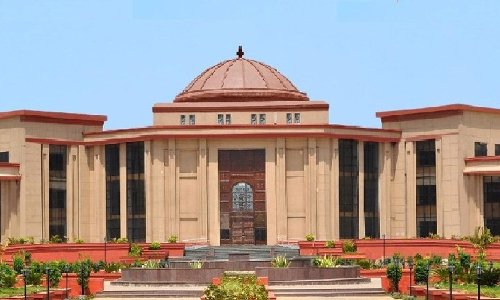
Non-Delivery Of Signed Copy Cannot Save Limitation; Chhattisgarh High Court Affirms Section 34 Dismissal
The Chhattisgarh High Court has ruled that though the delivery of signed copy of the arbitral award to each of the parties to the arbitral proceedings is sine qua non, however, if the award debtor had already become aware of the award, enabling him to file an application to set aside the award, mere non-delivery of the signed copy cannot be said to cause any prejudice to him. The Single Bench of Justice Arvind Singh Chandel was dealing with an appeal filed by the applicant under Section...

Arbitration Cases Weekly Round-Up: 18 September To 24 September, 2022
Bombay High Court: Mere Reference To Proposal Containing An Arbitration Clause, Unilaterally Signed By One Party, Would Not Amount To An Arbitration Agreement: Bombay High Court Case Title: M/s. TCI Infrastructure Limited & Anr. versus M/s. Kirby Building Systems (Uttaranchal) Private Limited & Anr. The Bombay High Court has ruled that in an agreement executed by both the parties which contains independent terms and conditions, a mere reference to a proposal containing an ...
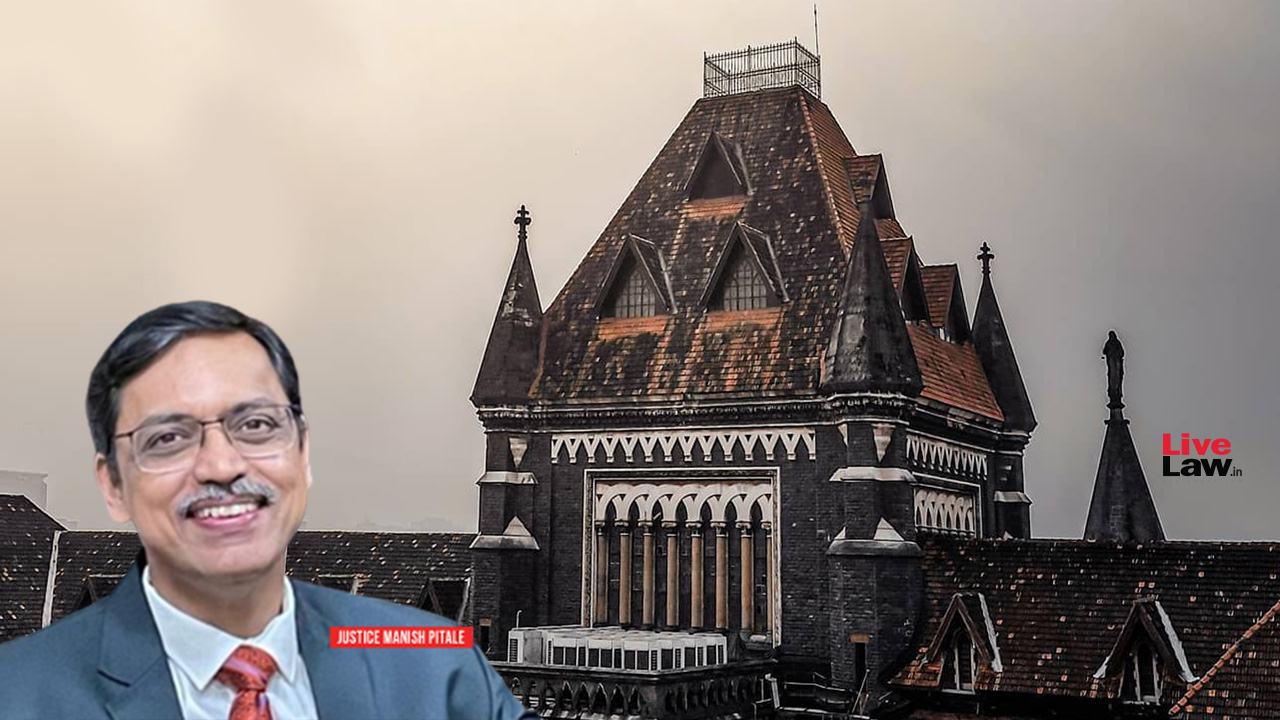
Mere Reference To Proposal Containing An Arbitration Clause, Unilaterally Signed By One Party, Would Not Amount To An Arbitration Agreement: Bombay High Court
The Bombay High Court has ruled that in an agreement executed by both the parties which contains independent terms and conditions, a mere reference to a proposal containing an arbitration clause which was unilaterally signed by one party, would not amount to an arbitration agreement coming into existence between the parties. The Single Bench of Justice Manish Pitale held that for an arbitration agreement to come into existence, there must be a document incorporating an arbitration...
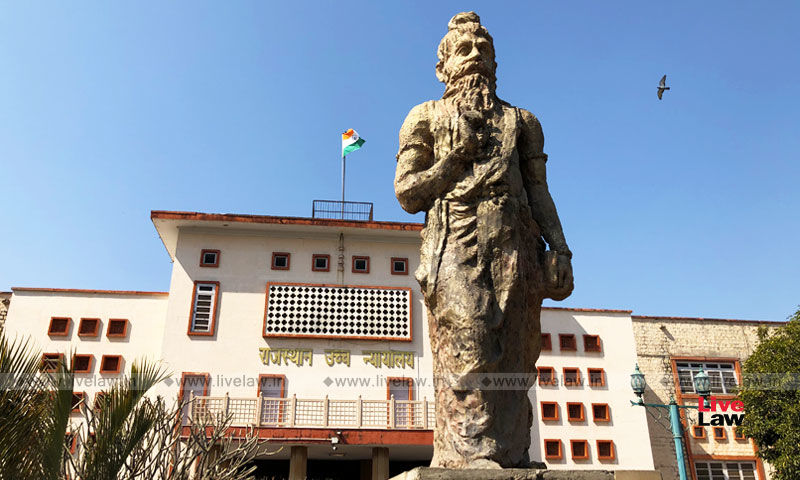
Challenge Against Appointment Of Arbitrator Can Be Entertained Only After Passing Of The Award: Rajasthan High Court Reiterates
The Rajasthan High Court has reiterated that any challenge against an arbitrator on the grounds contained in the Fifth Schedule of the Arbitration and Conciliation Act, 1996 (A&C Act), which give rise to justifiable doubts regarding his independence or impartiality, can be gone into by the Court only after the Arbitral Tribunal has given an award. The Single Bench of Justice Pankaj Bhandari ruled that where the arbitration clause provided for referring the disputes to the Empowered ...
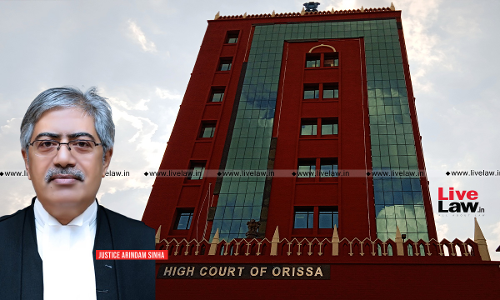
Writ Not Maintainable Against Admission Of Petition Under Section 34 Of A&C Act Without Pre-Deposit : Orissa High Court
The Orissa High Court has ruled that the Court cannot entertain a writ petition against an order passed by the lower court admitting the application under Section 34 of the Arbitration and Conciliation Act, 1996 (A&C Act) to set aside the arbitral award, despite the fact that the award debtor had failed to deposit 75% of the awarded amount, as mandated by Section 19 of the Micro, Small and Medium Enterprises Development Act, 2006 (MSMED Act). The Single Bench of Justice Arindam...

Demystifying The Effect Of Insolvency Proceedings In India On Arbitrations
Globalization has been accompanied by cross-border commercial disputes and arbitration has become the default setting for adjudication both nationally and globally.[1] This swing towards arbitration has prompted India to re-equip laws according to international standards. Concurrently, the government has introduced the Insolvency and Bankruptcy Code in 2016 ["IBC"] that has transformed the Indian Economy from a debtors' paradise into an economy of fairness and equity between creditors and...
Arbitration Cases Weekly Round-Up: 11 September To 17 September 2022
Supreme Court: Disputes Related To Tax Concessions Are Not Arbitrable: Supreme Court Case Title: M/s Shree Enterprise Coal Sales Pvt Ltd. versus Union Of India The Supreme Court has held that disputes related to tax concessions are not arbitrable. The division bench of Justice Dhananjaya Y Chandrachud and Justice Hima Kohli has observed that the High Court was in error in holding that the terms of e-auction provided that any dispute was arbitrable. The Apex Court ruled that...

Clause Giving Only Supervisory Powers To Third Party With Respect To Disputes; Not An Arbitration Agreement: Madras High court
The Madras High Court has ruled that where the parties have agreed to give only supervisory powers to a third party with respect to the disputes arising between them, and a clause which does not disclose the intention of the parties to give any adjudicatory powers to the third party, does not qualify as an 'arbitration agreement', as defined under Section 2(1)(b) read with Section 7 of the Arbitration and Conciliation Act, 1996 (A&C Act). The Single Bench of Justice M. Sundar...
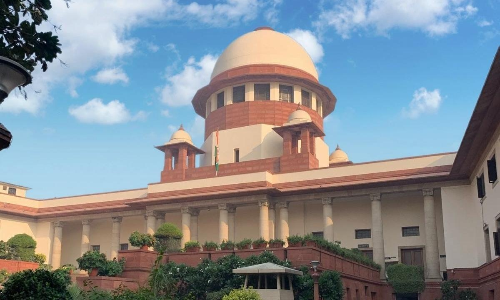
Disputes Related To Tax Concessions Are Not Arbitrable: Supreme Court
The Supreme Court has held that disputes related to tax concessions are not arbitrable. The division bench of Justice Dhananjaya Y Chandrachud and Justice Hima Kohli has observed that the High Court was in error in holding that the terms of e-auction provided that any dispute was arbitrable. Undoubtedly, a contractual dispute would be amenable to being resolved by arbitration. However, in the present case, the relief related to tax concessions was not of an arbitrable nature. ...
Unilateral Determination Of Fees By Arbitrators Not Binding On Parties
The Supreme Court in 2009 in Union of India v. Singh Builders[1] recognized the problem of retired judges charging high fees as arbitrators and dragging matters for far too long resulting in the defeat of the purpose of arbitration. Against this backdrop, on the recommendations of the 246th Law Commission, the 2015 amendment of the Arbitration & Conciliation Act, 1996 ("Arbitration Act") introduced the IV Schedule to serve as a guide for the fees of arbitrators. However, a new problem...
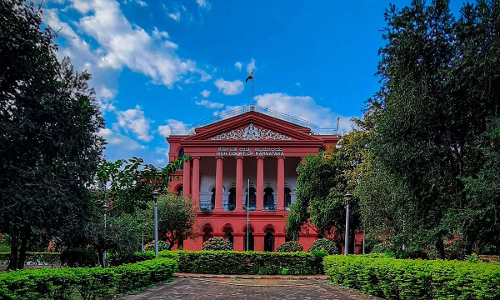
Arbitration Clause, Effect Of Novation; Can't Be Decided Under Section 11 Of A&C Act: Karnataka High Court
The Karnataka High Court has ruled that the issue whether an agreement containing an arbitration clause stood novated with the execution of a second agreement and thus, the arbitration agreement between the parties was not subsisting, cannot be decided at the stage of reference to arbitration under Section 11 of the Arbitration and Conciliation Act, 1996 (A&C Act), since it involves a detailed enquiry which must be decided by the Arbitrator himself under Section 16 of the A&C Act. ...

Appointment Of An Arbitrator From A Narrow Panel
The 'Rule Against Bias' is a widely accepted principle of Natural Justice. When applied in the field of arbitration, this rule command that the arbitrator must be impartial, independent, and neutral. This rule comes into play if it is shown that the person concerned to be appointed as an arbitrator has a personal connection or personal interest or has personally acted in the matter concerned. This rule of disqualification is applied not only to avoid the possibility of a partial decision...