
ARBITRATION
Arbitration Award - Jurisdiction To Allow Any Claim Can Be Challenged If Question Of Fact Is Not Involved: Delhi High Court
The Delhi High Court has ruled that a claimant cannot support his claims on grounds that were not urged before the arbitral tribunal. However, the Court has held that if a question with respect to the jurisdiction of an arbitral tribunal to award any claim is raised, which does not involve deciding any question of fact, the party challenging the arbitral award is not prohibited from raising such grounds which were not raised before the arbitral tribunal. The Bench of Justices Vibhu...
All India Arbitration Cases Half Yearly Digest: January To June, 2022
Supreme Court: Arbitration Act - Dispose Sec 11(5) & 11(6) Applications Pending For Over 1 Year Within 6 Months : Supreme Court To High Courts Case Title: M/s Shree Vishnu Constructions versus The Engineer in Chief Military Engineering Service And Ors. Citation: 2022 LiveLaw (SC) 523 The Supreme Court of India has made strong observations emphasising the need for High Courts to decide applications for appointments of Arbitrators at the earliest. A Bench comprising ...

Execution Of Agreement, In Bid Document As Condition Precedent; Failure To Execute, Not A Concluded Contract: Bombay High Court
The Bombay High Court has ruled that where reference to a future contract is made in the tender documents and in the Letter of Intent (LoI) issued to a successful bidder, in such terms which shows that the parties do not intend to be bound until the said contract is signed between them, there is no concluded contract between them which can be specifically enforced. The Court observed that the terms and conditions specified in the bid documents were only broad guidelines and that the...

'Administrative Mechanism For Resolution Of Disputes' Is Not A Substitute For Arbitration: Delhi High Court
The Delhi High Court has ruled that the Administrative Mechanism for Resolution of Disputes (AMRD) is not a substitute for arbitration in cases where there is an arbitration agreement between the parties. The Single Bench of Justice Anup Jairam Bhambhani observed that the party invoking the arbitration clause fell within the scope and ambit of the AMRD, under the Office Memorandum No. 334774/DoLA/AMRD/2019, dated 31.03.2020, issued by the Ministry of Law & Justice, Department of ...

Arbitration Cases Weekly Round-Up: 16 October To 22 October, 2022
Delhi High Court: Rewriting Commercial Contractual Terms Is Fatal To An Arbitral Award: Delhi High Court Case Title: Calcom Cement India Ltd. versus Binod Kumar Bawri & Ors. The Delhi High Court has ruled that where the parties agree to enter into a mutual consultation in the future, for making amendments to an original agreement, the same would only constitute an "agreement to agree", which is not enforceable in law. The Single Bench of Justice C. Hari Shankar held that...
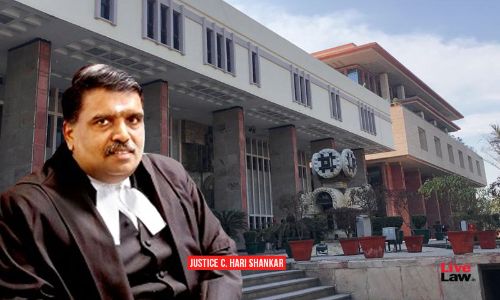
Rewriting Commercial Contractual Terms Is Fatal To An Arbitral Award: Delhi High Court
The Delhi High Court has ruled that where the parties agree to enter into a mutual consultation in the future, for making amendments to an original agreement, the same would only constitute an "agreement to agree", which is not enforceable in law. The Court held that the finding of the arbitral tribunal that though the amendment contemplated by the "Amendment to the Share Holders Agreement" was not in fact carried out by the parties, however, the original Share Holders Agreement stood...
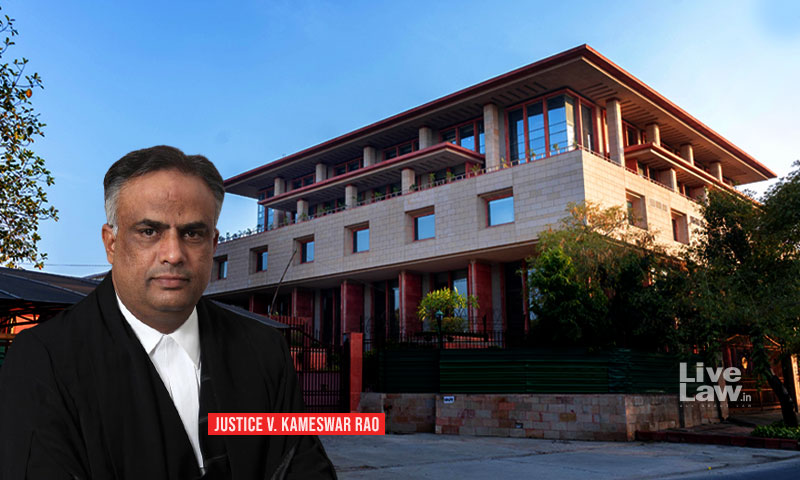
Arbitration Clause In The Initial Agreement Binding Even If Subsequent Settlement Doesn't Have It: Delhi High Court
The Delhi High Court has ruled that an arbitration clause contained in a rent agreement would continue to be binding upon the parties, despite the fact that after the expiry of the agreement the parties had entered into a 'Terms of Settlement' and 'Addendum to Settlement', which did not contain an arbitration clause. The Court observed that the relationship between the parties came into existence on the execution of the rent agreement. Further, it noted that the 'Terms of Settlement'...
Initiation Of Proceedings Under The SARFAESI Act Does Not Bar The Arbitration Of Disputes: Delhi High Court
The Delhi High Court has ruled that the provisions of the Securitisation and Reconstruction of Financial Assets and Enforcement of Security Interest Act, 2002 (SARFAESI Act) provides a remedy in addition to the adjudication under the Arbitration and Conciliation Act, 1996 (A&C Act)and hence, initiation of proceedings under the SARFAESI Act does not bar the arbitration of disputes. The Single Bench of Justice Neena Bansal Krishna held that whether an arbitral award would operate as...
Arbitral Tribunal Cannot Recall The Order Terminating The Arbitral Proceedings: Delhi High Court
The High Court of Delhi has held that once the arbitral tribunal terminates the arbitration proceedings on account of claimant withdrawing its claims, it cannot recall the order of termination order. The bench of Justice C. Hari Shankar held that once the arbitral proceedings are terminated, the arbitral tribunal becomes Functus Officio and it cannot entertain an application recalling its earlier order by which it terminated the arbitral proceedings. The Court further held that...
Notice Stating Right To Initiate Arbitration Not A Notice Under Section 21 of A&C Act: Delhi High Court
The Delhi High Court has ruled that a notice issued by a party, merely stating its right to initiate arbitral proceedings, which it would subsequently initiate if the payment was not made by the opposite party, is a unilateral communication which does not qualify as a notice under Section 21 of the Arbitration and Conciliation Act, 1996 (A&C Act). The Division Bench of Justices Rajiv Shakdher and Tara Vitasta Ganju reiterated that the A&C Act does not contemplate unilateral ...

Close Relative Of Arbitrator Must Be 'Controlling The Company' To Make Him Ineligible: Orissa High Court
The Orissa High Court has clarified that to make an arbitrator ineligible under Clause 9 of the Seventh Schedule read with Section 12(5), the Arbitration and Conciliation Act, 1996, the arbitrator must have a close family relationship with a party and in case of companies, he must have a close relation with the person(s) in the management who should be "controlling the company". A Single Bench of Chief Justice Dr. S. Muralidhar observed, "Further, Clause-9 of the Seventh Schedule...

Limitation Qua Counter-Claim Stops On The Date Of Notice Of Arbitration: Madras High Court
The High Court of Madras has held that the limitation period qua Counter-Claims would be arrested on the date on which the respondent issues the notice of arbitration and the date of filing of counter-claims would be irrelevant. The bench of Justice M. Sundar further held that limitation is a facet of 'public policy' and an error in limitation clearly leaves an award hit by Section 34(2)(b)(ii) read with Clause (ii) of Explanation 1 thereat. The Court further held that if the...