
ARBITRATION

Award Debtor Failed To Take Recourse To S. 26 of Arbitration Act; Cannot Challenge Award Claiming Expert Was Not Examined: Bombay High Court
The Bombay High Court has ruled that if an award debtor has failed to take recourse to the provisions of Section 26 of the Arbitration and Conciliation Act, 1996 (A&C Act), it cannot seek to set aside the award on the ground that the expert, whose report was relied upon by the arbitrator, was not examined by the opposite party. The bench of Justice Manish Pitale was dealing with a petition challenging the arbitral award in a dispute between partners, where the award debtor contented...
Objections Under Section 47 Of CPC Cannot Be Considered In An Enforcement Petition Under Section 36 Of The A&C Act: Delhi High Court
The High Court of Delhi has held that objections available under Section 47 of CPC cannot be considered by a Court at the time of enforcement of an arbitration award under Section 36 of the A&C Act. The bench of Justice Vashwant Varma held though under the Arbitration Act, 1940, the Arbitral Award was required to be made a rule of the Court and a decree but Section 36 of the Arbitration Act, 1996, confers the Arbitral Award with a status of a decree to be enforced in the same...

Non - Signatory Can Be Referred To Arbitration Under ‘Doctrine Of Alter Ego’: Madras High Court
The Madras High Court has ruled that non-signatories to arbitration agreement can be referred to arbitration by invoking the ‘doctrine of alter ego’ only in exceptional cases where there is convincing evidence that the non-signatory is the ‘alter ego’ of the signatory. The bench of Justice Senthilkumar Ramamoorthy remarked that the doctrine of alter ego is applied in exceptional circumstances by piercing the corporate veil of the signatory Company in order to determine who lurked...
Arbitration Clause Continues To Operate Even After Dissolution Of Partnership: Delhi High Court
The Delhi High Court has ruled that an arbitration clause contained in a contract executed with a partnership firm, will continue in effect even after the death of a partner causes the dissolution of the partnership. The bench of Justice Chandra Dhari Singh held that the Court has the power to conduct a procedural review of its order passed under Section 11 of the Arbitration and Conciliation Act, 1996 (A&C Act). It further remarked that the Courts’ competence to review Section 11...
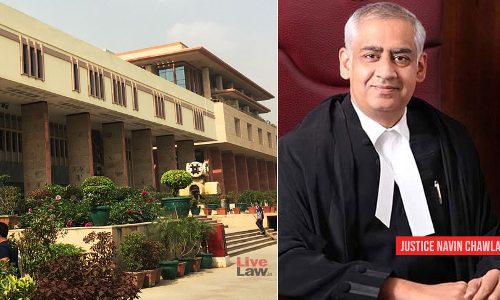
Resort To Resolve Disputes Internally Before Filing Section 11 Application Under A& C Act: Delhi High Court
The High Court of Delhi has held that an application for the appointment of an arbitrator under Section 11 of the A&C Act would be premature if it is filed without compliance with the pre-arbitration internal dispute resolution mechanism stipulated under the agreement. The bench of Justice Navin Chawla held that when the agreement provides for a multi-tier dispute resolution process in the form of reference of dispute firstly to some internal authorities and on being dissatisfied...

Reference Under Section 18(1) Of MSMED Act Would Override Arbitration Agreement Between Parties: Bombay High Court
The Bombay High Court has ruled that once reference under Section 18(1) of the Micro, Small and Medium Enterprises Development Act, 2006 (MSMED Act) is made and the Facilitation Council is in the process of commencing arbitration under Section 18(3), the application under Section 11 of the Arbitration and Conciliation Act, 1996 (A&C Act) seeking appointment of arbitrator cannot be allowed merely because the parties had entered into an arbitration agreement. The bench of Justice ...

Arbitration Cases Weekly Round-Up: 15 January to 21 January 2022
Supreme Court: 12 Months Time Limit Under Section 29A Arbitration Act Not Applicable To International Commercial Arbitration: Supreme Court Case Title: TATA Sons Pvt Ltd versus Siva Industries and Holdings Ltd The Supreme Court has held that the time limit of twelve months as prescribed in Section 29A of Arbitration and Conciliation Act is not applicable for international commercial arbitration. "In terms of the amended provisions of Section 29A, arbitral tribunals in ...
Arbitral Reference Can’t Be Made Mechanically Under Section 8, If Some Parties To Suit Are Non-Signatories To Arbitration Agreement: Bombay High Court
The Bombay High Court has ruled that if the plaintiff seeks relief in a suit against parties, some of whom are not signatories to the arbitration agreement, the matter cannot be mechanically referred to arbitration under Section 8 of the Arbitration and Conciliation Act, 1996 (A&C Act). The bench of Justice Manish Pitale remarked that amendment of Section 8 by the 2015 Amendment Act and the decision of the Apex Court in Vidya Drolia & Ors. v. Durga Trading Corporation (2020),...

Period Of Limitation Begins To Run On The Date Of Payment Of Final Bill For Claims Rejected: Calcutta HC
The Calcutta High Court has held that the period of limitation would begin to run from the date of final payment for the claims that are rejected under it. The Court held that once a claim that was existing at the time of preparation of the final bill is rejected in the final payment, the limitation period commences which cannot be stopped by issuing unilateral letters by a party. The bench of Justice Shekhar B. Saraf held that at the stage of appointment of arbitrator the Courts do...
Delivery Of Arbitration Award To Employee/ Agent Of Party, Not A Valid Delivery Under Arbitration Act: Delhi High Court
The Delhi High Court has ruled that delivery of arbitral award, to be effective under the Arbitration and Conciliation Act, 1996 (A&C Act), must be made to a person who has direct knowledge of the arbitral proceedings. The bench of Justice Chandra Dhari Singh remarked that the word ‘party’ in Section 34(3) of the A&C Act means party to the arbitral proceedings and does not include an agent of the party as well. The Court further held that, delivery of the arbitral award to the...

Award Of Costs By Arbitrator, Not Containing Quantification And Reasons, Is Arbitrary: Delhi High Court
The Delhi High Court has ruled that the mandate contained in Section 31(3) of the Arbitration and Conciliation Act, 1996 (A&C Act), as per which an arbitral award shall state the reasons on which it is based, must pervade every aspect of the award, including the award of costs. “Awarding costs by a stroke of the pen, without stating reasons therefor, would fly in the face of section 31(3), apart from being opposed to well accepted canons of fairness and justice”, the bench of...

Issue Whether Main Claim Is Time Barred, Is An Issue On Merits; Must Be Decided In Arbitral Proceedings: Bombay High Court
The Bombay High Court has ruled that while the limitation period for filing an application under Section 11 of the Arbitration and Conciliation Act, 1996 (A&C Act), seeking appointment of arbitrator, is to be examined by the Court, the limitation aspect of the substantive claims is to be looked into only by the arbitral tribunal and not by the Court. The bench of Justice Bharati Dangre added that the only exception to this is, if the claim being referred to arbitration is hopelessly ...