
ARBITRATION

Whether A Signed Copy Or Certified Copy Of The Award, Purpose Of S. 31(5) of A&C Act Is To Inform The Party: Bombay High Court
The Bombay High Court has ruled that the purpose of Section 31(5) of the Arbitration and Conciliation Act, 1996 (A&C Act), which provides for delivery of the signed copy of the arbitral award, is of imparting knowledge to the party regarding the contents of the award, and to make the party aware that the limitation to raise a challenge has started to run. The court held that the said knowledge/information is equally available to the party, when it receives the certified copy of the...

Delhi High Court Invokes “Direct Benefits” And “Intertwined” Estoppel Theory To Refer Non-Signatory To Arbitration
The Delhi High Court has invoked the “direct benefits” estoppel theory and the “intertwined estoppel theory” to refer a non-signatory to arbitration. While referring the builder/developer (non-signatory) of a building to arbitration in a dispute between the owner of the flat and the maintenance agency under the ‘maintenance agreement’, the court observed that its impleadment was mandated not on account of the “group of companies” doctrine but on the ground that the maintenance agency’s ...

Arbitration Cases Weekly Round-Up: April 9 To April 15, 2023
Supreme Court:Limited Scrutiny of Court Under Section 11 Of Arbitration Act Through The “Eye Of The Needle”, Is Necessary And Compelling: Supreme CourtCase Title: NTPC Ltd vs M/s SPML Infra LtdThe Supreme Court has ruled that the court while exercising jurisdiction under Section 11(6) of the Arbitration and Conciliation Act, 1996 (A&C Act) is not expected to act mechanically, and that the limited scrutiny of the court at the pre-reference stage, through the “eye of the needle”, is necessary...

Appeal Against Dismissal Of S. 8 Application Filed Before Commencement Of 2015 Arbitration Amendment Act, Not Maintainable: Himachal Pradesh High Court
The Himachal Pradesh High Court has reiterated that the amendment incorporated in Section 37 (1) (a) of the Arbitration and Conciliation Act, 1996 (A&C Act) by the Arbitration and Conciliation (Amendment) Act, 2015, which provides for an appeal against an order of the court refusing to refer the parties to arbitration under Section 8, is prospective in nature. Thus, the same will apply to court proceedings which have commenced on or after the Amendment Act came into force, i.e.,...

A Court Cannot Condone The Delay In Filing Of The Petition Under Section 34 Of The A&C Act Beyond 120 Days: Gauhati High Court Reiterates
The Gauhati High Court has held that a Court cannot condone the delay in the filing of the petition under Section 34 of the A&C Act beyond 120 days.The bench of Justice Malasri Nandi held that the Court cannot condone the delay beyond the period of limitation provided under Section 34(3) of the Act i.e. 3 months+ 30 days. It held that Section 5 of the Limitation Act does not apply to petition under Section 34(1) of the A&C Act. FactsThe parties entered into an agreement in the year 2010...
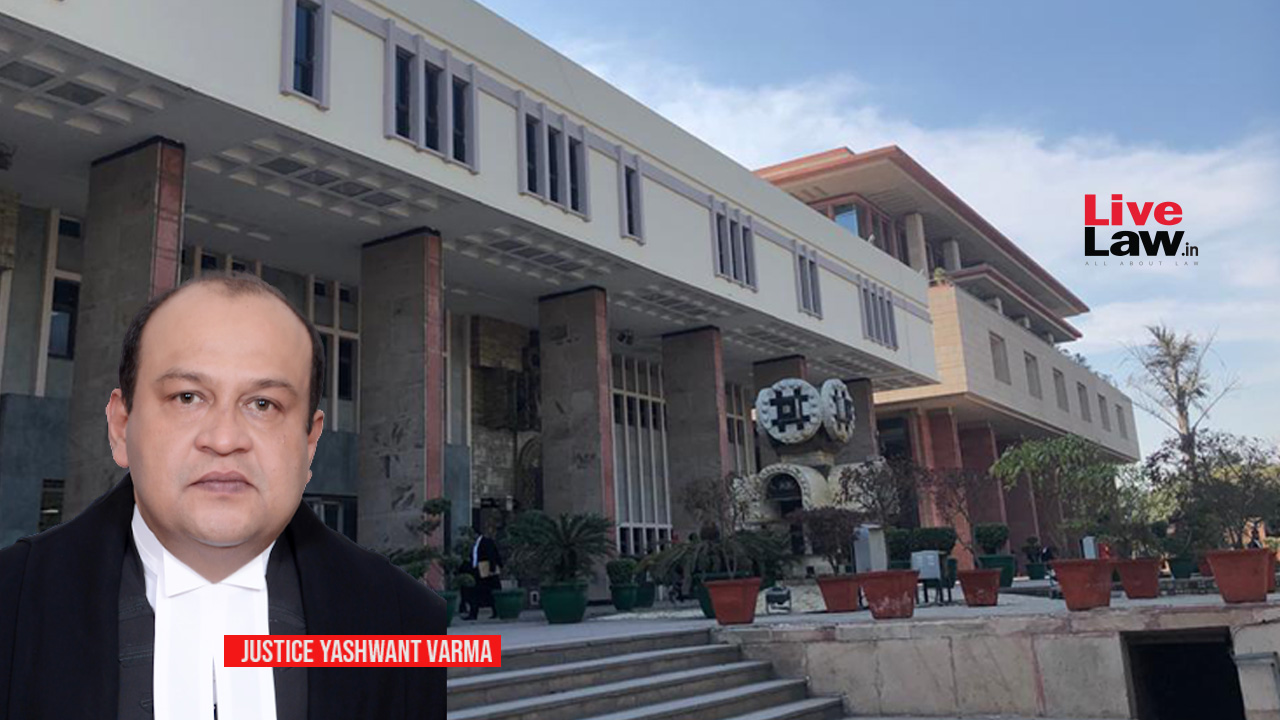
Delhi High Court Lays Down Twin Test For Exercising Power Of Attachment Before Passing Arbitral Award
The Delhi High Court has ruled that though the power to pass an attachment order before an award is rendered by the Arbitral Tribunal may not have been specifically set out in Sections 9 and 17 of the Arbitration and Conciliation Act, 1996 (A&C Act), however, such an order could be made if the circumstances so warrant.However, the bench of Justice Yashwant Varma remarked that the said power cannot be invoked merely because the claimant is found to have a just or valid claim upon a prima...

Section 12(5) Of The A&C Act Would Not Apply To An Arbitration That Commenced Before The 2015 Amendment: Calcutta High Court
The High Court of Calcutta has held that Section 12(5) of the A&C Act, which provides for ineligibility of a person to act as an arbitrator whose appointment falls under any categories mentioned under the Seventh Schedule to the Act, would not apply to an arbitration that commenced before the 2015 Amendment.The bench of Justice Shekhar B. Saraf held that the 2015 Amendment that added Section 12(5) to the A&C Act would not retrospectively apply to arbitration proceedings that commenced...
Award Passed By A Unilaterally Appointed Arbitrator Is A Nullity, Cannot Be Enforced Under Section 36 Of The A&C Act: Calcutta High Court
The High Court of Calcutta has held that an arbitration award passed by an arbitrator who was unilaterally appointed by one of the parties cannot be executed under Section 36 of the A&C Act.The bench of Justice Shekhar B. Saraf held that a unilaterally appointed award does not carry the privilege of existence in the eyes of the law and is regarded as a nullity, therefore, there is nothing to execute in an enforcement petition. FactsThe parties entered into Master Lease Agreement dated...
![[Arbitration and Conciliation Act] Supreme Court Sought Particulars of All Pending Section 11(6) Applications From High Courts](https://assets.livelawbiz.com/h-upload/2022/02/23/500x300_410400-arbitration-and-conciliation-act.jpg "[Arbitration and Conciliation Act] Supreme Court Sought Particulars of All Pending Section 11(6) Applications From High Courts")
Arbitration | Section 34 Application Must Be Filed Within 90 Days Limitation To Claim Exclusion Of Period When Court Remain Closed : Supreme Court
The Supreme Court has held that an application under Section 34 of Arbitration and Conciliation Act, 1996 must be filed within “prescribed period” of limitation i.e. 90 days, for seeking benefit of exclusion of period during which the Court remained closed from computation of limitation period. If the application is filed by invoking Proviso to Section 34(3) of Arbitration Act, which extends the limitation period to further 30 days on the Court’s discretion, then benefit of such exclusion would...

Limited Scrutiny of Court Under Section 11 Of Arbitration Act Through The “Eye Of The Needle”, Is Necessary And Compelling: Supreme Court
The Supreme Court has ruled that the court while exercising jurisdiction under Section 11(6) of the Arbitration and Conciliation Act, 1996 (A&C Act) is not expected to act mechanically, and that the limited scrutiny of the court at the pre-reference stage, through the “eye of the needle”, is necessary and compelling.The bench comprising Chief Justice DY Chandrachud and Justice PS Narasimha remarked that the same is intertwined with the duty of the referral court to protect the parties from...
Arbitration- Limitation Starts From Failure Of Settlement Talks: Calcutta High Court
The High Court of Calcutta has held that the period of limitation will only begin to run when the talks of amicable settlement between the parties fail.The bench of Justice Shekhar B. Saraf held that the period of limitation for referring a dispute to arbitration would be calculated from the date of the breaking point i.e., the date of failure of settlement talks, when the parties were trying to amicably settle the dispute. FactsThe parties entered into a contract dated 28.10.2010 by which the...
Arbitration Cases Weekly Round-Up: April 02 To April 08, 2023
Bombay High Court: Limited Remedy Available Under S. 34 Of A&C Act Against Award Of Compensation Under NHA, Is Not A Ground To Invoke HC’s Writ Jurisdiction: Bombay High Court Case Title: M/s Omanand Industries & Anr. vs The Secretary to the Government of India, Ministry of Road Transport and Highways The Bombay High Court has ruled that though the scope for challenging the compensation awarded by the Arbitrator to the landowners under Section 3-G (5) of the National...