
ARBITRATION
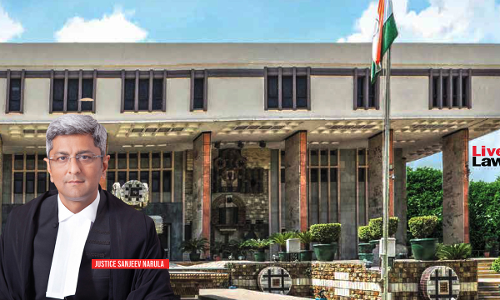
Absence Of Term “Seat” In Arbitration Clause, Exclusive Jurisdiction Can Be Derived From Intention Of Parties: Delhi High Court Dismisses Section 11(6) Application
The Delhi High Court bench comprising Justice Sanjeev Narula held that the intention of the parties to grant exclusive jurisdiction can be derived from the language of the arbitration clause even in the absence of the usage of the term “seat” in the arbitration clause. The bench held that if there is an agreement explicitly or impliedly stating a seat of arbitration, the exclusive jurisdiction is upon the court of the seat to appoint an arbitrator under Section 11(6) of the Arbitration and...
High Court At Designated 'Venue' Has Jurisdiction, J&K High Court Dismisses S. 11 Application
The Jammu & Kashmir and Ladakh High Court bench comprising Chief Justice N. Kotiswar Singh affirmed that when parties specify a particular location as the venue for arbitration proceedings, that location effectively becomes the seat of arbitration. Consequently, only courts with jurisdiction over that designated venue possess the authority to hear and decide on matters pertaining to the arbitration agreement. Therefore, the bench dismissed an application under Section 11(6) of the...

Arbitrator Decides Validity Of Arbitration Agreement, Telangana High Court Applies Prima Facie Approach To Allow S. 11 Application
The Telangana High Court bench comprising Justice K Lakshman held that the court can refer a dispute to arbitration unless a party could establish a prima facie case of the non-existence of a valid arbitration agreement. The bench held that in cases where doubt arises regarding the validity of the arbitration agreement, the matter should be referred and decided by the arbitrator. Brief Facts: The matter pertained to a lease agreement between Sri Gourishetty Srinivas (“Applicant), who...
Writ Petition Against Arbitrator's Order Not Maintainable Unless Exceptional Circumstances Or Bad Faith Can Be Shown: M.P. High Court
The High Court of Madhya Pradesh bench comprising Justice Sushrut Arvind Dharmadhikari and Justice Devnarayan Mishra refused to exercise the writ jurisdiction of the High Court under Article 226/227 of the Indian Constitution for a matter involving dismissal of an application made to an Arbitrator under Section 16(3) of the Arbitration and Conciliation Act, 1996 by the Petitioner. The High Court held that a writ petition under Article 226/227 of the Indian Constitution is not maintainable...

Section 8 Of A& C Act Is Compiled On Filing Application Under O. 7 Rule 11, Informing About Arbitration Clause: Telangana High Court
The Telangana High Court single bench of Justice Alok Aradhe held that the requirement under Section 8(1) of the Arbitration and Conciliation Act, 1996 to inform the court regarding the existence of an arbitration clause is fulfilled when a party files an application for rejection of plaint under Order VII Rule 11 of the Code of Civil Procedure, 1908 in a commercial court. Brief Facts: The matter pertained to an agreement entered between M/s Naolin Infrastructure Private Ltd....
Generic Exclusive Jurisdiction Clause In Agreement Doesn't Supersede Courts' Jurisdiction Of Arbitration Seat: Delhi High Court
The Delhi High Court single bench of Justice Sachin Datta held that even if the agreement specifies exclusive jurisdiction on a different court, courts having jurisdiction over the seat of arbitration retain supervisory authority over the arbitral process. Therefore, it held that the presence of a generic exclusive jurisdiction clause does not diminish Delhi courts' jurisdiction as the seat of arbitration. Brief Facts: The matter pertained to a Business Associate Agreement executed...
Allegation of Bias Can't Be Raised After Award Has Been Passed Under S. 31, Delhi High Court Dismisses S. 34 Application
The Delhi High Court bench comprising Justice Pratibha M. Singh held that objections regarding bias against an arbitrator, as outlined in Section 12(5) of the Arbitration and Conciliation Act, 1996, cannot be raised after the arbitrator has rendered a decision under Section 31. The single bench emphasized that once an award has been made, raising allegations of bias amounts to a waiver under Section 4 of the Arbitration Act. Brief Facts: Ircon International Ltd. (“Respondent”)...
Arbitration Referred By Civil Court Without Invoking S. 11 Of Arbitration Act Doesn't Require Registration, It's Part Of Decree: Karnataka High Court
The Karnataka High Court single bench comprising Justice MG Uma held that when a Civil Court refers the parties to arbitration and appoints an arbitrator without invoking Section 11 of the Arbitration and Conciliation Act, 1996, the award merges with the decree accepted by the court, therefore, doesn't warrant to be registered and drawn on a stamp paper. Brief Facts: H R Satyanarayana (“Petitioner”) initiated a suit before the Trial court seeking partition and separate possession of...

Mere Negotiations Do Not Delay Cause Of Action For Purpose Of Limitation, Telangana High Court Dismisses Application For Appointment Of Arbitrator
The Telangana High Court single bench comprising Justice CV Bhaskar Reddy held that the mere exchange of communications or settlement discussions between the parties does not extend the period of limitation for issuing a notice of arbitration. The bench held that mere negotiations do not delay the cause of action for the purpose of limitation. Brief Facts: Athelli Mallikarjun (“Applicant”) entered into development agreements-cum-General Power of Attorney with S.S.B Constructions...
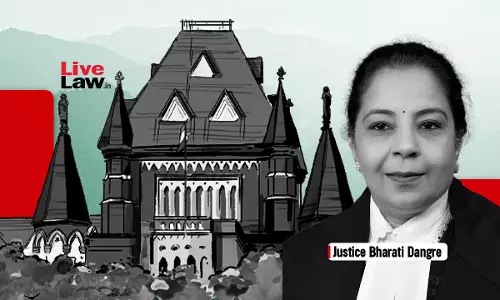
Fraud Being Non-Arbitrable Due To Complexity Is Archaic Position, Contemporary Arbitration Practice Has Evolved: Bombay High Court
The Bombay High Court single bench comprising Justice Bharati Dangre held that due to an evolution in contemporary arbitration where there was a belief that fraud disputes were unsuitable for arbitration, today, arbitral tribunals routinely navigate through extensive material in various dispute types. Thus, it held that the previous notion of fraud being non-arbitrable due to complexity is archaic and no longer applicable in modern arbitration practices. Brief Facts: The matter...
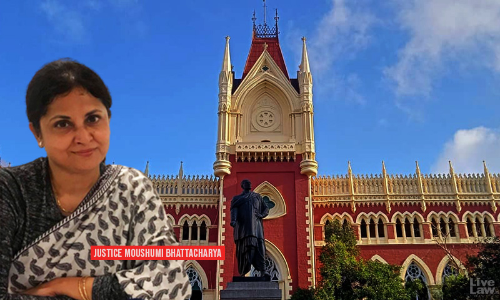
Arbitration And Conciliation Act Does Not Overlap West Bengal Public Land Act: Calcutta High Court
The Calcutta High Court single bench of Justice Moushumi Bhattacharya held that there exists no conflict between the Arbitration and Conciliation Act, 1996, and the provisions of The West Bengal Public Land (Eviction of Unauthorised Occupants) Act, 1962. It held that both statutes operate within distinct domains and do not overlap in their scope or application. Brief Facts: Rolta Infrastructure and Technology Services Private Limited (“Petitioner”) approached the Calcutta High Court...

Arbitration Weekly Round Up: 3nd February to 11th February 2024
Delhi High Court Delhi High Court Dismisses Writ Petition, Permits Petitioner To Avail Remedy Under S. 37 Of Arbitration Act Case Title: Shri Balaji Enterprises & Ors vs Reserve Bank Of India & Anr. Citation: 2024 LiveLaw (Del) 134 The Delhi High Court bench comprising Justice Subramonium Prasad held that the aggrieved party should avail the alternate remedy available under the Arbitration and Conciliation Act, 1996 before approaching the court under Article 226 unless...