
ARBITRATION
Enforcement Of Foreign Award Must Be Refused Only Rarely, International Standards To Be Applied To Determine Bias : Supreme Court
In a crucial judgment, while allowing the enforcement of a foreign arbitral award, the Supreme Court (on March 04), held that to determine the factor of arbitral bias, Court must endeavour to follow international standards than domestic ones. It is only in exceptional circumstances that enforcement of a foreign should be refused on the ground of bias., the Court said."Embracing international standards in arbitration would foster trust, certainty, and effectiveness in the resolution of...

Arbitration Weekly Round-Up: 18th March to 24th March 2024
Supreme Court General Reference Won't Have Effect Of Incorporating Arbitration Clause In Another Contract, Specific Reference Needed : Supreme Court Case Title: NBCC (INDIA) LIMITED VERSUS ZILLION INFRA PROJECTS PVT.LTD. Citation : 2024 LiveLaw (SC) 246 The Supreme Court reiterated that a dispute cannot be referred to arbitration based on the arbitration clause contained in another contract unless a specific reference was made in the main contract to incorporate the...
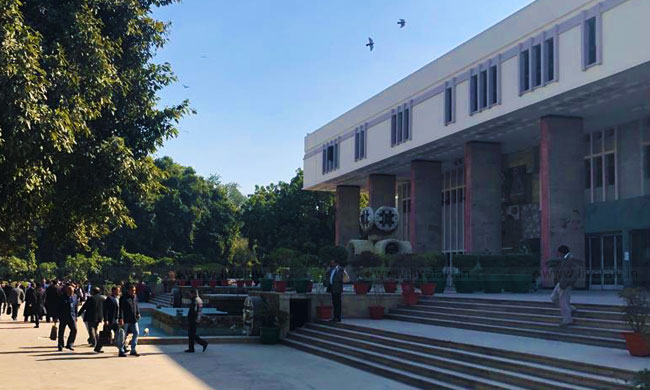
Mere Delay By Employer Would Not Entitle The Contractor To Damages Unless The Loss Is Pleaded And Proved: Delhi High Court
The High Court of Delhi has held that merely because the delay in the execution of the work is attributable to the employer, the same would not entitle the contractor to claim damages unless it pleads and proves that such delay resulted in loss to it. The bench of Justices Vibhu Bakhru and Tara Vitasta Ganju held that a procedural order passed by the earlier arbitrator, not being a final decision on the merits, does not preclude the substitute arbitrator from deciding the claims on ...
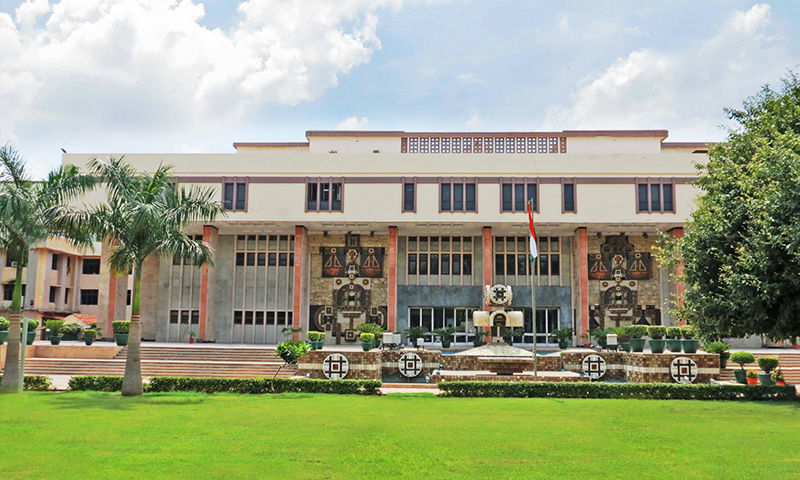
Membership Of An Arbitral Institution Cannot Be Insisted Upon As A Pre-Requisite For Invoking Arbitration: Delhi High Court
The High Court of Delhi has held the membership of an arbitral institution cannot be insisted upon as a pre-requisite for invoking arbitration. The bench of Justice Sachin Datta held that when parties agree to resolve their dispute through an arbitral institution, such an agreement cannot be construed to mean that they have agreed to take its membership. The Court held that insistence by an arbitral institution for such membership impinges on the validity of the appointment...
Panel Consisting Of 23 Names Cannot Be Considered Broad-Based If It Lacks Arbitrators From Different Backgrounds: Delhi High Court
The High Cout of Delhi has held that a panel consisting of 23 names cannot be considered broad-based if lacks arbitrators from different backgrounds. The bench of Justice Dinesh Kumar Sharma held that a panel must not only be broad in terms of numbers but should also reflect diversity by having arbitrators from diverse backgrounds. Facts The parties entered into an agreement dated 20.06.2016. A dispute arose between the parties which led to the petitioner issuing the notice...
Unilateral Appointment Of Arbitrator By Party: Delhi High Cout Set Aside Arbitral Award As It Contravened Section 12(5) A&C And & 7th Schedule
The Delhi High Court single bench of Justice Jasmeet Singh held aside an arbitral award noting that the arbitrator was unilaterally appointed by the Respondent. The bench held that that the unilateral appointment of the Sole Arbitrator by Respondent was non-est in law, as it contravened Section 12(5) read with the Seventh Schedule of the Arbitration and Conciliation Act, 1996. “The Sole Arbitrator has been appointed by the respondent unilaterally. The same is clearly hit by the ...
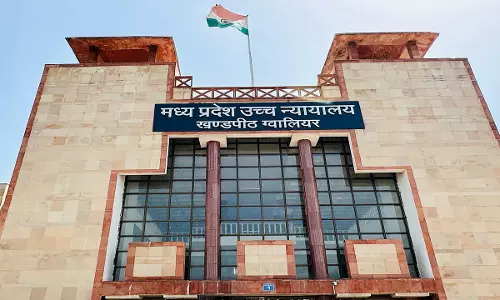
Proceedings Under Section 138 of Negotiable Instruments Act And Arbitration Are Parallel In Nature Rather Overlapping: Madhya Pradesh High Court
The Madhya Pradesh High Court single bench of Justice Anand Phatak held that proceedings under Section 138 of the Negotiable Instruments Act regarding dishonoring of cheques and arbitration are two proceedings moving in different jurisdictional realm and they are parallel in nature rather than overlapping. It held that “both may continue because scope of Section 138 of the N.I. Act is confined to the dishonoured cheques, whereas dispute between the parties appears to be such deep and exact...
Arbitration Act | To Claim Liquidated Damages, Party Should Establish It Had Suffered Legal Injury As Result Of Breach Committed By Other Party: Delhi High Court
The Delhi High Court division bench of Justice Rajiv Shakdher and Justice Amit Bansal held Liquidated damages, in law, are no different from unliquidated damages that an aggrieved party may claim. In both instances, the aggrieved party is required to demonstrate legal injury. “Liquidated damages, as agreed to between the disputants, represents the maximum amount that can be paid to an aggrieved party. Since damages for breach of contract is paid as compensation, the law requires the...
Where Arbitral Award In Nature Of Money Decree, Requirement Of 100% Deposit Of Award For Grand Of Stay: Bombay High Court
The Bombay High Court single bench of Justice R.I. Chagla held that where the arbitral award is in the nature of money decree, there is a requirement for deposit of 100% of the awarded amount for grant of stay. Further, it held that there is no distinction in the application of parameters between stays sought under Section 36(3) and Section 37 of the Arbitration Act, as neither provision specifies such differentiation Section 36(3): (3) Upon filing of an application under...
MSCS Act | Disputes Between Society And Its Members Are Subject To Arbitration: Calcutta High Court Sets Aside State & District Consumer Commission Orders
The Calcutta High Court single bench of Justice Prasenjit Biswas held that disputes concerning the management, constitution, or business of the society, between the society and its members or those claiming through them, are subject to arbitration under Section 84 of the Multi-State Co-operative Societies Act, 2002. Therefore, it set aside orders of District Consumer Disputes Redressal Forum and the State Consumer Disputes Redressal Commission for entertaining the complaint. Brief...
No Privity Of Contract Between Parties, not party to MOU: Delhi High Court Dismisses Section 11(4) A&C Petition
The Delhi High Court single bench of Justice Dinesh Kumar Sharma dismissed a petition under Section 11(4) of the Arbitration and Conciliation Act, 1996 noting that the Petitioners were not party to Memorandum of Understanding containing the arbitration clause, thus there was no privity of contract between the Petitioners and the Respondent. Brief Facts: The Petitioner approached the Delhi High Court (“High Court”) under Section 11(4) of the Arbitration and Conciliation Act, 1996...
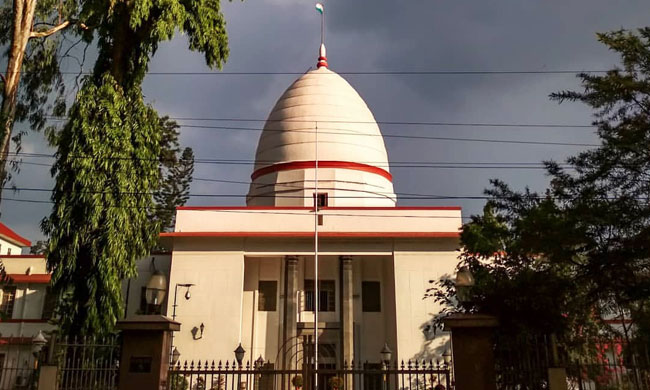
MSMED Act | Conciliation Mechanism Under Section 18 Shall Be Followed To Resolve Payment Dispute: Gauhati High Court Dismisses Writ Petition
The Gauhati High Court single bench of Kaushik Goswami dismissed a writ petition noting that when a dispute arises regarding payment under Micro, Small and Medium Enterprises Development Act, 2006, the mechanism under Section 18 shall be followed to resolve the dispute by way of a conciliation proceeding, failing which arbitration proceeding as prescribed under Section 18 to be conducted. Brief Facts: The Petitioner filed writ petition in the Gauhati High Court and challenged...