
ARBITRATION

Industrial Tribunals Bound To Give Proper And Cogent Reasons For Their Orders: Karnataka High Court
The Karnataka High Court has observed that Industrial Tribunals must give proper and cogent reasons for their orders. If the tribunals give reasons for an order, it will be an effective restraint on the abuse of power, as the order, if it discloses extraneous or irrelevant consideration, will be subject to judicial scrutiny and correction. A Single judge bench of Justice K S Hemalekha said, “The Tribunal, while rejecting the claim statement, must assign proper and cogent reasons,...

An Award Issued By Unilaterally Appointed Arbitrator Can Be Contested For Invalidity Of Appointment, Even By The Appointing Party: Delhi High Court
The High Court of Delhi has held that an award passed by a unilaterally appointed arbitrator can be challenged on ground of invalidity of such appointment and consequent lack of jurisdiction even by the party who made such an appointment. The bench of Justice Anup Jairam Bhambhani held that a defect of jurisdiction can be challenged at any stage since it goes to the power of the tribunal to decide the dispute. It held that mere participation in the arbitral proceedings cannot be...
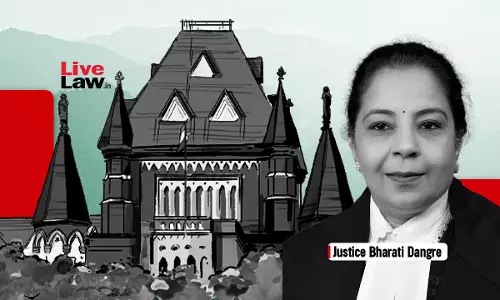
Appointment Of Arbitrators From A Narrow Panel Of 4 Arbitrators Is Violative Of Section 12(5) Of The A&C Act: Bombay High Court
The High Court of Bombay has held that appointment of arbitrator from a narrow panel of 4 arbitrators is violative of Section 12(5) of the A&C Act. It held that such practice of preparing narrow panels restricts free choice and give rise to suspicion that favourites are chosen. The bench of Justice Bharati Dangre held that independence and impartiality of arbitrators is a hallmark of arbitration and the rule against bias is one of the fundamental principles of natural justice,...

Cheques Encashed Pursuant To 'Full And Final Settlement' Without Any Protest, Rajasthan High Court Refuses Arbitration
The High Court of Rajasthan, Jaipur Bench, has held that an application seeking the appointment of an arbitrator would not be allowed if the parties had already entered into a full and final settlement, and the applicant had encashed the settlement amount without protest or objection. The Court held that in such cases, the dispute would be considered non-arbitrable. Chief Justice Manindra Mohan Shrivastava's bench further clarified that a petition seeking the appointment of an ...
Power Under Section 9 Of A&C Are Wider Than Power Of Court Under Order 38 Rule 5 Of CPC: Calcutta High Court
The High Court of Calcutta has held that power of a Court exercising powers under Section 9 of the A&C Act are wider than the powers of a Court under Order XXXVIII Rule 5 of CPC. It held that unlike under CPC, the dissipation of assets is not a mandatory requirement for interim relief under Section 9 of the A&C Act. The bench of Justice Ravi Krishan Kapur a petitioner under Section 9 of the A&C Act cannot be burdened with the rigours of Order XXXVIII Rule 5 of CPC. ...

A Term-Sheet Is Not A Binding Agreement If It Required Execution Of A Definitive Agreement: Karnataka High Court
The High Court of Karnataka has held that a termsheet for buyout is only an offer and a contract if it was valid only for a limited period or till the execution of a definitive agreement. The Bench of Justices Anu Sivaraman and Anant Ramanath Hedge ruled that a termsheet would expire if the specified period for executing a definitive agreement passes without such an agreement being made. It held that an expired termsheet cannot be enforced or acted upon. Facts The parties entered...
Can A Section 29A Application Be Filed In The Commercial Court Or Only In The High Court? Single Bench Of Bombay High Court Refers The Issue To Larger Bench
The High Court of Bombay (Goa Bench) has referred the issue of maintainability of a Section 29A application seeking extension of the arbitration before the Commercial Court to a larger bench in view of conflicting views by two co-ordinate benches of the High Court. The Bench of Justice Bharat P. Deshpande observed that the since Section 29A of the A&C Act not just involves extension of the mandate of the arbitrator, but also questions relating to the substitution, termination and...

Ease Of Doing Business In India Is A Matter Of 'Public Policy', Fruits Of Arbitral Award Must Be Protected To Promote Business: Calcutta High Court
The High Court of Calcutta has held that ease of doing business in india with indian entities is also a matter of 'Public Policy'. These observations were made by the High Court while hearing an application under Section 9 of the A&C Act at post award stage in arbitration with seat in United States (US). The Bench of Justice Ravi Krishan Kapur held that the fruits of the award must be made real and realizable so that the award is not rendered illusory or meaningless. It held that...
An Arbitration Award With Contradictory Findings Is Liable To Be Set Aside Under Section 34 Of The A&C Act: Delhi High Court
The High Court of Delhi has held that an arbitration award, in which the tribunal rendered findings contrary to its own observations, falls within the rubric 'Public Policy' under Section 34 of the Act. The bench of Justice Chandra Dhari Singh also held that in a situation wherein the arbitral tribunal has given conflicting awards on an identical issue involving the same parties and with same contractual conditions, the Court would have to set aside the award in such an anomalous...
Non-Adjudication Upon An Issue Going To The Root Of The Matter Would Make The Arbitral Award Opposed To 'Public Policy': Delhi High Court
The High Court of Delhi has held that non-adjudication, by the arbitral tribunal, upon an issue that goes to the root of the matter would make the arbitral award opposed to public policy. It held that such an award would be set aside under Section 34 of the A&C Act. The bench of Justice Chandra Dhari Singh held that once the tribunal duly notes the submissions of a party on an issue central to the dispute but renders no finding on such submission/contentions, it would result in...
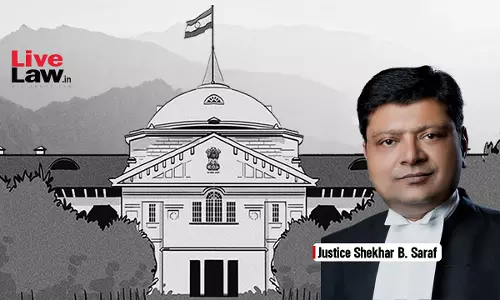
Arbitration Is Hailed As A Faster Alternative To Traditional Litigation, But Reality In India Falls Short Of Object: Allahabad HC
The Allahabad High Court has held that interference in an arbitral award on grounds of violation of public policy can be done if it is against the substantive provisions of the Act.The Court held that interference in arbitral award under Section 37 of the Arbitration and Conciliation Act, 1996 on grounds of 'public policy' must be cautiously done as it can lead to excessive judicial review due the subjective and broad interpretation of 'public policy.'“An award can be interfered with on the...
Arbitral Award Can't Be Challenged U/S 47 CPC In Execution Proceedings: Allahabad High Court Imposes ₹5 Lakh Cost On State
The Allahabad High Court has imposed a cost of Rs. 5 lakhs on the State of Uttar Pradesh for raising objections under Section 47 of CPC in execution proceedings under Section 36 of the Arbitration and Conciliation Act, 1996 on the grounds which were decided in application under Section 34 but were not raised in appeal under Section 37 of the 1996 Act.While dismissing the appeal, Justice Shekhar B. Saraf held “The tactics employed by the Petitioners (State of Uttar Pradesh) characterized by their...