
ARBITRATION
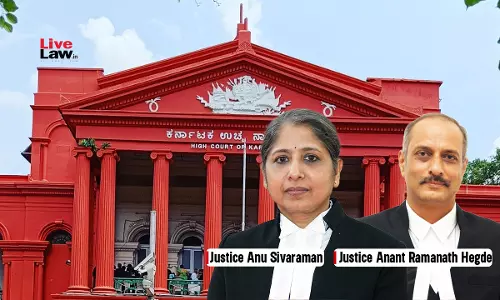
Settlement Arising From Contract Containing Arbitration Clause Must Be Resolved Through Arbitration: Karnataka High Court
The Karnataka High Court division bench of Justice Anu Sivaraman and Justice Anant Ramanath Hegde has held that the right to enforce the settlement has to be through arbitration as the alleged settlement is in respect of a transaction arising from the contract which contained an arbitration clause. Brief Facts: M/s S P Sai Technologies (Respondent) filed a suit for recovery of money, and M/s Akshaya Private Limited (Appellant) contested the jurisdiction of the court by filing an...

Formal Contract Signature Not Required To Enforce Arbitration Clause If Parties Are Ad Idem: Madras High Court
The Madras High Court division bench of Justice Krishnan Ramasamy has held that if it is proved that if it is established that the parties are ad idem, a formal contract signature by the other party is not necessary to enforce the arbitration agreement. Further, the bench held that by acting upon the Purchase Orders, the party implicitly accepted the terms, including the arbitration clause contained in the GCC. Brief Facts: Larsen & Toubro Limited (Petitioner) issued Letters...
Doctrine Of Separability; Arbitration Agreement Survives Termination Of Main Contract: Bombay High Court
The Bombay High Court bench of Justice R. G. Avachat and Justice Neeraj P. Dhote has held that an arbitration agreement survives the termination of the main contract facilitating the resolution of disputes arising under or in connection with the contract. Therefore, the bench dismissed a writ petition noting that the dispute was arbitral and fell within the ambit of the arbitration clause. Brief Facts: The matter pertained to termination notice which terminated the contract for...
Non-Signatories Bound By Arbitration Clause When Purchasing Property From Agreement Parties: Karnataka High Court
The Karnataka High Court bench of Justice Anu Sivaraman and Justice Anant Ramanath Hegde has held that a person who is not a party to the arbitration agreement but buys property from someone who is a party to the agreement is still bound by the arbitration clause that applies to their vendors. The High Court noted that the Constitution Bench of the Supreme Court decision in Cox and Kings Limited v. SAP India Private Limited and Another was primarily concerned with whether the phrase...
Legal Heirs Of Deceased Party To Arbitration Agreement Comes Under "Legal Representatives" Under Section 2(1)(g) Of Arbitration Act: Telangana High Court
The Telangana High Court bench of Justice P.Sam Koshy and Justice Sambasivarao Naidu has held the legal heirs of a deceased person who was a party to an arbitration agreement fall under the definition of "legal representative" as specified in Section 2(1)(g) of the Arbitration and Conciliation Act, 1996. The bench held that it encompasses persons who manage or claim to inherit the deceased's estate. The issue before the High Court was whether an objection under Section 8 of the ...
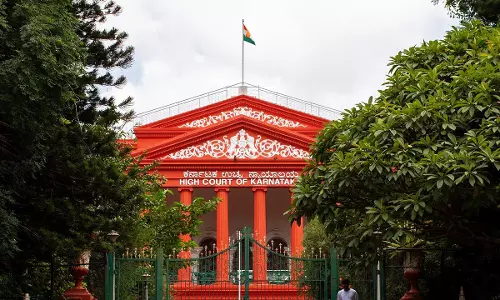
Lis Pendens Principle Applies To Property Acquired During Section 9 Arbitration Proceedings: Karnataka High Court
The Karnataka High Court bench of Justice Anu Sivaraman and Justice Anant Ramanath Hegde has held that an individual who acquires property that is the subject of a proceeding under Section 9 of the Arbitration and Conciliation Act, 1996, is subject to the principle of lis pendens. The issue before the High Court was whether the transaction was affected by the principle of lis pendens as outlined in Section 52 of the Transfer of Property Act, 1882. Section 52 of the Transfer of...
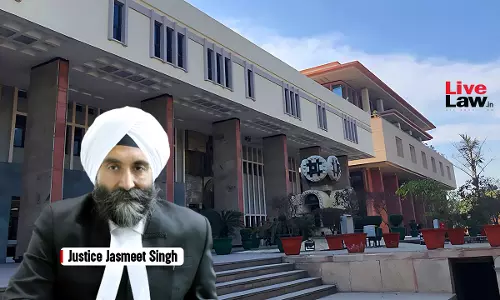
Arbitrators Must Separately Calculate Fees For Claims And Counterclaims In Ad Hoc Arbitration: Delhi High Court
The Delhi High Court bench of Justice Jasmeet Singh has set aside computration of fee by an arbitration on the basis decision in Rail Vikas Nigam Ltd. vs. Simplex Infrastructures Ltd which was later set aside in ONGC Ltd. v. Afcons Gunanusa JV, 2022 LiveLaw (SC) 723. The bench held that in ad hoc arbitration, the arbitrator must calculate fees separately for claims and counterclaims, with the ceiling limit in the Fourth Schedule applied separately to each. Brief Facts: The...
![Gauhati High Court, Justice Michael Zothankhuma, Supreme Court, NHM Scheme, NHM [National Health Mission], Ayurvedic Doctors, parity in salary, Allopathic Medical Officers, Allopathic, Ayurvedic, National Rural Health Mission, State of Uttarakhand And Ors. v. Sanjay Singh Chauhan And Ors., The Ayurvedic Doctors Association and two others v. state of Assam and 4 others,](https://assets.livelawbiz.com/h-upload/2020/07/24/500x300_378810-gauhati-high-court-01.jpg "Gauhati High Court, Justice Michael Zothankhuma, Supreme Court, NHM Scheme, NHM [National Health Mission], Ayurvedic Doctors, parity in salary, Allopathic Medical Officers, Allopathic, Ayurvedic, National Rural Health Mission, State of Uttarakhand And Ors. v. Sanjay Singh Chauhan And Ors., The Ayurvedic Doctors Association and two others v. state of Assam and 4 others,")
Writ Jurisdiction Can't Be Invoked In View Of Arbitration Clause Except For Specific Circumstances: Gauhati High Court
The Gauhati High Court bench of Justice Michael Zothankhuma has held that writ jurisdiction cannot be invoked in the presence of an arbitration clause, except under specific circumstances. The bench observed that the Petitioner did not demonstrate a violation of fundamental rights, principles of natural justice, or that the proceedings were without jurisdiction. Brief Facts: The matter pertained to a termination order issued by Addl. Principal Chief Conservator of Forests...
Unilateral Appointment Of Arbitrator & Non Service Of Notice : Madras High Court Sets Aside Arbitral Award
The Madras High Court bench of Justice Krishnan Ramasamy has set aside an arbitral award where the opposite party proceeded with arbitration unilaterally and appointed the Arbitrator without any intimation to the claimants. Further, the claimants neither received notices of hearing nor appeared before the Tribunal, and consequently, the Arbitrator did not afford any opportunity to claimants to contest the matter. Therefore, the bench held that such an arbitral award was against the...
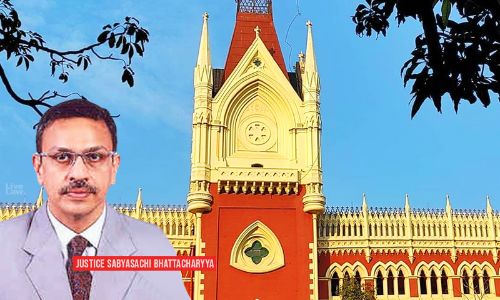
Arbitrator's Award For Compensation For Excess Work And Business Loss Without Sufficient Evidence Is Perverse, Contrary To Fundamental Policy: Calcutta High Court
The Calcutta High Court bench of Justice Sabyasachi Bhattacharyya has held that the arbitrator's decision to award compensation to the claimant for excess work and business loss, without sufficient evidence to support these claims, is perverse and contrary to the fundamental policy of Indian law. Brief Facts: The matter pertained to an arbitral award that granted monetary claims to the claimant. The Petitioner argued that the award lacked any reasoning and that the arbitrator...
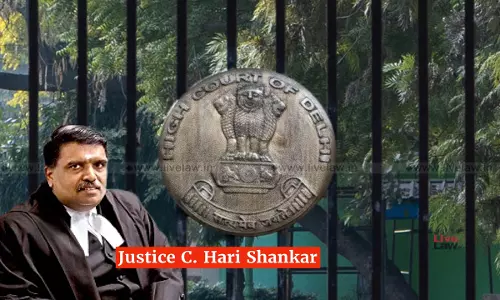
Article 23A Of Schedule I-A Of Stamp Act Applies To Agreements To Sell Under Section 53A Of Transfer Of Property Act: Delhi High Court
The Delhi High Court bench of Justice C.Hari Shankar has held that Article 23A of Schedule I-A of the Stamp Act applicable in Delhi covers Agreement to Sell to which Section 53A of the Transfer of Property Act (TPA) applies. Section 53A of the TPA is designed to protect a transferee who has part performed a contract for the transfer of immovable property. To avail of this protection, the transferee must demonstrate that the contract was in writing, signed by or on behalf of the...
Section 34 Of Arbitration Act Can't Be Used To Seek Re-Litigation: Delhi High Court
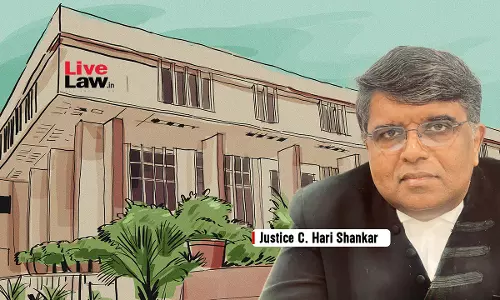
The Delhi High Court bench of Justice C. Hari Shankar has held that that Section 34 of the Arbitration and Conciliation Act, 1996 cannot be used as a tool for a litigant to desist from participating in the arbitral proceedings, despite being fully aware thereof, and, thereafter, seek a “second bite at the arbitral cherry”.The bench further held that under Section 34 the court cannot enter into a re-appreciation of facts.Section 34 outlines the grounds on which a party can request the court to...