
ARBITRATION

Which Court Can Extend Arbitration Deadlines? Bombay High Court Provides Clarification
The Bombay High Court bench of Justice M. S. Karnik and Justice Valmiki Menezes has held that when the High Court constitutes an arbitral tribunal, the High Court holds the jurisdiction to extend the time for completing the arbitration process. Further, the bench clarified that if the tribunal was constituted through an agreement between the parties, the application for extending time can be addressed by the principal civil court with original jurisdiction, which includes both the ...
Breaches Of Undertaking Given Before Court Or Arbitral Tribunal Shouldn't Be Pursued Under Contempt Of Courts Act: Delhi High Court
The Delhi High Court bench of Justice Dharmesh Sharmab has held that breaches of undertakings given before a Court, or an Arbitral Tribunal should not be pursued under the Contempt of Courts Act. Instead, the High Court held that proper course of action is to seek enforcement of the arbitral award. Brief Facts: Index Hospitality Limited (Petitioner) sought to initiate contempt proceedings against Contitel Hotels And Resorts Pvt Ltd & Ors. (Respondents) under Sections 11 and 12...

High Court Doesn't Qualify As Civil Court Under Section 2(1)(e) Of Arbitration Act, Has Jurisdiction Under Section 11(6): Punjab And Haryana High Court
The Punjab and Haryana High Court bench of Justice Jagmohan Bansal has held that the High Court itself does not qualify as a Civil Court under Section 2(1)(e) of the Arbitration and Conciliation Act, 1996. Consequently, the High Court held that it has jurisdiction under Section 11(6) of the Arbitration Act, which grants it authority where the principal Civil Court of original jurisdiction would have the power to address the issues that are subject to arbitration, if those issues were...
Arbitration Clause In Partnership Firm's Agreement Remains Valid If Assets And Liabilities Transferred To Private Limited Company: Punjab And Haryana High Court
The Punjab and Haryana High Court bench of Justice Jagmohan Bansal has held that an arbitration clause in a partnership firm's agreement remains valid if a private limited company has taken over all the firm's assets and liabilities. The High Court held that this arrangement can be inferred from both the dissolution deed of the partnership firm and in the company's Memorandum of Association and Articles of Association. Brief Facts: Shanker Printing Mills (Applicant) initially...

Arbitral Award Can Be Enforced Anywhere In Country Where Decree Is Executable: Madhya Pradesh High Court
The Madhya Pradesh High Court bench of Justice Dwarka Dhish Bansal has held that an award could be enforced through its execution in any location within the country where the decree could be executed. The High Court held that it is unnecessary to obtain a transfer of the decree from the Court that had jurisdiction over the arbitral proceedings. Brief Facts: Mahindra & Mahindra Financial Services Limited (the Applicant), who held the decree, filed a civil revision...

Arbitration Cases Monthly Digest: July 2024
Supreme Court Avoid Bulky Pleadings & Lengthy Submissions In Arbitration Appeals : Supreme Court To Advocates Case Title: Bombay Slum Redevelopment Corporation Private Limited Versus Samir Narain Bhojwani Citation : 2024 LiveLaw (SC) 445 Expressing displeasure over the filing of bulky and lengthy submissions in the arbitral proceedings, the Supreme Court on Monday (July 8) called upon the Bar to urge only the legally permissible grounds in the arbitration proceedings...
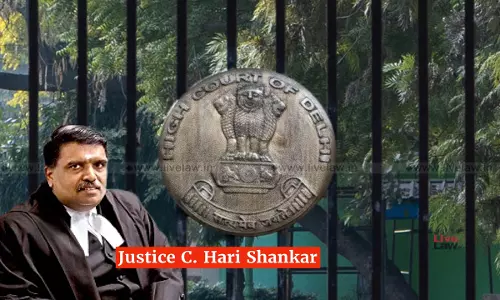
Non-Response Can't Be Presumed As Consent For Appointment Of Arbitrator: Delhi High Court
The Delhi High Court bench of J. C.Hari Shankar has held that consent requires consensus ad idem and there must be positive consent present from the petitioner side with respect to the appointment of an arbitrator. If such consent is absent, the appointment becomes unilateral and ex facie illegal. The court has held that there was no consent by the petitioner with respect to the appointment of Mr. Kasana as the Arbitrator. The respondent by merely putting a cautionary caveat in...
How To Determine Conversion Of Arbitral Award In Foreign Currency To Indian Currency? Supreme Court Explains
In a significant judgment relating to International Commercial Arbitration, the Supreme Court has decided the two important questions on the enforcement of an arbitral award expressed in foreign currency to Indian Currency.The two questions that appeared for the Court's consideration were:Firstly, what is the correct and appropriate date to determine the foreign exchange rate for converting the award amount expressed in foreign currency to Indian rupees? The Court said that the relevant date...
Arbitration | Impermissible For Arbitral Tribunal Or Courts To Grant Interest Upon Interest Under 1940 Act : Supreme Court
The Supreme Court on Wednesday (Aug. 7) held that an Arbitral Tribunal is not empowered to grant interest upon interest while passing an arbitral award as the Arbitration Act, 1940 does not specifically provide for the grant of interest on interest. “In the light of the above legal provisions and the case law on the subject, it is evident that ordinarily courts are not supposed to grant interest on interest except where it has been specifically provided under the statute or where there is...
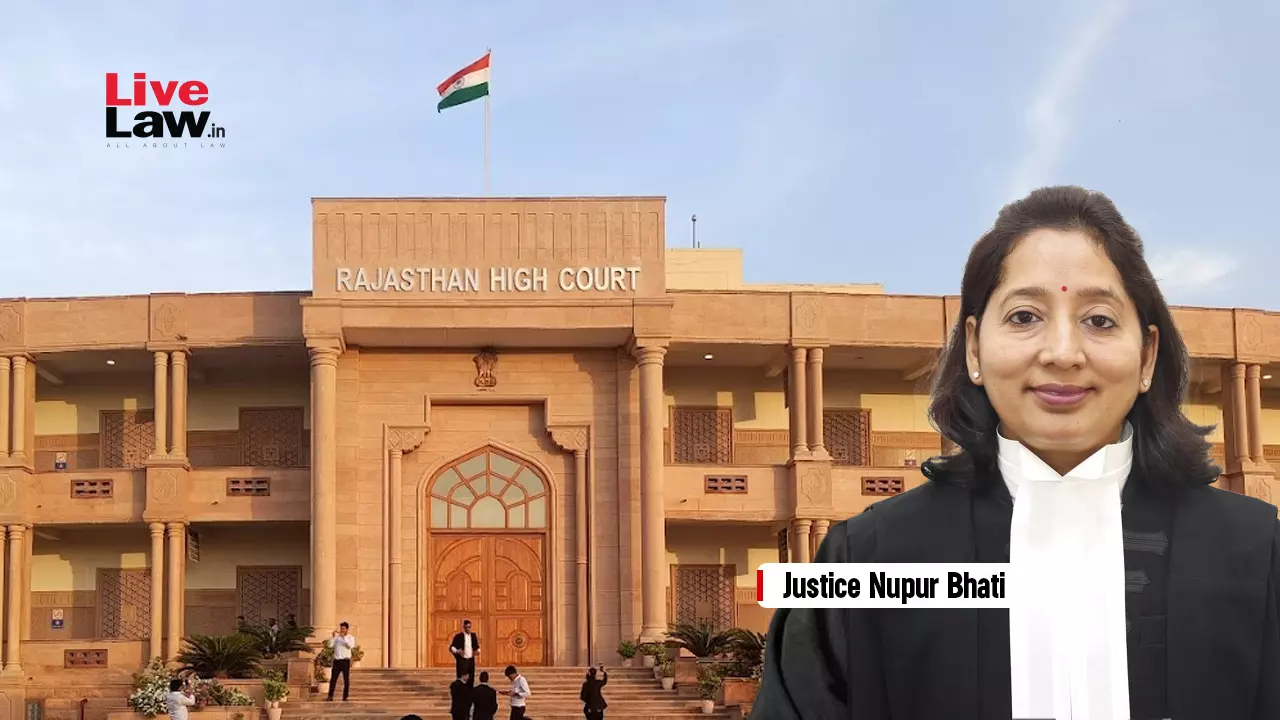
Arbitral Tribunal First To Adjudge Non-Arbitrability Of Dispute And Ground Of Res-Judicata, Courts Can Have Second Look After Award: Rajasthan HC
The bench of Justice Nupur Bhati at the Rajasthan High Court accepted an application filed under Section 11(6) of the Arbitration and Conciliation Act, 1996 seeking appointment of an arbitrator and observed that the issue of non-arbitrability of a dispute under an arbitration agreement falls under the domain of the arbitral tribunal in the first instance and the courts have the power to only “second look” after passing of the arbitral award. The Court also opined that the question regarding the...
Writ Petition Can't Be Entertained Against Every Interlocutory Order Issued By Arbitral Tribunal: Delhi High Court
The Delhi High Court bench of Justice Sanjeev Narula has held that the scope of judicial interference under Article 226 is limited when challenging an Arbitral Tribunal's order concerning the conduct of arbitration proceedings. The bench held that a writ petition cannot be entertained against every interlocutory order related to case management. Such orders fall within the Arbitral Tribunal's discretion and authority which includes decisions on matters like summoning witnesses and...
Principles Of Equity And Fairness Not Applicable To Commercial Matters, Relief Is Governed By Contract: Delhi High Court
The Delhi High Court bench of Justice C Hari Shankar has held that commerce is devoid of equity. The bench held that commercial transactions are driven by a harsh reality, and the principle of universal brotherhood does not extend to commercial dealings. In these transactions, there is no obligation on the arbitrator for fairness, kindness, or equity, and no court can mandate such qualities. The bench noted that while there might be a limited expectation of fairness in transactions...