
ARBITRATION
Dispute Relating To Members And Management Of Public Trusts Not Arbitrable, Must File Suit U/S 92 CPC : Allahabad High Court
The Allahabad High Court has held that disputes relating to public trusts which are enlisted under Section 92 of the Civil Procedure Code are not arbitrable under the Arbitration and Conciliation Act, 1996.The bench comprising of Chief Justice Arun Bhansali and Justice Vikas Budhwar further held that Section 89 of CPC which provides for settlement of disputes outside Court does not override Section 92 as Section 92 is a specific provision dealing with disputes regarding Trusts. The Court held...

Continuous Cooperation Between International And Domestic Arbitration Bodies Needed: Justice Surya Kant
Supreme Court judge Justice Kant on Sunday stressed the need for continued cooperation between international and domestic arbitration bodies in ensuring that arbitration remains a fair, cost-effective, and accessible mode of dispute resolution.Justice Kant was speaking at the valedictory function of the two-day Conference on International Arbitration and Rule of Law. It was organised on the occasion of the 75th year of establishment of Supreme Court and the 125th anniversary of the Permanent...
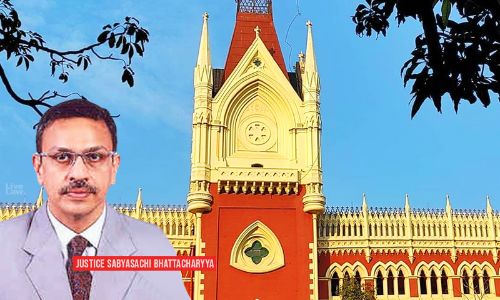
MSME Act Doesn't Bar Independent Arbitration Under Arbitration And Conciliation Act Based On Agreement Clause: Calcutta High Court
The Calcutta High Court bench of Justice Sabyasachi Bhattacharyya has held that Section 18 of the MSME Act does not create any substantive rights or liabilities but simply offers an alternative method for resolving disputes outside of court proceedings. The bench held that if a party involved in a dispute chooses to pursue arbitration independently under the Arbitration and Conciliation Act, 1996, based on an arbitration clause in the agreement between the parties, the MSME Act does...
Arbitrator Justified In Treating Loan Admission In Correspondence As Admitted Claim Under Order XII Rule 6 CPC: Delhi High Court
The Delhi High Court bench of Acting Chief Justice Manmohan and Justice Tushar Rao Gedela has held that when a party makes a clear admission of owing a loan in its contemporaneous correspondence, the arbitrator is justified in treating it as an admitted claim under Order XII Rule 6 of the CPC. The bench noted that the purpose of this rule is to allow a party to secure a speedy judgment, at least to the extent of the relief that the plaintiff is entitled to based on the defendant's...
Composite Reference Can't Be Made Of Disparate Causes Of Action: Calcutta High Court
The Calcutta High Court bench comprising Justice Sabyasachi Bhattacharyya has held that composite reference to an Arbitral Tribunal cannot be made for disparate causes of action in different agreements with different parties as it contravenes the principles of privity, confidentiality, and party autonomy. Background: The Petitioner, the Secretary of Ganaudyog Bazar Unnayan & Service Cooperative Society Ltd., filed an application under Section 11 of the Arbitration and...
Arbitration | Application To Extend Time To Pass Arbitral Award Maintainable Even After Expiry Of Period Under S.29A(4) : Supreme Court
In an important ruling concerning the Arbitration and Conciliation Act, the Supreme Court today held that an application for extending the time for passing of an arbitral award can be filed even after the expiry of the twelve-month or the extended six-month period.“we hold that an application for extension of the time period for passing an arbitral award under Section 29A (4) read with Section 29A (5) is maintainable even after the expiry of the twelve-month or the extended six-month period, as...
Disputes Exceeding Rent Control Act Threshold Are Arbitrable If Lease Agreement Includes Arbitration Clause: Calcutta High Court
The Calcutta High Court bench of Justice Sabyasachi Bhattacharyya has held that when the total monthly payable amount surpasses the threshold for invoking the provisions of the Rent Control Act, the dispute becomes subject to arbitration if the lease agreement contains an arbitration clause. Further, the bench held that in a petition filed under Section 11 of the Arbitration and Conciliation Act, 1996, the court is not permitted to examine the merits of the disputes between the...
Referral Court Under Section 11 Can't Decide The Arbitrability of Non-Notified Claim: Delhi High Court
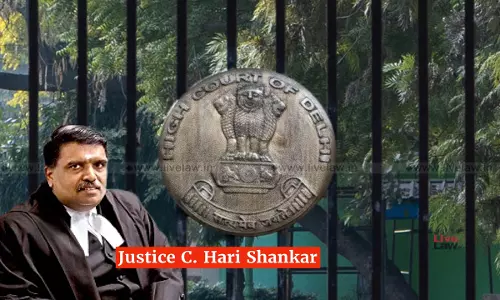
The Delhi High Court bench of Justice C. Harishankar, while deciding a Section 11 application, has held that a referral court under Section 11 cannot examine the arbitrability of non-notified claims. After the SBI General Insurance Co Ltd v. Krish Spinning judgment, the arbitral tribunal will decide on the arbitrability of disputes. Facts: The appellant and respondent entered into a Contract Agreement dated 27/07/2017 for certain civil works at Haldia Refinery. Clause 9.0.0.0 and...

Tossing Award File From One Table To Other By State Not Enough To Condone Delay ; Himachal Pradesh High Court
The Himachal Pradesh High Court bench of Justice Jyotsna Rewal Dua has held that the explanation for the delay in filing objections under Section 34(1) of the Arbitration and Conciliation Act, 1996 is insufficient to justify condoning the delay if it appears that the file was merely tossed from one table to the other by the State. Brief Facts: The objectors/applicants, State of Himachal Pradesh, filed an application under Section 34(3) of the Arbitration and Conciliation Act...
Contempt Proceedings Inappropriate For Resolving Complex Disputed Factual Issues: Delhi High Court
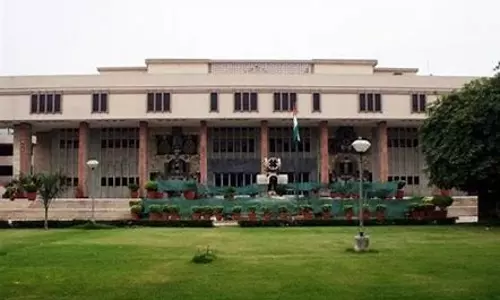
The Delhi High Court bench of Justice Dharmesh Sharma has held that the contempt proceedings are not the appropriate forum to resolve disputed factual issues such as conducting a detailed accounting analysis to determine the fairness or justification of accounting practices. Brief Facts: The matter pertained to contempt petitions which were filed under Section 12 of the Contempt of Courts Act, 1971, in conjunction with Article 215 of the Constitution of India, 1950 seeking...
All Arbitration Proceedings Must Be Filed In Court With Jurisdiction Over The Arbitral Seat: Delhi High Court
The Delhi High Court bench of Justice C. Hari Shankar has held that once the arbitral seat is established, all proceedings, including the initial ones, must be filed only in the court that has jurisdiction over the arbitral seat. The bench held that no other Court is authorized to handle any matters related to the arbitration. Brief Facts: The matter pertained to an objection raised by Union of India (Respondent) regarding the territorial jurisdiction of the High Court to entertain...
Party Ignores Section 21 Notice; Should Seek Court Intervention, Arbitrator Can't Unilaterally Summon Parties: Delhi High Court
The Delhi High Court bench of Justice C. Hari Shankar has held that if a party seeking arbitration faces a situation where the opposing party does not respond to a Section 21 notice or refuses to agree to arbitration, the only recourse is to approach the Court under Section 11(5) or Section 11(6) of the Arbitration and Conciliation Act, 1996, depending on the circumstances. The bench held that party cannot unilaterally grant jurisdiction to the arbitrator, even if the arbitrator is...